Showing posts with label Carbon Credit. Show all posts

Wednesday, July 8, 2015

How to Build a cannabrick home

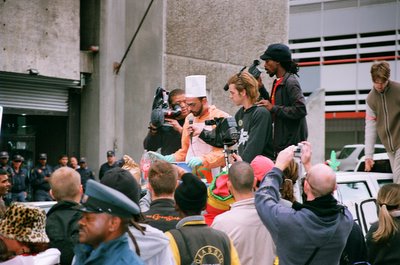
Peacefully Demonstrated outside the Department of Housing May 7 2005
  1. Plant a cannabis seed. Water and allow the plant to grow and produce seed. Plant and water these seeds. Your goal is to grow enough to build a house, you will need about 1 acre to build a 5 roomed home.

    Tyala imbewu ntsangu (ye-cannabis). Nkcenkceshela imbewu uze uyinike ithuba lokuba ikhule ide ikhuphe eyayo imbewu. Uyothi ke uyityale nalembewu uyinkcenkceshele njalo. Injongo yakho kukukhulisa izityalo ezothi zonele ekwakheni indlu, uyakudinga i-acre (malunga nentsimi) enye ukuze wakhe indlu enamagumbi amahlanu.

    Plant 'n hemp saad. Water en laat die plante om te groei en saad te produseer. Plant en water hierdie sade. Jou doel is om  genoeg te groei om 'n huis bou, jy sal ongeveer een aker benodig om 'n 5-kamer huis te bou.

    Sokutshala imbewu insangu njalo. Amanzi nokuvumela isitshalo ukuze zikhule futhi ukhiqize imbewu. Plant namanzi lezi zinhlamvu. Umgomo wakho iwukuba akhule ngokwanele ukwakha indlu, uzodinga 1 Acre ukwakha 5 roomed ekhaya.


  2. Consider the many relevant points presented in the guidelines of Build a house with hemp / Building with hemp.

    Qwalasela yonke imigaqo oyibekelweyo kwincwadana i-Build a house with hemp / Building with hemp.

    Oorweeg die baie relevante punte in die riglyne van die Build a house with hemp / Building with hemp.

    Cabangela amaphuzu amaningi efanele evezwa neziqondiso of Yakha indlu nge insangu / Building nge insangu.


  3. Start planning where your house will stand. Consider everything about the environment you’ll be building in, like winter and summer sunshine, wind and rain – you don’t want to build on a floodplain, or your house will wash away. Be sure to plan all your water and waste requirements.

    Ceba indawo ozokwakha kuyo indlu yakho. Qwalasela yonke into ngomhlaba lo uzokwakha kuwo indlu yakho, izinto ezinje ngemimoya, ilanga, neemvula zehlobo nobusika, akekho umntu ofuna ukwakha indlu yakhe emgxobhozweni okanye apho iyothi ibe lilifa lezikhukhula khona. Uqiniseke ukuba unamanzi akulungeleyo ukwenza oku.

    Begin met die beplanning, waar jou huis sal staan. Oorweeg dit alles oor die omgewing en jy sal gebou in, soos winter en somer son, wind en reën - jy wil nie op 'n vloedvlakte bou nie, of jou huis sal wegspoel. Maak seker om te beplan al jou water en afval vereistes voldoen.

    Qala uhlela kuphi indlu yakho eyokuma. Cabanga konke mayelana imvelo uyobe ngokwakha ku, efana ebusika kanye kwelanga ehlobo, umoya nemvula-ungafuni ukwakha ethile kwemfunda, noma indlu yakho iyoba basuse. Qiniseka ukuhlela konke amanzi kanye imfucuza izidingo zakho.

  4. Cut the grown cannabis plants down and leave in the field to rett for a week. The morning dew and natural rotting process will loosen the fibers from the plant.

    a. Process the plant matter by cutting leaves and branches off, then hit small bundles the length of the plant over and upturned rake.
    b. The long fiber parts that remain in your hand are good for weaving rugs and making various other items your skills can accomplish.
    c. The seed can be gathered for more housing.
    d. Gather the small woody bits (the hurd) that have fallen, this waste is what will be used in the construction material.

    Sika / sarha izityalo uzibeke egadini ixesha elingangeveki ukuze zibole. Umbethe wasekuseni nezinye izinto zendalo ezibolisayo ziya kuyikhulula I-fibre ezityalweni.

    a. Yikhawulezise ngohlukanisa intonga zezityalo namagqabi, uhlale uyiharika rhoqo.
    b. Intonga ezi zinothi zincede kwezinye izinto ezifana nokwenza ingubo nezinye izinto onothi uzibonele zona ngokolwazi lwakho.
    c. Imbewu inokuqokelelwe ukwakha ezinye izindlu.
    d. Qokelela imithana ethe yaziwela njengokuba uzoyisebenzisa xa usakha indlu yakho.

    Sny die gegroei hemp/cannabis plante af en in die veld verlaat om rhett vir 'n week. Die oggend-dou en die natuurlike verrotting proses sal die vesel van die plant los te maak.

    a. Proses van die plantmateriaal deur te sny blare en takke af, dan is getref klein bundels die lengte van die plant oor en omgekeerde hark.
    b. Die lang vesel dele wat in jou hand bly is goed vir die matte weef en die maak van verskeie ander items jou vaardighede kan bereik.
    c. Die saad kan vir meer behuising ingesamel word.
    d. Versamel die klein houtagtige bits (die hurd) wat gedaal het, die afval is wat sal in die konstruksie materiaal gebruik kan word.

    Sika izitshalo insangu njalo. isikhule phansi endle ukuze rhett isonto lonke. Amazolo ekuseni inqubo lwemvelo ukubola kuzokwenza athambise imicu kulesi simila.

    a. Ukucubungula udaba plant ukusika amaqabunga namagatsha ahambe ke hit izinyanda amancane ubude sitshalo phezu ne hala sokutakula.
    b. I-long fibre izingxenye ezisele esandleni sakho kukhona okuhle ngokuba ihlanganisa omata kanye nokwenza ezinye izinto ezahlukahlukene amakhono akho kungaba afeze.
    c. Imbewu kungenziwa babuthana izindlu xaxa.
    d. Ubuthe izingcezu bok encane (i-hurd) ukuthi uwe, lokhu imfucuza okuzokusiza lisetshenziswe ukwaziswa yezokwakha

  5. Wash the hurd, dry it, then wash it again. Be careful not to allow the matter to rot or decay during this process, by turning, airing and allowing the African sun to dry the hurd properly. Now combine in proportions 10:2:3:3 combine the cannabis/ntsangu/dagga Hurd(10), washed river sand 0.5mm(2), hydraulic lime(3) and water(3) to make the mulch (This process may need tweaking depending on your geographic location, humidity, rainfall etc)

    Hlamba ingqokelela yakho, uyomise, uphinde uyihlambe.Ulumkele ukuba lengqokelela ibole kwelithuba, yiguquguqule, uyivumele ibethwe ngumoya uvumele nelanga lase Afrika liyomise lengqokelela. Dibanisa ngokwalo mgaqo 10:2:3:3, dibanisa ke lemvuno yakho yomgquba wentsangu (10) kunye nesanti yasemlanjeni 0.5mm(2), ikalika (3) kunye namanzi (3) ukwenza udaka (Nale into ke iyokuthi ixhomekeke kwindawo leyo ukuyo nemvula zakhona njalo-njalo).

    Was die kudde, droog dit af, dan was dit weer. Wees versigtig om nie toe te laat die aangeleentheid te verrot of verval gedurende hierdie proses, deur die draai, voorlê en laat die Afrika-son om droog die kudde goed. Nou kombineer in verhoudings 10:2:3:3 kombineer die cannabis / ntsangu / dagga Hurd (10), gewaste riviersand 0.5 mm (2), hidrouliese kalk (3) en water (3) aan die deklaag te maak (Hierdie proses kan tweaking nodig, afhangende van jou geografiese ligging, humiditeit, reën, ens)

    Geza izinti, zome it ke geza futhi. Qaphela ukuba singavumeli udaba ukubola noma ukubola kulo msebenzi , ngokubhekisa , angabiki futhi sivumele ilanga Afrika ukuze ome le hurd kahle . Sebesebenzisa ngezabelo 10:2:3:3 hlanganisa insangu njalo. / ntsangu / insangu Hurd (10) , umfula wageza isihlabathi 0.5mm (2) , wokubacindezela umcako (3) kanye namanzi (3) ukwenza semboza ngabo izithombo zezihlahla (Le nqubo may badinga tweaking kuye ngokuthi indawo yokuhlala yakho, umswakama, imvula, njll)

  6. Now build your house! Ngoku ke yakha indlu yakho! Nou bou jou huis! Manje ukwakha indlu yakho!

  7. Teach others. Fundisa abanye. Onderrig ander.

You can use this “dagga-cement” for making bricks, shutter casting or the proven “pole-and-dagga” method. This last method allows for a sturdy, warm, fireproof and water proof home – built with pride and intuitive engineering, not a ‘uniform box’.

Be sure to consider all aspects of your house design and structural requirements. Although the cannabis-cement will become stronger than steel in time, it is not advised to build over 2 floors high without considering structural implications. With planning this cement can be used to build up to 4 floors high.

The cannabis-cement will dry over a period of a month (depending on the weather). At this point you will be able to add the roof. Seal your home’s walls with lime; lime external walls annually. Decorate your house with masonry to make it unique, and paint with coloured lime as per custom.

Always PLANT A TREE in a place that will provide shade, to commemorate this accomplishment.
Council will plant trees if citizens care for them. Call (021) 689-8938 http://www.trees.org.za/

Assist your family, friends or neighbors with your experience and expertise. Share information and technique; you can uplift yourself and your community.


Saturday, May 9, 2015

Decade anniversary - How to Build a cannabrick home

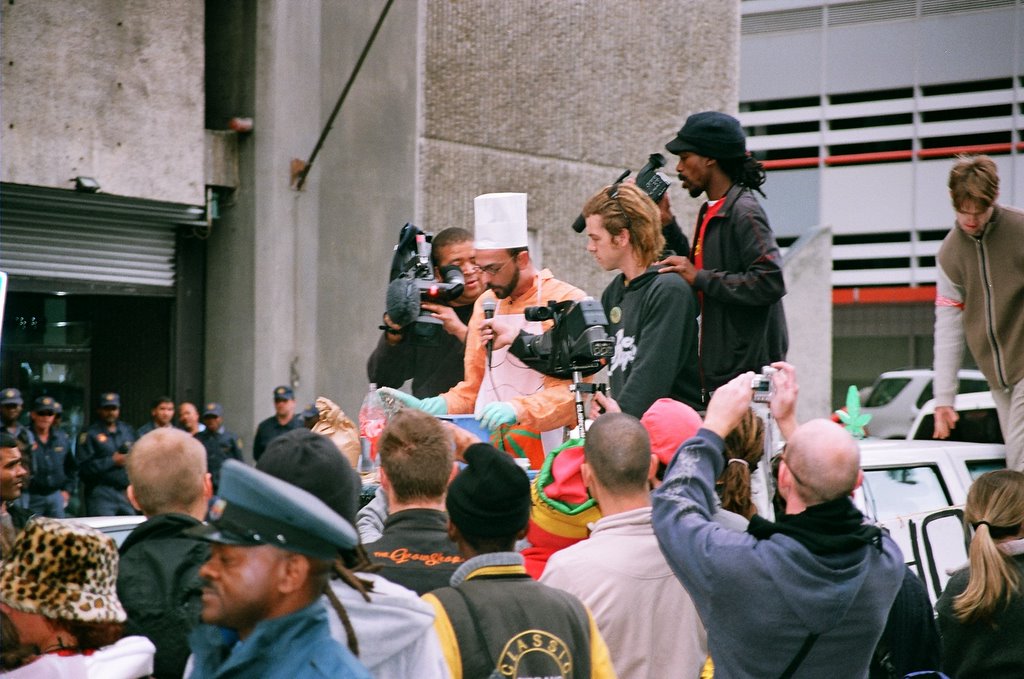
Peacefully Demonstrated outside the Department of Housing May 7 2005
  1. Plant a cannabis seed. Water and allow the plant to grow and produce seed. Plant and water these seeds. Your goal is to grow enough to build a house, you will need about 1 acre to build a 5 roomed home.

    Tyala imbewu ntsangu (ye-cannabis). Nkcenkceshela imbewu uze uyinike ithuba lokuba ikhule ide ikhuphe eyayo imbewu. Uyothi ke uyityale nalembewu uyinkcenkceshele njalo. Injongo yakho kukukhulisa izityalo ezothi zonele ekwakheni indlu, uyakudinga i-acre (malunga nentsimi) enye ukuze wakhe indlu enamagumbi amahlanu.

    Plant 'n hemp saad. Water en laat die plante om te groei en saad te produseer. Plant en water hierdie sade. Jou doel is om  genoeg te groei om 'n huis bou, jy sal ongeveer een aker benodig om 'n 5-kamer huis te bou.

    Sokutshala imbewu insangu njalo. Amanzi nokuvumela isitshalo ukuze zikhule futhi ukhiqize imbewu. Plant namanzi lezi zinhlamvu. Umgomo wakho iwukuba akhule ngokwanele ukwakha indlu, uzodinga 1 Acre ukwakha 5 roomed ekhaya.


  2. Consider the many relevant points presented in the guidelines of Build a house with hemp / Building with hemp.

    Qwalasela yonke imigaqo oyibekelweyo kwincwadana i-Build a house with hemp / Building with hemp.

    Oorweeg die baie relevante punte in die riglyne van die Build a house with hemp / Building with hemp.

    Cabangela amaphuzu amaningi efanele evezwa neziqondiso of Yakha indlu nge insangu / Building nge insangu.


  3. Start planning where your house will stand. Consider everything about the environment you’ll be building in, like winter and summer sunshine, wind and rain – you don’t want to build on a floodplain, or your house will wash away. Be sure to plan all your water and waste requirements.

    Ceba indawo ozokwakha kuyo indlu yakho. Qwalasela yonke into ngomhlaba lo uzokwakha kuwo indlu yakho, izinto ezinje ngemimoya, ilanga, neemvula zehlobo nobusika, akekho umntu ofuna ukwakha indlu yakhe emgxobhozweni okanye apho iyothi ibe lilifa lezikhukhula khona. Uqiniseke ukuba unamanzi akulungeleyo ukwenza oku.

    Begin met die beplanning, waar jou huis sal staan. Oorweeg dit alles oor die omgewing en jy sal gebou in, soos winter en somer son, wind en reën - jy wil nie op 'n vloedvlakte bou nie, of jou huis sal wegspoel. Maak seker om te beplan al jou water en afval vereistes voldoen.

    Qala uhlela kuphi indlu yakho eyokuma. Cabanga konke mayelana imvelo uyobe ngokwakha ku, efana ebusika kanye kwelanga ehlobo, umoya nemvula-ungafuni ukwakha ethile kwemfunda, noma indlu yakho iyoba basuse. Qiniseka ukuhlela konke amanzi kanye imfucuza izidingo zakho.

  4. Cut the grown cannabis plants down and leave in the field to rett for a week. The morning dew and natural rotting process will loosen the fibers from the plant.

    a. Process the plant matter by cutting leaves and branches off, then hit small bundles the length of the plant over and upturned rake.
    b. The long fiber parts that remain in your hand are good for weaving rugs and making various other items your skills can accomplish.
    c. The seed can be gathered for more housing.
    d. Gather the small woody bits (the hurd) that have fallen, this waste is what will be used in the construction material.

    Sika / sarha izityalo uzibeke egadini ixesha elingangeveki ukuze zibole. Umbethe wasekuseni nezinye izinto zendalo ezibolisayo ziya kuyikhulula I-fibre ezityalweni.

    a. Yikhawulezise ngohlukanisa intonga zezityalo namagqabi, uhlale uyiharika rhoqo.
    b. Intonga ezi zinothi zincede kwezinye izinto ezifana nokwenza ingubo nezinye izinto onothi uzibonele zona ngokolwazi lwakho.
    c. Imbewu inokuqokelelwe ukwakha ezinye izindlu.
    d. Qokelela imithana ethe yaziwela njengokuba uzoyisebenzisa xa usakha indlu yakho.

    Sny die gegroei hemp/cannabis plante af en in die veld verlaat om rhett vir 'n week. Die oggend-dou en die natuurlike verrotting proses sal die vesel van die plant los te maak.

    a. Proses van die plantmateriaal deur te sny blare en takke af, dan is getref klein bundels die lengte van die plant oor en omgekeerde hark.
    b. Die lang vesel dele wat in jou hand bly is goed vir die matte weef en die maak van verskeie ander items jou vaardighede kan bereik.
    c. Die saad kan vir meer behuising ingesamel word.
    d. Versamel die klein houtagtige bits (die hurd) wat gedaal het, die afval is wat sal in die konstruksie materiaal gebruik kan word.

    Sika izitshalo insangu njalo. isikhule phansi endle ukuze rhett isonto lonke. Amazolo ekuseni inqubo lwemvelo ukubola kuzokwenza athambise imicu kulesi simila.

    a. Ukucubungula udaba plant ukusika amaqabunga namagatsha ahambe ke hit izinyanda amancane ubude sitshalo phezu ne hala sokutakula.
    b. I-long fibre izingxenye ezisele esandleni sakho kukhona okuhle ngokuba ihlanganisa omata kanye nokwenza ezinye izinto ezahlukahlukene amakhono akho kungaba afeze.
    c. Imbewu kungenziwa babuthana izindlu xaxa.
    d. Ubuthe izingcezu bok encane (i-hurd) ukuthi uwe, lokhu imfucuza okuzokusiza lisetshenziswe ukwaziswa yezokwakha

  5. Wash the hurd, dry it, then wash it again. Be careful not to allow the matter to rot or decay during this process, by turning, airing and allowing the African sun to dry the hurd properly. Now combine in proportions 10:2:3:3 combine the cannabis/ntsangu/dagga Hurd(10), washed river sand 0.5mm(2), hydraulic lime(3) and water(3) to make the mulch (This process may need tweaking depending on your geographic location, humidity, rainfall etc)

    Hlamba ingqokelela yakho, uyomise, uphinde uyihlambe.Ulumkele ukuba lengqokelela ibole kwelithuba, yiguquguqule, uyivumele ibethwe ngumoya uvumele nelanga lase Afrika liyomise lengqokelela. Dibanisa ngokwalo mgaqo 10:2:3:3, dibanisa ke lemvuno yakho yomgquba wentsangu (10) kunye nesanti yasemlanjeni 0.5mm(2), ikalika (3) kunye namanzi (3) ukwenza udaka (Nale into ke iyokuthi ixhomekeke kwindawo leyo ukuyo nemvula zakhona njalo-njalo).

    Was die kudde, droog dit af, dan was dit weer. Wees versigtig om nie toe te laat die aangeleentheid te verrot of verval gedurende hierdie proses, deur die draai, voorlê en laat die Afrika-son om droog die kudde goed. Nou kombineer in verhoudings 10:2:3:3 kombineer die cannabis / ntsangu / dagga Hurd (10), gewaste riviersand 0.5 mm (2), hidrouliese kalk (3) en water (3) aan die deklaag te maak (Hierdie proses kan tweaking nodig, afhangende van jou geografiese ligging, humiditeit, reën, ens)

    Geza izinti, zome it ke geza futhi. Qaphela ukuba singavumeli udaba ukubola noma ukubola kulo msebenzi , ngokubhekisa , angabiki futhi sivumele ilanga Afrika ukuze ome le hurd kahle . Sebesebenzisa ngezabelo 10:2:3:3 hlanganisa insangu njalo. / ntsangu / insangu Hurd (10) , umfula wageza isihlabathi 0.5mm (2) , wokubacindezela umcako (3) kanye namanzi (3) ukwenza semboza ngabo izithombo zezihlahla (Le nqubo may badinga tweaking kuye ngokuthi indawo yokuhlala yakho, umswakama, imvula, njll)

  6. Now build your house! Ngoku ke yakha indlu yakho! Nou bou jou huis! Manje ukwakha indlu yakho!

  7. Teach others. Fundisa abanye. Onderrig ander.
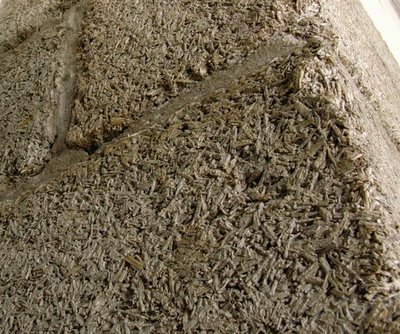
You can use this “dagga-cement” for making bricks, shutter casting or the proven “pole-and-dagga” method. This last method allows for a sturdy, warm, fireproof and water proof home – built with pride and intuitive engineering, not a ‘uniform box’.

Be sure to consider all aspects of your house design and structural requirements. Although the cannabis-cement will become stronger than steel in time, it is not advised to build over 2 floors high without considering structural implications. With planning this cement can be used to build up to 4 floors high.

The cannabis-cement will dry over a period of a month (depending on the weather). At this point you will be able to add the roof. Seal your home’s walls with lime; lime external walls annually. Decorate your house with masonry to make it unique, and paint with coloured lime as per custom.

Always PLANT A TREE in a place that will provide shade, to commemorate this accomplishment.
Council will plant trees if citizens care for them. Call (021) 689-8938 http://www.trees.org.za/

Assist your family, friends or neighbors with your experience and expertise. Share information and technique; you can uplift yourself and your community.




Friday, February 14, 2014

SONA

Fellow South Africans,

Honourable Members,

Other than mining, we had identified five other job drivers in 2009.

These are tourism, agriculture, the green economy, infrastructure development and manufacturing.
 

Wednesday, August 14, 2013

How to build a Cannabrick Home


Peacefully Demonstrated outside the Department of Housing May 7 2005
  1. Plant a cannabis seed. Water and allow the plant to grow and produce seed. Plant and water these seeds. Your goal is to grow enough to build a house, you will need about 1 acre to build a 5 roomed home.

    Tyala imbewu ntsangu (ye-cannabis). Nkcenkceshela imbewu uze uyinike ithuba lokuba ikhule ide ikhuphe eyayo imbewu. Uyothi ke uyityale nalembewu uyinkcenkceshele njalo. Injongo yakho kukukhulisa izityalo ezothi zonele ekwakheni indlu, uyakudinga i-acre (malunga nentsimi) enye ukuze wakhe indlu enamagumbi amahlanu.

    Plant 'n hemp saad. Water en laat die plante om te groei en saad te produseer. Plant en water hierdie sade. Jou doel is om te groei genoeg is om 'n huis bou, jy sal ongeveer een aker benodig om' n 5-kamer huis te bou.
  2. Consider the many relevant points presented in the guidelines of Build your house step-by-step.

    Qwalasela yonke imigaqo oyibekelweyo kwincwadana i-Build Your House Step By Step.

    Oorweeg die baie relevante punte in die riglyne van die bou van jou huis stap aangebied-vir-stap.


  3. Start planning where your house will stand. Consider everything about the environment you’ll be building in, like winter and summer sunshine, wind and rain – you don’t want to build on a floodplain, or your house will wash away. Be sure to plan all your water and waste requirements.

    Ceba indawo ozokwakha kuyo indlu yakho. Qwalasela yonke into ngomhlaba lo uzokwakha kuwo indlu yakho, izinto ezinje ngemimoya, ilanga, neemvula zehlobo nobusika, akekho umntu ofuna ukwakha indlu yakhe emgxobhozweni okanye apho iyothi ibe lilifa lezikhukhula khona. Uqiniseke ukuba unamanzi akulungeleyo ukwenza oku.

    Begin met die beplanning, waar jou huis sal staan. Oorweeg dit alles oor die omgewing en jy sal gebou in, soos winter en somer son, wind en reën - jy nie wil bou op 'n vloedvlakte, of jou huis sal wegspoelen nie. Maak seker om te beplan al jou water en afval vereistes voldoen.

  4. Cut the grown cannabis plants down and leave in the field to rhett for a week. The morning dew and natural rotting process will loosen the fibers from the plant.

    a. Process the plant matter by cutting leaves and branches off, then hit small bundles the length of the plant over and upturned rake.
    b. The long fiber parts that remain in your hand are good for weaving rugs and making various other items your skills can accomplish.
    c. The seed can be gathered for more housing.
    d. Gather the small woody bits (the hurd) that have fallen, this waste is what will be used in the construction material.

    Sika / sarha izityalo uzibeke egadini ixesha elingangeveki ukuze zibole. Umbethe wasekuseni nezinye izinto zendalo ezibolisayo ziya kuyikhulula I-fibre ezityalweni.

    a. Yikhawulezise ngohlukanisa intonga zezityalo namagqabi, uhlale uyiharika rhoqo.
    b. Intonga ezi zinothi zincede kwezinye izinto ezifana nokwenza ingubo nezinye izinto onothi uzibonele zona ngokolwazi lwakho.
    c. Imbewu inokuqokelelwe ukwakha ezinye izindlu.
    d. Qokelela imithana ethe yaziwela njengokuba uzoyisebenzisa xa usakha indlu yakho.

    Sny die gegroei hemp/cannabis plante af en in die veld verlaat om rhett vir 'n week. Die oggend-dou en die natuurlike verrotting proses sal die vesel van die plant los te maak.

    a. Proses van die plantmateriaal deur te sny blare en takke af, dan is getref klein bundels die lengte van die plant oor en omgekeerde hark.
    b. Die lang vesel dele wat in jou hand bly is goed vir die matte weef en die maak van verskeie ander items jou vaardighede kan bereik.
    c. Die saad kan vir meer behuising ingesamel word.
    d. Versamel die klein houtagtige bits (die hurd) wat gedaal het, die afval is wat sal in die konstruksie materiaal gebruik kan word.

  5. Wash the hurd, dry it, then wash it again. Be careful not to allow the matter to rot or decay during this process, by turning, airing and allowing the African sun to dry the hurd properly. Now combine in proportions 10:2:3:3 combine the cannabis/ntsangu/dagga Hurd(10), washed river sand 0.5mm(2), hydraulic lime(3) and water(3) to make the mulch (This process may need tweaking depending on your geographic location, humidity, rainfall etc)

    Hlamba ingqokelela yakho, uyomise, uphinde uyihlambe.Ulumkele ukuba lengqokelela ibole kwelithuba, yiguquguqule, uyivumele ibethwe ngumoya uvumele nelanga lase Afrika liyomise lengqokelela. Dibanisa ngokwalo mgaqo 10:2:3:3, dibanisa ke lemvuno yakho yomgquba wentsangu (10) kunye nesanti yasemlanjeni 0.5mm(2), ikalika (3) kunye namanzi (3) ukwenza udaka (Nale into ke iyokuthi ixhomekeke kwindawo leyo ukuyo nemvula zakhona njalo-njalo).

    Was die kudde, droog dit af, dan was dit weer. Wees versigtig om nie toe te laat die aangeleentheid te verrot of verval gedurende hierdie proses, deur die draai, voorlê en laat die Afrika-son om droog die kudde goed. Nou kombineer in verhoudings 10:2:3:3 kombineer die cannabis / ntsangu / dagga Hurd (10), gewaste riviersand 0.5 mm (2), hidrouliese kalk (3) en water (3) aan die deklaag te maak (Hierdie proses kan tweaking nodig, afhangende van jou geografiese ligging, humiditeit, reën, ens)

  6. Now build your house! Ngoku ke yakha indlu yakho! Nou bou jou huis!

  7. Teach others. Fundisa abanye. Onderrig ander.


You can use this “dagga-cement” for making bricks, shutter casting or the proven “pole-and-dagga” method. This last method allows for a sturdy, warm, fireproof and water proof home – built with pride and intuitive engineering, not a ‘uniform box’.

Be sure to consider all aspects of your house design and structural requirements. Although the cannabis-cement will become stronger than steel in time, it is not advised to build over 2 floors high without considering structural implications. With planning this cement can be used to build up to 4 floors high.

The cannabis-cement will dry over a period of a month (depending on the weather). At this point you will be able to add the roof. Seal your home’s walls with lime; lime external walls annually. Decorate your house with masonry to make it unique, and paint with coloured lime as per custom.

Always PLANT A TREE in a place that will provide shade, to commemorate this accomplishment.

Council will plant trees if citizens care for them. Call (021) 689-8938 http://www.trees.org.za/

Assist your family, friends or neighbors with your experience and expertise. Share information and technique; you can uplift yourself and your community.


Sunday, July 21, 2013

Science the key to SA's future: Motlanthe

Problems inherited from the apartheid era can be solved through research, Deputy President Kgalema Motlanthe said on Saturday.

"Inevitably, most if not all the historically inherited challenges constituting a dead weight on our development ambitions can only be addressed through the research agenda of our national research institutes," he told a summit on science and technology in Polokwane, Limpopo.

Motlanthe said national research institutes had the task to remain relevant to the developmental agenda through the use of science, technology and innovation.

"In other words harnessing the force of science and technology to meet our developmental needs is among the surest ways out of the current quagmire of under-development," he said.

Motlanthe said through the National Development Plan, government laid out the parameters within which each social partner could make a contribution towards the achievement of the country's shared vision.

"This shared vision entails the reduction of poverty, stimulating economic growth, effecting economic transformation and creating employment."

He said South Africa needed to do more in mobilising resources for the task of producing quality education for both teachers and learners alike.

"Only a sound and quality education system with strong emphasis on mathematics and science can serve as a reliable feeder for tertiary institutions...," he said.

Motlanthe said research projects were carried out disparately without knowledge sharing and co-ordination to avoid duplication.

"Our national research efforts lack a central framework or institute to define and identify the most immediate projects, resulting in duplication, wastage and inefficient use of funding."

The lack of collaboration robbed the country of the benefits which would accrue from research.

Research institutes could commission a study of the systemic failure in the governance system and how best could government address its problems, he said.

Motlanthe said under-utilisation of existing research institutes by government often led to wasteful expenditure in that each government department commissioned research in common areas.

"I submit that the benefits of science, technology and innovation are not only potentially immense for us but also, and more crucially, constitute the pre-conditions for South Africa's development."

Sunday, September 23, 2012

SA among four nations calling for climate commitments

Brazil, South Africa, India and China are urging developed countries to adopt more ambitious goals to reduce global warming.

The four countries form the bloc known as BASIC and representatives on Friday ended a two-day meeting to define a common position ahead of November's United Nations' climate change conference in Doha.
BASIC acts jointly in international climate change meetings.

They say developed nations must assume stronger emission reduction commitments under the 1997 Kyoto Protocol that is aimed at stemming pollution and global warming. It has been opposed by the United States.

Chinese climate negotiator Xie Zenhua told reporters that while "developing countries are committed to reduce emissions of greenhouse gases by 70 percent, developed countries are committed to a 30 percent reduction." He says that's insufficient.

Tuesday, December 6, 2011

'No money for climate jobs'

SOUTH Africa has spent R70billion on the arms deal, R40.3billion on the 2010 Fifa World Cup and committed R1.5trillion on future electricity production. But the government will not finance climate jobs, delegates at the One Million Climate Jobs conference heard yesterday.

SA had R70bn for arms deal, R40bn for World Cup and R1.5tn on future electricity production - but no money for climate jobs


Trade unions, social movements and environmental organisations met to discuss an alliance to campaign for the creation of one million jobs, which they believe would address both the country's unemployment crisis and curb climate change.

Under the banner One Million Climate jobs, the alliance is demanding that the South African government release funds to create jobs as it works towards a greener economy.

Said the alliance in a statement: "One million climate jobs would cost R9-billion. Research shows that there is more that R250-billion available annually to finance climate jobs.

"There is also at least R200-billion available to kick-start investment in renewable energy and other climate-friendly developments."

Speakers at the conference said there was a lack of political will to do so.

"It is clear that South Africa has money. The challenge is to channel this money into providing for our most pressing needs as people and to withstand the pressure from the minerals energy complex and international lobby to expand electricity production with no regard to climate change, human wellbeing, environmental risks or resource depletion," the statement said.

The alliance proposed that the country moves towards renewable energy, which it estimates would create more than 150,000 direct and permanent jobs in the manufacture, installation, maintenance and extension of the electricity grid to link renewable energy plants.

More than 700,000 jobs would be created if the country's transport system goes green with the expansion of the rail passenger and general freight network, upgrade of existing fleets to become more energy efficient, construction of bus rapid transit lanes, manufacture of bicycles and the construction of cycle lanes, green spaces and safe pedestrian walkways.

The alliance wants government to provide "energy-efficient, good quality" low cost housing which it estimates would create 250,000 jobs.

Jane Barrett of the SA Transport and Allied Workers Union said the reality was that at least 40% of South Africans were unemployed.

"This is not an official figure. This is a real figure," Barrett said.

- Sowetan

Sunday, December 4, 2011

Jobs promise gives SA green fever

SOUTH Africa is hoping to capitalise on a "green revolution" that could boost the economy and generate hundreds of thousands of jobs within 10 years.

Key government, civil society and business players at the COP17 climate talks on Friday night were all pushing for the country's transition towards a more eco-friendly and sustainable economy.

Renewable sources of energy and materials form the basis of a green economy, in which industries commit to limiting their harmful carbon emissions.

South Africa currently produces more than 90% of its electricity from coal-fired power stations and accounts for just over 1% of man-made greenhouse gases in the world.

The government, through its "green" tax system, collected nearly R700-million over the past year from levies and taxes on plastic bags, fuel, electricity, vehicle emissions and air travel.

The taxes are aimed at reducing the negative impact on the environment.

Now the government is intensifying plans to move to a low-carbon economy within the next decade, with the recent signing of the national green economy accord in Pretoria.

The accord binds government, business and labour to creating 300000 jobs by building a green industrial base in South Africa.

Experts believe the new accord has the potential to significantly change the country's current carbon and capital-intensive economic framework.

Economic Development Minister Ebrahim Patel said this week that South Africa had to make the move towards a green economy as quickly as possible.

"As a considerable emitter of greenhouse gases, South Africa faces the challenge of transitioning to a less carbon-intensive growth trajectory without delay."

At a round-table discussion hosted by the Financial Times and Brand SA on Friday, Environment Minister Edna Molewa said she welcomed South Africa's "confident move into a green economy", with the creation of jobs in the next 10 years.

"At COP18 we will stand up proud and say to the world, 'yes, we are doing our bit'," Molewa said.

"We have stressed that there will be creation of jobs. This is not just an effort that is jobless, we will be getting into sustainable development, that talks to our people, our economy and takes care of our environment."

According to a "green jobs" report released on Friday, the largest contribution to the job market would come from natural resource management "due to the rich endowment that SA has in terms of solar and wind power".

The report - compiled by the Industrial Development Council and the Development Bank of South Africa - estimates that as many as 500000 jobs could be created in a greener economy.

"As more and more businesses, households and the public sector begin to embrace green technologies and practices, the potential exists to create a sustainable number of new job opportunities and to facilitate reskilling," the report said.

It showed that other jobs would come from green building activities, recycling, the conversion of waste to energy, the production of batteries for electric vehicles, soil and land management and renewable energy generation.

Finance Minister Pravin Gordhan said South Africa needed to find more effective economic models to address the issue of climate change.

"We must convert opportunities into actuality," he said. "What we have witnessed now as a result of the climate crisis is the inability of the current economic models to create jobs ... Greening the economy is a huge opportunity."

Cosatu is backing the move towards a greener economy.

Said its spokesman Patrick Craven: "In the long run it is essential for the survival of the planet, that we have an economy which is not dependent on the burning of fossil fuels.

"Of course some jobs will be lost in some sectors. We believe that many, if not more, could be created in other sectors."

- Timeslive

Friday, November 25, 2011

SA's green economy could create 460,000 jobs

Greening South Africa's economy could create 460,000 new jobs by 2025, according to a report released on Friday.

"The experience of several advanced and emerging countries that have been adopting green initiatives point towards an extraordinary opportunity for South Africa as it pursues a job-rich new growth path," Economic Development Minister Ebrahim Patel said at the launch of the report in Johannesburg.

The green jobs report was compiled by the Industrial Development Corporation (IDC), Development Bank of South Africa (DBSA), and Trade and Industrial Policy Strategies (Tips).

The report estimates that 98,000 new jobs could be created in the short-term and around 255,000 in the medium term.

Long-term, 462,000 employment opportunities could be created in the formal economy.

The greening of the economy could create jobs in the primary, secondary, and tertiary sectors.

"As a considerable emitter of greenhouse gases, South Africa faces the challenge of transitioning to a less carbon-intensive growth trajectory without delay," Patel was reported as saying in a statement issued by the IDC and DBSA.

"In short, our challenge is to use less carbons and more people in our economic growth."

Employment challenges
Head of IDC's research and information department and co-author of the report, Jorge Maia, said a greening economy should result in expanded productive capacity.

"This should be progressively supported by investment activity and result in considerable employment creation ... the momentum provided by the greening of an economy is being increasingly exploited in countries such as the United States of America, the United Kingdom, China, and Brazil, among many others, especially in light of the employment challenges faced at national level."

The DBSA's divisional executive of strategic operations, David Jarvis, said the green economy was complex, new, diverse, and fast-evolving.

"South Africa will be dealing with the progressive and simultaneous introduction of technologies that are being improved, developed, or commercialised ... the economic merit of many of these technologies may only be fully established in years to come, opening up opportunities for the establishment of infant industries over time, but placing a requirement on countries to invest now to realise any first-mover advantages," he said.

The report's research team looked at four broad types of activities that could create jobs.

These are energy generation, energy and resource efficiency, emissions and pollution mitigation, and natural resource management.

South Africa's new growth path aims to create five million jobs by 2020, while its national development plan proposes creating 11-million jobs by 2030.

- Sapa

Wednesday, November 23, 2011

"Government is like God. Quick to hear, but slow to respond."

That was the message President Jacob Zuma had for villagers in Qumbu in the Eastern Cape at the weekend when he encouraged them to return to farming - and not to wait for government hand-outs.

At Tsilitwa village after visiting Gqunu village to promote the Masibambisane agricultural project on Saturday, Zuma said the government - like God - helped those who helped themselves.

"People must go back to farming. They must decide on their own and not be dependent," he said.

"Then they can go to government and ask for assistance with fencing, seeds and so on. We want to improve the lives of rural people. We must not complain about hunger when there is so much land."

Zuma said: "Masibambisane is for the people, it is not political. God helps those who help themselves. He softens the hearts of government and of business owners ."

Accompanied by Minister of Agriculture, Forestry and Fisheries Tina Joemat-Pettersson and Eastern Cape premier Noxolo Kiviet, Zuma promised 1000 goats would be delivered in instalments of 100 to the Gqunu community.

He emphasised the importance of the government and the business sector joining hands to eradicate poverty.

"Our policy at Masibambisane is to sell what we do not use from our gardens. We want to bring back the dignity of our people. We need to reduce meetings and increase action," he said.

Other ministers there made promises to the community on behalf of their respective departments.

Public Works Minister Thembelani Nxesi said they had learnt that there was a river that sometimes overflowed and as a result children drowned.

"We have identified that the river needs a bridge and the road leading to Gqunu is really bad, so those are the instantaneous things that we have acknowledged that need to be fixed. We will also not be using machinery because we want people to get jobs," Nxesi pledged.

Water and Environmental Affairs Minister Edna Molewa promised that her department would spend R2-million in the area.

"We saw a child fetching water from a very dirty well. So we will spend R2-million to bring water tanks to the villagers. There will be other schemes that we will be involved in," Molewa said.

Community member Zandile Mthini said the villagers were glad Zuma had come to visit them.

"We are not a lazy community but we lack resources. I am happy the president has recognised that and is here with people from government and they are ready to help us," Mthini said.

- Timeslive

Saturday, October 8, 2011

Analysis: South African carbon tax plan hurts job ambitions

(Reuters) - South Africa's carbon tax plan is running headlong into a clash with its job creation plans, putting the government in a bind ahead of hosting of a global climate summit at the end of the year as it seeks to rein in emissions without hurting growth.

Africa's biggest economy wants to cut CO2 emissions by 34 percent over the next decade but has little flexibility to make fast changes with major employers among the top polluters and its cash-strapped power sector almost fully reliant on coal.

The government has said its top priority is to cut into a chronic 25 percent unemployment rate but industry will have less money for new employees if it is forced to pay high carbon taxes and while exports flounder due to an economic slump in Europe and the United States.

South Africa said it would consider sector-specific tax reductions and exemptions to protect key industries, although these would be temporary, raising fears the proposed tax will force some mining or industrial operations to close.

"The carbon tax as currently proposed would certainly kill the South African steel industry," Nonkululeko Nyembezi-Heita, the chief executive ArcelorMittal South Africa said.

The government said a tax imposed directly on all measured emissions at a rate of 75 rand ($9) a tonne of CO2 and eventually rising to around 200 rand ($25) a tonne, seemed "most appropriate," although analysts said the rates were high.

The benchmark EU Allowances carbon price is at just under 11 euros ($14.6) per tonne of CO2.

Australia, a mining hub like South Africa, said it would tax its top 500 polluters at a price starting at A$23($22) per tonne that would rise about 5 percent a year before moving to a market-based emissions trading scheme in 2015.

Nearly all of South Africa's power is generated by state-utility Eskom's coal-fired plants, making it impossible for companies to choose less carbon-heavy electricity.

South Africa is investing heavily to diversify its energy mix away from coal and to have renewable energy and nuclear power supply a big portion of its electricity, but it may take decades until such measures materialize.

"You can't be introducing any penal measures in the form of a carbon tax until the government has restructured its energy source," said Duane Newman, a tax director at Deloitte.

TOP POLLUTERS

South Africa hopes the tax will influence behavior, especially at top polluters Eskom and petrochemicals group Sasol, which collectively spew out more than half of the country's annual emissions of around 500 million tonnes.

Yet emissions in South Africa are still disclosed on a voluntary basis, making it difficult to name the full extent of pollution or to calculate an appropriate tax, analysts said.

"We are making decisions based on potentially factually incorrect information," Deloitte's Newman said.

A carbon tax would put further strain on industries that are already battling with steep increases in power tariffs, meant to help Eskom pay for new power plants and avoid a repeat of a crisis which brought industry to a halt in early 2008.

Cash-strapped Eskom's chief executive Brian Dames said any cost of a carbon tax be fully passed to consumers, with analysts saying it could raise tariffs by up to 30 percent.

Critics question South Africa's desire to be a frontrunner on the tax, especially as its voluntary offer to cut emissions is tied to commitments of financial and technical support from developed nations, which so far have not materialized.

They argue it is too early to look at a tax, especially given the absence of international climate change agreements.

South Africa is hoping the tax, along with investments in renewable energy, will spur the development of a local green industry, create a renewable power manufacturing base and jobs.

But analysts said the tax may instead force miners to choose to relocate their smelting or other energy-intensive activities.

"This could potentially have a material impact on our competitiveness in the export market, in particular the coal market," said Stan Pillay, manager for climate change and energy at global miner Anglo American.

Some fear South Africa may be rushing on the tax decision as it seeks to improve its carbon credentials ahead of hosting the Conference of Parties (COP17) in Durban at the end of 2011.

ArcelorMittal said industries should be given allowances based on global benchmarks and be taxed if they exceed them.

"Then you would be taxed on something over which you have some control and which you can manage down overtime by implementing improvement projects," said Siegfried Spanig, the steelmaker's environmental manager.

Sasol's chief executive David Constable said it would push for voluntary reductions over the punitive measures currently proposed.

"We would much rather like to see a carrot rather than a stick approach," he said.

"There will have to be different rulings and guidelines by sector. Voluntary targets with incentives will not affect the competitiveness of the country and reduce jobs."

A draft tax policy paper will be released in November. ($1 = 7.879 South African Rand) ($1 = 0.751 Euros) ($1 = 1.041 Australian Dollars)

Tuesday, September 22, 2009

Dagga should be legalised: Police and prisonwardens

Cosatu's congress could end on a high note, with police union Popcru pushing for dagga to be legalised.

The proposal was due to come up for debate today when delegates debate resolutions.

Popcru general secretary Nkosinathi Theledi told The Star that by legalising dagga, the police would be freed to focus on fighting more serious crime.

If adopted, said Theledi, the proposal would be forwarded to the SAPS top brass for consideration.

"Whether we like it or not, dagga is being used and it should rather be legalised.

"We are saying it should be regulated ... the age limit on who is allowed to use it.

"Research even tells us that there are cases where doctors prescribe dagga for patients with particular ailments.

"If it happens, then this will save police resources - instead of chasing after (dagga sellers and producers), they can look at bigger crime," said Theledi.

Theledi, who says he does not smoke dagga, said he was initially opposed to the idea, but had been persuaded otherwise by his union.

While the use of dagga may encourage some users to try harder drugs, Theledi said regulation - such as that on alcohol sales - should be enforced.

Legalisation would also "empower the people who produce it and will add to the economy", according Theledi, stressing it would be up to congress delegates to debate and finalise the issue.

Meanwhile, Cosatu deputy general secretary Bheki Ntshalintshali said that, for the first time, the issue of global warming would feature at the congress.

- The Star

and like 5 other countries around the world with less of the raw product and housing demand - you too can build sustainable carbon negative cannabrick homes from it; click the pic to find out how

Wednesday, June 17, 2009

Cannabrick homes to be built in government drive

A prototype three-bedroom house, funded by the taxpayer, will go on show today. The home is part of a government drive to build more housing with a smaller carbon footprint.

The "renewable house" features walls made from Hemcrete - a mix of hamp and lime - and was built thanks to a £200,000 grant from the Department for Energy and Climate Change (DECC).

The National Non-Food Crops Centre (NNFCC), which built the home, said building it used half the energy that building a traditional brick home would use.

It claims energy bills for the home owners would be as low as £150 a year, and predicts building on thousands of houses could begin soon.

Dr John Williams, head of materials at the NNFCC, told The Guardian: "The forecasts are that we could roll this out very quickly if someone places an order for 25,000 homes.

"Increasing numbers of farmers are growing hemp because it fits in with their current growing cycles between April and September and it is a good break crop for wheat.

"If just 1 per cent of the UK's agricultural land was used to grow hemp, it would be enough to build 180,000 homes per year."

The hemp house provides a cheaper alternative to traditional brick and mortar housing, with a build cost of £75,000 excluding groundworks.

The hemp absorbs carbon dioxide when it is growing and the NNFCC estimates that 110kg (242.5lb) of carbon dioxide is removed from the atmosphere, the equivalent of a return flight from Plymouth to Manchester, for every square metre of wall.

- Telegraph

InternAfrica would again like to point out that South Africa has both more of the raw product available than the UK - and MORE of a housing demand.

Here is how to build your own Cannabrick home.

Sunday, April 26, 2009

House made from Cannabis

House Made Of Marijuana

Hemp, a plant from the cannabis family, could be used to build carbon-neutral homes of the future to help combat climate change and boost the rural economy, say researchers at the University of Bath.

A consortium, led by the BRE Centre for Innovative Construction Materials based at the University, has embarked on a unique housing project to develop the use of hemp-lime construction materials in the UK.

Hemp-lime is a lightweight composite building material made of fibres from the fast growing plant, bound together using a lime-based adhesive. The hemp plant stores carbon during its growth and this, combined with the low carbon footprint of lime and its very efficient insulating properties, gives the material a ‘better than zero carbon’ footprint.

Professor Pete Walker, Director of the BRE Centre for Innovative Construction Materials, explained: “We will be looking at the feasibility of using hemp-lime in place of traditional materials, so that they can be used widely in the building industry.

“We will be measuring the properties of lime-hemp materials, such as their strength and durability, as well as the energy efficiency of buildings made of these materials.

“Using renewable crops to make building materials makes real sense - it only takes an area the size of a rugby pitch four months to grow enough hemp to build a typical three bedroom house.

“Growing crops such as hemp can also provide economic and social benefits to rural economies through new agricultural markets for farmers and associated industries.”

The three year project, worth almost £750,000, will collect vital scientific and engineering data about this new material so that it can be more widely used in the UK for building homes.

The project brings together a team of nine partners, comprising BRE Ltd, Feilden Clegg Bradley Studio architects, Hanson Cement, Hemcore, Lhoist UK, Lime Technology, National Non-Food Crops Centre, University of Bath and Wates Living Space. As part of the project the University of Bath received a research grant of £391,000 from the Renewable Materials LINK programme run by the Department for Environment, Food & Rural Affairs (DEFRA). - Allvoices.com

How to build your own Cannabrick Home

Thursday, April 9, 2009

A HOUSE MADE FROM CANNABIS

MANY people controversially argue that cannabis has health benefits.

But never before has the class B drug been described as a way to save the environment too.

Researchers at the University of Bath believe they have discovered a way to build carbon-neutral homes of the future - by using cannabis instead of the usual bricks and mortar.

Experts are working on a revolutionary housing project using construction materials made out of hemp-lime, a form of the drug.

The lightweight building material is made of fibres from the fast-growing cannabis plant, bound together using a lime-based adhesive.

The hemp plant stores carbon as it grows and combined with the low carbon footprint of lime and its efficient insulating properties, gives the material a “better than zero carbon” footprint, researchers said.

Professor Pete Walker, director of the BRE Centre for Innovative Construction Materials, said: “We will be looking at the feasibility of using hemp-lime in place of traditional materials, so that they can be used widely in the building industry.

ì
Using renewable crops to make building materials makes real sense - it only takes an area the size of a rugby pitch four months to grow enough hemp to build a typical three-bedroom house
î

Professor Pete Walker


“We will be measuring the properties of lime-hemp materials, such as their strength and durability, as well as the energy efficiency of buildings made of these materials.

“Using renewable crops to make building materials makes real sense - it only takes an area the size of a rugby pitch four months to grow enough hemp to build a typical three-bedroom house.

“Growing crops such as hemp can also provide economic and social benefits to rural economies through new agricultural markets for farmers and associated industries.”

The three-year project, worth almost £750,000, will collect scientific and engineering data about this new material so it can be more widely used in the UK for building homes.

- Express

Monday, September 8, 2008

Cape Town makes top ten Sustainable cities list

Cape Town has been named as among the top 10 cities in the world on track to become a global sustainable centre by 2020.

The Ethisphere Institute on Monday ranked Cape Town among the cities which appear to be environmentally and economically sustainable and provides its citizens with a healthy quality of life. It is the only city in South Africa and the continent to make the list from an final shortlist of 20.

The other cities are Toronto, Hyderabad, Singapore, Abu Dhabi, New York, London, Frankfurt, Curtiba and Melbourne.

The Ethisphere Institute says the cities were chosen because they are large, cosmopolitan and economically significant centres which are preparing for the future, today.

"In a world of increasing population pressures and depleting natural resources, some cities are proactively adjusting their practices today, as well as implementing sustainable long-term practices," said Alex Brigham, executive director of The Ethisphere Institute.

"We are recognising these 'cities of tomorrow' today."

The Ethisphere Institute is a think tank dedicated to the research and promotion of profitable best practices in governance, business ethics, compliance and corporate social responsibility.

To determine which cities qualified, Ethispace weighted several factors including economies and populations - qualifying cities had to have a population over 600 000.

Cultural activities, universities and international acclaim were also taken into account to make sure the global sustainable centres were relevant and significant around the world.

They also needed a plan in place to shift to an environmentally sustainable path so that by 2020 they will be sustainability role models.

Cape Town has received acclaim for its energy plan developed in 2004 to help meet the growing energy needs of the city. This includes aiming to have 10 percent of homes using solar power by 2020, as well as to have 10 percent of the city's energy consumption coming from renewable sources in the same timeframe. Among Cape Town's strengths is being a top tourist destination in the world.

"Cape Town is enjoying economic growth that will likely continue through 2020 and beyond," says the report.

The Fifa World Cup in 2010 has been credited with jumpstarting Cape Town's sustainability goals.

But researchers also highlighted challenges for Cape Town, with poverty cited as the most notable.

"While much of the city is developing nicely, a good chunk of it remains in squalor conditions. This is a major obstacle," says the report. - Cape Argus

How to build sustainable Cannabrick Homes

Demonstrated outside the Department of Housing - Cape Town
  1. Plant a cannabis seed. Water and allow the plant to grow and produce seed. Plant and water these seeds. Your goal is to grow enough to build a house, you will need about 1 acre to build a 5 roomed home.

    Tyala imbewu ntsangu (ye-cannabis). Nkcenkceshela imbewu uze uyinike ithuba lokuba ikhule ide ikhuphe eyayo imbewu. Uyothi ke uyityale nalembewu uyinkcenkceshele njalo. Injongo yakho kukukhulisa izityalo ezothi zonele ekwakheni indlu, uyakudinga i-acre (malunga nentsimi) enye ukuze wakhe indlu enamagumbi amahlanu.

  2. Consider the many relevant points presented in the guidelines of Build your house step-by-step.

    Qwalasela yonke imigaqo oyibekelweyo kwincwadana i-Build Your House Step By Step.

    The Eastern Cape Government has developed a document titled:
    “A Basic Guide to Quality Housing Development”
    It is available here.

  3. Start planning where your house will stand. Consider everything about the environment you’ll be building in, like winter and summer sunshine, wind and rain – you don’t want to build on a floodplain, or your house will wash away. Be sure to plan all your water and waste requirements.

    Ceba indawo ozokwakha kuyo indlu yakho. Qwalasela yonke into ngomhlaba lo uzokwakha kuwo indlu yakho, izinto ezinje ngemimoya, ilanga, neemvula zehlobo nobusika, akekho umntu ofuna ukwakha indlu yakhe emgxobhozweni okanye apho iyothi ibe lilifa lezikhukhula khona. Uqiniseke ukuba unamanzi akulungeleyo ukwenza oku.

  4. Cut the grown cannabis plants down and leave in the field to rhett for a week. The morning dew and natural rotting process will loosen the fibers from the plant.

    a. Process the plant matter by cutting leaves and branches off, then hit small bundles the length of the plant over and upturned rake.
    b. The long fiber parts that remain in your hand are good for weaving rugs and making various other items your skills can accomplish.
    c. The seed can be gathered for more housing.
    d. Gather the small woody bits (the hurd) that have fallen, this waste is what will be used in the construction material.

    Sika / sarha izityalo uzibeke egadini ixesha elingangeveki ukuze zibole. Umbethe wasekuseni nezinye izinto zendalo ezibolisayo ziya kuyikhulula I-fibre ezityalweni.

    a. Yikhawulezise ngohlukanisa intonga zezityalo namagqabi, uhlale uyiharika rhoqo.
    b. Intonga ezi zinothi zincede kwezinye izinto ezifana nokwenza ingubo nezinye izinto onothi uzibonele zona ngokolwazi lwakho.
    c. Imbewu inokuqokelelwe ukwakha ezinye izindlu.
    d. Qokelela imithana ethe yaziwela njengokuba uzoyisebenzisa xa usakha indlu yakho.

  5. Wash the hurd, dry it, then wash it again. Be careful not to allow the matter to rot or decay during this process, by turning, airing and allowing the African sun to dry the hurd properly. Now combine in proportions 10:2:3:3 combine the cannabis/ntsangu/dagga Hurd(10), washed river sand 0.5mm(2), hydraulic lime(3) and water(3) to make the mulch (This process may need tweaking depending on your geographic location, humidity, rainfall etc)

    Hlamba ingqokelela yakho, uyomise, uphinde uyihlambe.Ulumkele ukuba lengqokelela ibole kwelithuba, yiguquguqule, uyivumele ibethwe ngumoya uvumele nelanga lase Afrika liyomise lengqokelela. Dibanisa ngokwalo mgaqo 10:2:3:3, dibanisa ke lemvuno yakho yomgquba wentsangu (10) kunye nesanti yasemlanjeni 0.5mm(2), ikalika (3) kunye namanzi (3) ukwenza udaka (Nale into ke iyokuthi ixhomekeke kwindawo leyo ukuyo nemvula zakhona njalo-njalo).

  6. Now build your house! Ngoku ke yakha indlu yakho!

  7. Teach others. Fundisa abanye.


You can use this “dagga-cement” for making bricks, shutter casting or the proven “pole-and-dagga” method. This last method allows for a sturdy, warm, fireproof and water proof home – built with pride and intuitive engineering, not a ‘uniform box’.

Be sure to consider all aspects of your house design and structural requirements. Although the cannabis-cement will become stronger than steel in time, it is not advised to build over 2 floors high without considering structural implications. With planning this cement can be used to build up to 4 floors high.

The cannabis-cement will dry over a period of a month (depending on the weather). At this point you will be able to add the roof. Seal your home’s walls with lime; lime external walls annually.

Decorate your house with masonry to make it unique, and paint with coloured lime as per custom.

Always PLANT A TREE in a place that will provide shade, to commemorate this accomplishment.

Council will plant trees if citizens care for them. Call (021) 689-8938 http://www.trees.org.za/

Assist your family, friends or neighbors with your experience and expertise. Share information and technique; you can uplift yourself and your community.

Thursday, September 4, 2008

Recycling rotting rubbish to energy

Cape Town's rotting garbage may be turned into a source of cash - and energy - if the City of Cape Town's plan to capture methane from landfill sites is successful.

It will also reduce the amount of methane, a greenhouse gas, which is allowed to escape into the atmosphere.

Methane is 21 times more potent a greenhouse gas than carbon dioxide, both of which contribute to global climate change.

The city council has still to establish which of the recently-closed rubbish dumps will provide methane, how much they will provide and how much cash it will translate into.

The methane captured could be used as a fuel and converted into electricity
They hope this, and the methane captured from operating landfills, will offset the R800-million the council will have to spend over the next few years to rehabilitate landfills that have reached capacity at Swartklip, Faure, Gordon's Bay and Table View.

The old dumps will be turned into "attractive public open spaces", the city said.

The land cannot be used for housing because of the dangers of escaping gas from the rotting rubbish and because the old dumps remain unstable for several decades.

Peter Novella, in charge of the city's landfill sites, said on Tuesday that it was too early to say how much money could be made from the methane captured from the dumps, as the studies had not been done yet, but it was likely to be "a substantial amount".

The sites at Gordon's Bay and Table View had been closed for some time, so would not generate methane in quantities that could be used.

'We have a responsibility both to cap the old sites and to rehabilitate them'
It was possible that the sites at Faure and Swartklip might generate sufficient methane to be exploited, while the operational dumps at Vissershok, Coastal Park and Bellville all generated methane.

Novella said Durban city council was ahead of Cape Town in this regard, and was already generating electricity from the methane captured from its landfill sites.

The city had entered into a memorandum of understanding with a subsidiary company of the department of minerals and energy to capture and use the methane.

"Gas wells" would be drilled into the dumps and a network of underground pipes constructed. The methane captured could be used as a fuel and converted into electricity.

"We have a responsibility both to cap the old sites and to rehabilitate them. All landfills generate methane, a greenhouse gas that has an effect 21 times worse than that of carbon dioxide.

"There are two ways to get rid of it: you can flare it, burn it off, which generates carbon dioxide, the lesser evil, or you can capture it and generate electricity.

"The electricity can be sold and so generate income," Novella said.

The methane could also be used as a valuable source of carbon credits, he said, which could be sold on the international carbon trading market. - Cape Times


Monday, August 11, 2008

Climate change: Green investors bypass Africa

In 1997, the negotiators of the Kyoto Protocol, which regulates emissions of the industrial gases that contribute to climate change, adopted an interesting way to pay for clean development projects. It is called the Clean Development Mechanism (CDM).

The CDM is intended to reduce the cost of cutting emissions in the North while helping developing countries finance their own clean development projects. It allows businesses in developed countries to meet part of their domestic emissions-reduction targets by financing emissions-cutting projects in developing countries, where costs are often lower.

Projects are awarded one carbon emissions-reduction credit for each tonne of greenhouse gas they prevent from being released. These credits can be bought and sold like corporate stocks and used to lower the cost of green development projects.

After the first CDM project was approved in 2005, the world trade in emissions credits has grown rapidly, topping $64-billion in 2007. Industry analysts predict that the trade will exceed $100-billion by the time the Kyoto Protocol expires in 2012.

Great potential, few projects... Click the Cannabrick
For Africa and other poor regions struggling to adapt to climate change, access to carbon-trade financing could be vital. Scientists argue that global warming is damaging the Earth's climate faster than expected, and a severe shortfall in funds is hampering African efforts to cope. Although Africa generates only a tiny percentage of global greenhouse gases, it is expected to be among the regions hit hardest.

"The accelerating growth of carbon markets resulting from the United Nations-brokered [Kyoto] climate-change agreement," the head of the UN Environment Programme, Achim Steiner, told a meeting of African bankers in May 2007, "represents a significant economic and development opportunity for Africa."

However, according to the UN Framework Convention on Climate Change Secretariat, the UN agency that oversees the CDM, Africa accounts for only about 3% of the more than 1 000 CDM-approved projects globally -- and half those are in South Africa, whose sophisticated industrial and financial infrastructure lends itself to the complex CDM approval process.

Africa's difficulties in attracting CDM projects are similar to those that have hampered the continent's efforts to land purely commercial investments. Those include a lack of infrastructure, high poverty rates, limited financial resources, a shortage of the management and technical skills, weak government institutions, corruption and political instability.

African governments and environmentalists also note that the CDM's rules favour pollution-reducing projects rather than those that could help Africa cope with climate change, such as irrigation schemes and flood-control programmes. Such projects are instead to be financed by the Kyoto Protocol's Adaptation Fund, financed in part by a 2% levy on CDM credits.

Marshall Plan needed... Click the Cannabrick
In the view of some of Africa's leading climate scientists and environmental officials, far more is needed to match the continent's needs with resources.

Richard Muyungi, deputy director for the environment in the office of the Tanzanian vice-president, says that the cost of climate change in that East African country, among the world's poorest, is already running into the billions of dollars and slowing economic growth.

"Our energy sector has been most affected," Muyungi says, noting that drought has sharply reduced reservoir levels for hydroelectric power. "Many of our islands are threatened by rising sea levels" because of melting polar icecaps, he continues, while higher temperatures are making costly new demands on health systems. "We now have malaria around Mount Kilimanjaro. We never had that before."

The severity of the drought, and mounting concerns about the effects of climate change on food production, Muyungi says, have already forced the government to shift spending from long-term sustainable development programmes to emergency relief. It has also downgraded its earlier target of 6% to 7% economic growth for 2008.

"We cannot estimate the total cost, as we don't know how severe the impact will be. It is already not possible to grow cotton and maize in some areas. How much the losses will be is harder to say."

Tanzania is collaborating with the UN to attract CDM funding, Muyungi explains. "But the procedures are complicated. Africa is already behind in attracting foreign direct investment. The same problems stand in the way of CDM projects."

The CDM needs a comprehensive approach to Africa if it is going to help the region cope, he concludes. "We really need a Marshall Plan."

Reforming the system... Click the Cannabrick
Ogunlade Davidson, a leading African environmental scientist and dean of postgraduate studies at the University of Sierra Leone, is even blunter. The CDM, he says, has been "hijacked" by the private sector and transformed into a profit-generating centre instead of a vehicle for greenhouse-gas reductions.

Under the current system, Davidson says, investors are able to "piggyback" carbon emissions credits on to commercial projects in countries such as China and India that are already attracting high levels of foreign investment. That is one reason so many CDM projects are located in Asia, he declares, and so few in sub-Saharan Africa.

Even more alarming, Davidson observes, is the failure of the CDM to require industrialised countries to actually cut their carbon emissions at home. "It's a major flaw. Developed countries need to reduce their emissions by 90%. We need more drastic action. Market forces alone cannot deliver the reductions needed. Markets caused the problem in the first place."

The CDM can be improved through reform of its criteria and procedures and tighter requirements for domestic emissions reductions, Davidson says. The mechanism also needs to be supplemented by programmes to make green technologies available to developing countries, tougher action against Northern greenhouse-gas emissions and more funding for adaptation.

"The needs are huge," he emphasises. "Most adaptation finance will have to come via development aid. It must become mainstreamed into the development process."

For Africa, however, fixing the market's flaws may be less urgent than finding a way into it. "When Africa only has 30 CDM projects out of 1 000," Muyungi notes dryly, "there is a problem."

CLICK THE CANNABRICK

CDM projects (percentage of total)
India: 31,96%
China: 20,52%
Brazil: 12,56%
Mexico: 9,84%
Malaysia: 2,62%
Chile: 2,06%
Africa: 2,34%

Source: UN Africa Renewal from UNFCCC data, 2008

Michael Fleshman is a writer for United Nations Africa Renewal magazine

- M&G