Thursday, May 10, 2012

Village sealed off by protest

Thousands of residents from Sir Lowry’s Pass Village burned tree trunks, plastic and bushes in a service delivery protest that blocked access to the town from the N2 on Wednesday morning.

Some protesters lobbed rocks at riot police and fire and rescue officers while others, carrying sticks, chanted, saying they were tired of empty promises from the authorities.

Tom Mti, 62, said he had been living in Sir Lowry’s Pass Village for over 30 years, yet he and his neighbours still lived in shacks.

Mti said there was a meeting with the City of Cape Town about a month ago at which it promised to move some residents but this had not yet happened.

“Yesterday(Tuesday) we had a community meeting and decided that we were going to strike this morning because we have had enough.”

At around 9am the police managed to move the crowd back to the village, where they were met by hundreds of other residents who had blocked the roads going in and out of the area.

George Cupido, chairman of a Sir Lowry’s Pass community group, said residents had complaints ranging from housing to drainage and sanitation. “Every meeting (with the City of Cape Town) is always the same. They make us promises they can’t keep,” he said.

Resident Phillip Jankies said he lived in an RDP house and had woken up at 3am to protest in “solidarity with people in the Rasta community” who live in the area that is primarily affected.

A 23-year-old Rastafarian known as “Blackface” who has lived in the area all his life said homes flooded badly in the rainy season. “Rain water seeps into our houses, the whole area is muddy and the electricity trips. We we want proper houses.”

Ward 100 councillor Johan Middleton tried to address residents this morning but they refused to speak to him, saying they wanted to see mayor Patricia de Lille.

Middleton said the problem was that there were 200 people on the housing waiting list in the area and space to build only 140 houses.

He said they had meetings every Friday with residents to try to explain the situation but that some people did not understand.

He said the mayor would not be able to make it out to speak to residents but that the Western Cape MEC for community safety, Dan Plato, was expected there on Wednesday.

Tuesday, May 8, 2012

Angry Delft residents ‘sick of waiting’

Nearly 100 protesters burnt tyres and portable toilets during a service delivery protest in Delft, which the local ward councillor said was linked to homes being illegally sold for as little as R4 000.

The residents, from temporary residential area (TRA) 5.1 in Delft, overturned bins on Symphony Way at around 7.30am on Monday, demanding houses and security for the area.

Nontsikelelo Phantsi, secretary of the TRA 5.1 community committee, said residents were sick of waiting.

“We were told that we’d be moved from TRA 5.1 to TRA 5, where there is temporary housing. We want to know when that is going to happen because we see people being put up in those houses while we get rained on in winter.

“There are very old, and very young people here. With the threat of losing our fencing, we are not safe. People will easily get raped here because we live near a bush,” said Phantsi.

Residents were also not pleased with the portable toilets provided by authorities, he said.

“We want toilets that we can at least flush,” said Phantsi.

Kayalethu Makeleni, councillor for ward 106, said: “I understand the residents’ plight. I even have proof that people have been selling houses to others. One person sold a house for R4 000.

“I confronted her and she admitted it. She was meant to meet with me on Sunday but did not pitch. I’m still trying to locate her,” said Makeleni.

He said he would continue to investigate the matter in order to lay a charge against those selling houses.

- Cape Argus

Delft residents blockade roads

CAPE TOWN - Angry residents in Delft south in Cape Town blockaded their main road with burning tyres and mobile toilets on Monday morning

The protesters demanded houses and claimed they were sidelined in the allocation of homes.

“We arranged a meeting with the Housing Development Agency. They carry on postponing the meeting. This is the last attempt for the people now.” 


A Delft South councillor in Cape Town on Tuesday said he was aware of claims that units in a new housing project are being sold to outsiders.

Angry residents closed the main entry road to Delft by burning portable toilets and rubbish on Monday.

They accused Housing Development Agency staff of selling the houses for between R4,000 to R6,000 to people from Khayelitsha and Langa.

The protesters only dispersed after their leaders and the HDA agreed to a meeting to deal with their concerns.

Councillor Khayalethu Makeleni said the issues will be dealt with.

“Everything we addressed after Thursday’s meeting, some are true because there is proof they showed me. But we don’t want to say anything now until we have that meeting.” - Eyewitness News

Shack Fire Fatalities Spark Protest

The death of two people in a shack fire in Khayelitsha TR informal settlement on Sunday morning sparked a protest over the lack of housing delivery in the area.

It is believed a paraffin heater caused the fire. Yamkela Mkiva, 15, died in the blaze, while her step father Andile Mnyamana and her mother Thembeka Mkiva were badly burnt and were rushed to hospital where Mnyamana died of his injuries.

The incident led to residents taking to the streets on Sunday night and early yesterday morning where they burnt tyres and scattered rubbish across Mew Way. The protesting residents said Human Settlement MEC Bonginkosi Madikizela and City ofCape Town are to be blame for the deaths as they had not provided proper houses and electricity.

A housing project for residents of TR Section has been on cards for a while.

On February 14 Madikizela met with residents at the Andile Mzisi Hall and discussed who would qualify for houses in the Nuwe Begin Housing Project in Mfuleni. Madikizela apparently told residents that the first group of TR Section residents would be moved to Nuwe Begin in April but residents said this has not happened.

Resident Thobile Nelane said he lost most of his clothes in the fire as his shack was partially burnt by the blaze.

"I heard people shouting 'fire, fire'. I ran outside. Mkhiva's house was on fire. The family was shouting inside for help."

Nelane said they tried to prise open the burglar bars but when they refused to give someone managed to prise the zinc clad walls open.

"Mnyamane dragged his wife out and went back for his step daughter, but he gave up before he saved her. They were badly burned."

Nelane said fire fighters did not arrive.

"We had to help ourselves. Some dug sand to put the fire out."

He said the continual postponement of dates for residents to move to Nuwe Begin angered the community.

"If we were moved in April, the date they promised us, nothing like this could have happened."

Another resident who did not want to be named said the Mkhiva family had lived in TR Section for over ten years.

"If Madikizela had kept his promise these people could have been alive today. We need proper houses, we've been living in shacks for too long."

Ward councillor Luvuyo Hebe said residents were angry at delays in the process.

"Madikizela promised to move them on 8th April but changed the date to 8th May and residents are scared that it might change again, that's why they're protesting. People died while waiting for houses," he said.

Hebe said he and other community leaders had managed to calm the protestors down yesterday.

Madikizela's spokesperson Bruce Oom, said the department recognized that people were "very eager" to move into their houses and the department was mandated to make it happen as soon as possible.

But Oom said all correspondence with regulars had stipulated that the dates provided were provisional.

He said the reason for the delay in moving residents to Nuwe Begin was that the Department intended to move everyone at one time and then clear the area from which they have been moved.

"This will prevent people from illegally occupying the land of the informal settlements that has just been vacated, and will enable the department to manage the process. An important point is that many people in the informal settlement are living on a wetland area, and once they move into their houses, no further settlement on the wetland will be possible," said Oom.

How the youth can build a Cannabrick Home


Peacefully Demonstrated outside the Department of Housing May 7 2005

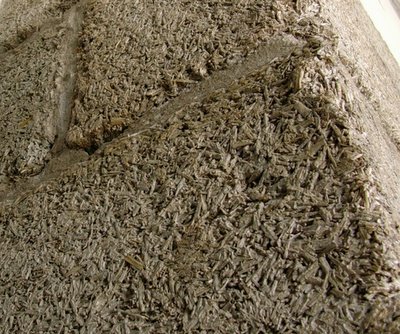
  1. Plant a cannabis seed. Water and allow the plant to grow and produce seed. Plant and water these seeds. Your goal is to grow enough to build a house, you will need about 1 acre to build a 5 roomed home.

    Tyala imbewu ntsangu (ye-cannabis). Nkcenkceshela imbewu uze uyinike ithuba lokuba ikhule ide ikhuphe eyayo imbewu. Uyothi ke uyityale nalembewu uyinkcenkceshele njalo. Injongo yakho kukukhulisa izityalo ezothi zonele ekwakheni indlu, uyakudinga i-acre (malunga nentsimi) enye ukuze wakhe indlu enamagumbi amahlanu.

    Plant 'n hemp saad. Water en laat die plante om te groei en saad te produseer. Plant en water hierdie sade. Jou doel is om te groei genoeg is om 'n huis bou, jy sal ongeveer een aker benodig om' n 5-kamer huis te bou.
  2. Consider the many relevant points presented in the guidelines of Build your house step-by-step.

    Qwalasela yonke imigaqo oyibekelweyo kwincwadana i-Build Your House Step By Step.

    Oorweeg die baie relevante punte in die riglyne van die bou van jou huis stap aangebied-vir-stap.


  3. Start planning where your house will stand. Consider everything about the environment you’ll be building in, like winter and summer sunshine, wind and rain – you don’t want to build on a floodplain, or your house will wash away. Be sure to plan all your water and waste requirements.

    Ceba indawo ozokwakha kuyo indlu yakho. Qwalasela yonke into ngomhlaba lo uzokwakha kuwo indlu yakho, izinto ezinje ngemimoya, ilanga, neemvula zehlobo nobusika, akekho umntu ofuna ukwakha indlu yakhe emgxobhozweni okanye apho iyothi ibe lilifa lezikhukhula khona. Uqiniseke ukuba unamanzi akulungeleyo ukwenza oku.

    Begin met die beplanning, waar jou huis sal staan. Oorweeg dit alles oor die omgewing en jy sal gebou in, soos winter en somer son, wind en reën - jy nie wil bou op 'n vloedvlakte, of jou huis sal wegspoelen nie. Maak seker om te beplan al jou water en afval vereistes voldoen.
  4. Cut the grown cannabis plants down and leave in the field to rhett for a week. The morning dew and natural rotting process will loosen the fibers from the plant.

    a. Process the plant matter by cutting leaves and branches off, then hit small bundles the length of the plant over and upturned rake.
    b. The long fiber parts that remain in your hand are good for weaving rugs and making various other items your skills can accomplish.
    c. The seed can be gathered for more housing.
    d. Gather the small woody bits (the hurd) that have fallen, this waste is what will be used in the construction material.

    Sika / sarha izityalo uzibeke egadini ixesha elingangeveki ukuze zibole. Umbethe wasekuseni nezinye izinto zendalo ezibolisayo ziya kuyikhulula I-fibre ezityalweni.

    a. Yikhawulezise ngohlukanisa intonga zezityalo namagqabi, uhlale uyiharika rhoqo.
    b. Intonga ezi zinothi zincede kwezinye izinto ezifana nokwenza ingubo nezinye izinto onothi uzibonele zona ngokolwazi lwakho.
    c. Imbewu inokuqokelelwe ukwakha ezinye izindlu.
    d. Qokelela imithana ethe yaziwela njengokuba uzoyisebenzisa xa usakha indlu yakho.

    Sny die gegroei hemp/cannabis plante af en in die veld verlaat om rhett vir 'n week. Die oggend-dou en die natuurlike verrotting proses sal die vesel van die plant los te maak.

    a. Proses van die plantmateriaal deur te sny blare en takke af, dan is getref klein bundels die lengte van die plant oor en omgekeerde hark.
    b. Die lang vesel dele wat in jou hand bly is goed vir die matte weef en die maak van verskeie ander items jou vaardighede kan bereik.
    c. Die saad kan vir meer behuising ingesamel word.
    d. Versamel die klein houtagtige bits (die hurd) wat gedaal het, die afval is wat sal in die konstruksie materiaal gebruik kan word.

  5. Wash the hurd, dry it, then wash it again. Be careful not to allow the matter to rot or decay during this process, by turning, airing and allowing the African sun to dry the hurd properly. Now combine in proportions 10:2:3:3 combine the cannabis/ntsangu/dagga Hurd(10), washed river sand 0.5mm(2), hydraulic lime(3) and water(3) to make the mulch (This process may need tweaking depending on your geographic location, humidity, rainfall etc)

    Hlamba ingqokelela yakho, uyomise, uphinde uyihlambe.Ulumkele ukuba lengqokelela ibole kwelithuba, yiguquguqule, uyivumele ibethwe ngumoya uvumele nelanga lase Afrika liyomise lengqokelela. Dibanisa ngokwalo mgaqo 10:2:3:3, dibanisa ke lemvuno yakho yomgquba wentsangu (10) kunye nesanti yasemlanjeni 0.5mm(2), ikalika (3) kunye namanzi (3) ukwenza udaka (Nale into ke iyokuthi ixhomekeke kwindawo leyo ukuyo nemvula zakhona njalo-njalo).

    Was die kudde, droog dit af, dan was dit weer. Wees versigtig om nie toe te laat die aangeleentheid te verrot of verval gedurende hierdie proses, deur die draai, voorlê en laat die Afrika-son om droog die kudde goed. Nou kombineer in verhoudings 10:2:3:3 kombineer die cannabis / ntsangu / dagga Hurd (10), gewaste riviersand 0.5 mm (2), hidrouliese kalk (3) en water (3) aan die deklaag te maak (Hierdie proses kan tweaking nodig, afhangende van jou geografiese ligging, humiditeit, reën, ens)
  6. Now build your house! Ngoku ke yakha indlu yakho! Nou bou jou huis!
  7. Teach others. Fundisa abanye. Onderrig ander.

You can use this “dagga-cement” for making bricks, shutter casting or the proven “pole-and-dagga” method. This last method allows for a sturdy, warm, fireproof and water proof home – built with pride and intuitive engineering, not a ‘uniform box’.

Be sure to consider all aspects of your house design and structural requirements. Although the cannabis-cement will become stronger than steel in time, it is not advised to build over 2 floors high without considering structural implications. With planning this cement can be used to build up to 4 floors high.

The cannabis-cement will dry over a period of a month (depending on the weather). At this point you will be able to add the roof. Seal your home’s walls with lime; lime external walls annually. Decorate your house with masonry to make it unique, and paint with coloured lime as per custom.

Always PLANT A TREE in a place that will provide shade, to commemorate this accomplishment.

Council will plant trees if citizens care for them. Call (021) 689-8938 http://www.trees.org.za/

Assist your family, friends or neighbors with your experience and expertise. Share information and technique; you can uplift yourself and your community.


Jobless youth time bomb

A young person is three times more likely to be unemployed than an adult globally and if the disparity is not dealt with urgently economic protest will worsen.

About 125million young people around the world are living below the poverty line of $1.25 a day, a statistic that paints a bleak future.

The International Labour Organisation revealed these and other shocking statistics at the Youth Employment Summit, hosted by the National Youth Development Agency, in Boksburg,East Rand, yesterday.

Unemployment remains high at 23.9% in South Africa, and 70% of the jobless are between the ages of 15 and 34.

Globally, 200million people are out of work and 75million of them are young people who are either uneducated or lack skills, or are discouraged work-seekers.

The report said between 2007 and 2010, youth unemployment increased by 5.1million.

It also highlighted a concern that, in the same period, about 1000 youth-led protests about unemployment took place in more than 80 countries.

Expelled ANC Youth League president Julius Malema led an economic freedom march of about 20000 unemployed youths from Johannesburg to Pretoria last year.

Vic van Vuuren, a director of the International Labour Organisation's country office in the Southern African Development Community, said swift solutions were needed to address high unemployment in South Africa.

"Creative ways have to be found and agreed upon in the short term in creating jobs for the youth.

"Longer term interventions linked to economic growth, and improved skills development and education, will also be needed for long-term sustainability, but this alone will not be adequate.

"Wage subsidies and allowing space for work-life experiences for the youth, such as internships, need to be debated and resolved," he said.

Thulani Tshefuta, president of the SA Youth Council, called for the government to introduce an alternative system to tendering, which has allowed corrupt officials to be awarded lucrative contracts, turning them into overnight millionaires despite shoddy work.

Thousands exposed to unsafe tap water

It has emerged that drinking water from 14 municipalities in seven provinces is unsafe for human consumption .

The startling findings, contained in the 2012 Blue Drop Report, were released by Water Affairs Minister Edna Molewa yesterday.

"Residents and visitors are hereby warned not to consume the tap water supplied in these towns without some form of acceptable disinfecting treatment at home [boiling or the addition of bleach]," the report says.

The red-flagged municipalities include Ikwezi and Koukamma in the Eastern Cape, and Bushbuckridge, Chief Albert Luthuli, Mkhondo, Msukaligwa and Nkomazi in Mpumalanga.

Also affected are the Free State's Letsemeng, Ngwathe, Nketoane and Phumelela, Thabazimbi in Limpopo, Ngaka Modiri Molema district in North West and Umsobomvu in Northern Cape.

However, Gauteng residents can breathe easier - none of its municipalities has been red-flagged.

Water quality in Ekurhuleni received a quality rating of 98.95% and Johannesburg 98.92%, making the two the best in the country.

Other areas in the top 10 included municipalities in the Western Cape, North West and KwaZulu-Natal.

Mpumalanga and Northern Cape received the lowest rating, 60.9% and 68.2% respectively.

Despite the problems with water quality in certain areas, Molewa said tap water in South Africa "remains the best in the world".

"We are one of only a handful of countries where you can drink water directly from the tap," she said.

Yesterday's warning to residents of the 14 affected municipalities, said Molewa, remained in place until their managers communicated otherwise.

While no official warnings had previously been issued to residents of the red-flagged areas, the report says that in some areas the continuous non-supply of safe water was "of great concern".

"The significance of water safety planning is that it is a safety net to ensure people's lives are not placed at risk when issues of contamination occur," said Molewa.

Of grave concern was the Eastern Cape's Ikwezi and Koukamma municipalities' water, which she singled out as "not at all safe".

The Eastern Cape has over the years been plagued by contaminated water scandals.

At least 131 babies died in 2008 between January and April in the Ukhahlamba District Municipality from "an inexorable causal link between elements of water supply contamination, poor sanitation and hygiene levels, and diarrhoea infections".

Water supplies to Livingstone Hospital in Port Elizabeth were found to have been contaminated with potentially deadly bacteria in September, putting the sick and the elderly, as well as young children, at risk of diarrhoea, urinary tract infections and pneumonia.

The 2012 report says although no Western Cape municipalities have been red-flagged, the department is concerned about the quality of water supplied to residents of Kannaland Local Municipality. While not issuing a tap-water drinking warning, it says drinking water quality management "is not taking place according to regulatory expectations".

In Northern Cape, the report notes that the ability of one municipality to supply safe water continuously was "of great concern".

Leonard Manus, director of water services regulation, said the national department had sampled water from municipalities from January 2011 to December, and risks to the water included high microbiological failure and a lack of commitment to respond to the problems such as water treatment or the need for disinfectants.

Manus said water safety was a priority for the department and it would provide "full support and assistance" to the hot spots.

No specific deadlines have been given for the municipalities to clean their water, but Manus said: "We will work with the teams and give them all the support, but we will also put pressure on them to sort it out as soon as possible."

He warned that the department would take action against municipalities that did not cooperate, including taking them to court. "We will take the municipalities and the accounting officers [municipal managers] to court for neglecting to comply with legislation."

The department is currently embroiled in legal action involving the Madibeng Municipality in North West. Various officials in the municipality have since 2010 been facing two separate sets of criminal charges for discharging unpurified sewage into the Crocodile River.

Madibeng is but one of the 47% of South Africa's waste-water treatment works that received a zero Green Drop score in 2009.

Manus said R220-million was channelled through the Accelerated Community Infrastructure Programme last year alone to address water-related issues.

This excluded funds from the Regional Grant for Bulk Infrastructure. He said these amounts would increase this year and would be announced when Molewa delivers her budget speech on May 16.

Molewa said particular mention needed to be made of the Victor Kanye Local Municipality, formerly Delmas, and the Thembisile Local Municipality, both in Mpumalanga, for scores which had "astonishingly" improved as a result of changes in the management approach.

She said it was not just the sample quality of the water that was factored into how an area was rated, but also the ability for water safety planning.

Sapa reports that nine people were arrested yesterday during a protest in Lilydale in the Bushbuckridge municipality over the poor quality of water. "At 6am residents went on the rampage. They burnt municipal offices and a Caterpillar grader," said Lieutenant-Colonel Leonard Hlathi.


Monday, May 7, 2012

Heroic father killed in fire

A Cape Flats father made the ultimate sacrifice when he tried to save his family from a shack fire.

The last thing his neighbour remembers about Andile Mnyamana, 40, is how he tried to go back into the burning structure to rescue his stepdaughter and wife.

He managed to drag his wife Thembeka Mkiva, 33 to safety. But sadly, he could not get to his 15-year-old stepdaughter in time.

Yamkela Mkiva died in the blaze.

A neighbour in TR Section, Khayelitsha, recalls seeing Andile’s back blistered and his skin coming off his bones.

In the end, his injuries were too severe and he died hours later in hospital.

His neighbour, Thobile Nelani, 48, says when he woke up in the early hours of Sunday morning, he heard someone shout: “Help, there’s a fire!”

“When I got out, I saw the flames and called other people to come help us,” he explains.

“Andile’s wife was still sleeping at that time.

“But he managed to drag her out in time but when he went back, he got burnt but he didn’t care, he was very persistent but he finally gave in.

“We managed to put the fire out and he was taken to the hospital with his wife.”

Disgruntled community leader Xolisani Maqonga tells the Daily Voice the firefighters didn’t pitch up.

“The people had to help themselves. They dug up sand to put the fire out,” he says.

“They called fire rescue and not even one engine came to TR section.”

He blames the Human Settlement Department for not moving people to the new area Nuwe Begin.

“We had been promised to move a long time ago and every time we are supposed to the process is delayed,” he says.

“And now people are dying because the department is not taking note of us.

“There are no street names in this clustered area, maybe the fire engines couldn’t find a way of driving in here.”

Councillor at the TR Section Luvuyo Hebe says it gets difficult for the locals to extinguish the fire because there is no water.

“They have to walk about 500 metres to get water, that is why they thought of using sand, unfortunately people got hurt in this incident,” Hebe tells the Daily Voice.

“It’s really cold here and people have to use paraffin heaters and that is what caused the fire here.”

Captain FC van Wyk says an inquest docket has been opened and they are investigating the cause of fire.

*This article was published in the Daily Voice

Abbeyshrule home wins national Green award

A house in Longford designed by Winkens Architecture has won the Green Residential Building Award at the annual Green Awards which were held in Dublin last week. 

The prize was awarded by Ireland’s leading environmental experts for designing a traditional long house, which in this case comprised of a two-storey home made of timber post and beam with hemp lime infill to ensure an energy efficient, sustainable home for two adults and five children to live in, based in Abbeyshrule, Co Longford.

The brief in respect of the house, called for a very energy-efficient, sustainable home suitable for two adults and five children. Based on a traditional long house, the design is modernised to maximise solar gain and the two-storey build is timber post and beam construction with hemp lime infill to passive house standard.

According to the judging panel, “This design is based on a traditional long house and the building is orientated to benefit from passive solar gains and is super insulated to Passive House standards”.

Other winners on the night included the Department of Education & Skills which scooped two awards, the Overall Green Award and the Green Building Award for one of its new school buildings, Coláiste Choilm, in Offaly. University College Cork won the Green School or College Award and the Green Travel Initiatives Award while Ecocem won the Green SME Award and the Green Waste to Business Resource Award and Nemos Horticultural Ltd won the Green Innovation Award and the Green Product Award. Children’s University Hospital, Temple Street, won the Green Leader award and the Green Healthcare Award.

Service delivery protest in Cape Town

Residents of Delft, in Cape Town, blocked a road with burning tyres on Monday morning in a protest against poor service delivery, Western Cape police said.

Warrant Officer November Filander said about 70 people had been protesting on Symphony Road since 7.30am. – Sapa

42 left in the cold

Forty-two people who had been living in a 4mx5m shack in Mfuleni are sleeping outside after their dwelling was dismantled by the City of Cape Town.

The city said the land needed to be protected as it was designated for other people.

“We knew they were coming… they broke down the shack and took our materials,” said Bongisisa Maqungo.

He said that when they moved on to the land the people in the area told them the land was to be used for a housing project.

He said the city’s Anti-Land Invasion Unit had arrived on Friday to take photographs.

They arrived again at around 10am on Saturday and evicted the families.

“They didn’t show us anything, no order to say why they were demolishing our structure,” said Maqungo.

The group said they had been evicted from the same place seven times since they moved in on March 17.

They said they had slept outside in the cold on Saturday night.

“We slept here just like this – and we are in danger because the thugs, they can come and take our things,” said Maqungo.

He said they were slowly collecting materials from friends to rebuild.

They claim members of the unit broke their television and a wash bucket and that they took a cupboard.

Ernest Sonnenberg, the city’s human settlements mayoral committee (Mayco) member, said the city would be sticking to its guns on the matter, saying it needed to protect its land.

He said the land was already allocated for houses. “We cannot justify it when people invade land,” he said.

“You cannot claim that the land belongs to you because you come from Mfuleni when it is allocated to someone else.”

He said the allegations made against the unit would have to be investigated.

Sonnenberg said if they were evicted without a court order they should approach one of the legal aid clinics at Stellenbosch University, UWC or UCT.

The Cape Argus reported on Friday on the shack, which was home to eight men, 11 women, 15 boys and eight girls. They had previously been evicted from a backyard in Bhadeni, Mfuleni.

One of the women gave birth to a girl on Thursday when she went to the doctor with what she thought was flu.

The walls of the shack were made out of zinc, broken cupboards and plastic. It had no windows, doors, electricity, water or ablutions.

The occupants had to go to their neighbours for water to drink, cook and bath, and to use the toilet.

Bruce Oom, spokesman for Human Settlements MEC Bonginkosi Madikizela, told the Cape Argus last week that the department was aware of the backyarders’ plight.

“There are many families who are in a desperate situation but unfortunately we don’t have resources or legislation to accommodate them. There are hundreds and thousands of people waiting for housing opportunities in the Western Cape. We cannot provide temporary housing.

“We can only build about 13,000 houses a year, and about 12,000 service sites (a piece of property with basic services) where people can build their own structures on the site.”

Friday, May 4, 2012

42 live in a little shack of horrors

Forty-two people staying in a 4mx5m shack in Mfuleni have the weekend to find a new home.

If they don’t, they will be evicted from their barely enclosed home made of zinc, broken cupboards and plastic.

Daniswa Matiso, 28, and her five-year-old son share the room with 18 other adults and 23 children. They have until Monday to find alternative accommodation or face eviction.

“We don’t know where we’ll go. We’ve been to city officials and they just send us back and forth between themselves, telling us they can’t help us,” Matiso said.

The group consists of eight men, 11 women, 15 boys and eight girls. One of the women was pregnant and gave birth to a girl on Thursday.

Matiso said: “We all have to live together, we have no choice.”

The shack has no windows. Zinc and broken cupboards serve as walls, and the roof is made largely of plastic.

“As you can see, water is coming in right now. When it rains we don’t sleep at all. We stand on our feet, and we take the children and put them under whichever sheltered spot we can find.”

The group was evicted from the backyards of homes in Phase One, Mfuleni, in January. They ended up in the tiny shack in March.

Matiso said: “We were living in backyards in phase One, in Bhadeni. Our landlords said they needed us out in January because their houses had been earmarked for renovations.”

She said not even their ward councillor, Themba Honono, could assist.

“He told us he’s not ward councillor for shack dwellers. He said he doesn’t even know us,” she said.

Honono said: “They know very well that they aren’t supposed to be on that land. They occupy the land, then law enforcement demolishes their homes, and then only do they come to me.”

The small structure does not have electricity, water, or toilets. The group makes a fire on the sandy floor to keep warm and boil water for tea.

“We go to the surrounding houses to ask for water to drink, cook, and bath. We go to the same houses during the day to use the toilet.

“We can’t do that at night so we use the grass patch behind the shack as a toilet and clean it up the next day,” said Thumeka Sitawuti, 24.

The unemployed mother said their living conditions made it difficult for people like her to go job hunting.

Nolubabalo Boso, 30, a mother of two, said it was tough to raise her children like this.

“We can’t live like this. We can’t even wash properly here. We have to ask the men to go to the neighbours or the nearest tavern when we want to wash,” Boso said.

“We sleep with one eye open, anything could happen. Everything we do is done looking over our shoulders. Thugs eavesdrop when we’re washing.”

Matiso said: “We can’t even control the children properly, there are too many of them. It’s often very difficult to keep tabs on who’s home and who isn’t.”

Sitawuti said their property was also under threat. “We get trouble from drunk people from shebeens stumbling into our space, and we have to deal with that too. The children are always getting sick. We also have to deal with theft. A plastic sail, which cost R300, was given to us on loan. We hadn’t even finished paying it off, and it was stripped down.”

Bongisisa Maqungo, 22, worries about the children. “Some of these children don’t go to school. They stay here the whole time and see everything that goes on here. We don’t have a door or gate to lock. Anyone can come in here. These children have seen their moms scream in horror when thugs accost them,” he said.

“When thieves come here they don’t do it politely, they are violent. This is what these children grow up watching almost every day.”

Bruce Oom, spokesman for Human Settlements MEC Bonginkosi Madikizela, said the department was aware of the backyarders’ plight.

“There are many families who are in a desperate situation but unfortunately we don’t have resources or legislation to accommodate them,” Oom said. “There are hundreds and thousands of people waiting for housing opportunities in the Western Cape. We cannot provide temporary housing. We can only build about 13 000 houses a year, and about 12 000 service sites (a piece of property with basic services) where people can build their own structures on the site.”

Ernest Sonnenberg, the city’s human settlements mayoral committee (Mayco) member, suggested that the group contact Social Development.

“We cannot prioritise illegal land invaders over those who are on the housing database. There are 350 000 people on the city’s housing database and some have been waiting on it for many years.

“It would be highly prejudicial and procedurally unfair to prioritise the needs of illegal land invaders over those of legitimate beneficiaries.”

Sonnenberg said if they were evicted without a court order they should approach one of the legal aid clinics at Stellenbosch University, UWC or UCT.