Thursday, June 7, 2012

SA's economy cleans up with green jobs for greenhorns

As SA focuses on pro-poor growth and job creation, tens of thousands of new posts in the booming green economy are being filled by young job-seekers.

Trumpeting the job creation successes of her department’s green sector projects at a World Environment Day function in the Free State on Tuesday, Environmental Affairs Minister Edna Molewa said South Africa welcomed the worldwide shift towards green economies, since the country was endowed with a wealth of biodiversity. 

This gives the country a competitive edge, she told the function, which was held under the banner of the global theme for this year: “Green Economy: Does It Include You?”

Tens of thousands of green jobs have already been created, but the potential for even more job opportunities was huge, Molewa said, adding that her department had started several projects around the country to bring investment to rural areas, which would otherwise hold no promise for growth. 

And the government’s budget of R7.7-billion for environmental programmes is just the tip of the iceberg, she said.

Green job opportunities

As many as 27,000 new job opportunities had been created in the last financial year, with 10,400 being full-time.

The R800-million boost for the Green Fund that the treasury recently announced should allow for the creation of a further 63 000 jobs in this financial year, she said. To aid this, green hubs were being created around the country to ensure decentralised growth where it was most needed.

This is in line with the Green Economy Accord, which the government recently entered.

Lagging water infrastructure is holding Africa back

  This seeks to create 300,000 jobs in the green economy by 2020, she said. With a dearth of skilled workers, there would have to be a huge focus on education and formal training at higher learning institutions, she said.

“Tomorrow belongs to those who prepare themselves today,” she said.

Complementing the economy
Christelle Terreblanche, of South Africa’s national environmental agency Indalo Yethu, said the department’s plans were a chance to “ensure there is no conflict between economic and environmental health”. 

Rather than economic development happening to the detriment of the environment, they could be complementary, she said.

Indalo Yethu has created 3,000 job opportunities in ten rural towns by restoring the urban environment and getting rid of harmful waste, she said. 

Nick Nuttall, spokesperson for the United Nations Environment Programme (UNEP), recently said that a small investment into adaptation and the green economy would save on the huge costs of managing the fallout in the future. By making green growth a solid basis of their economic development, countries could create jobs as well as sustaining their future, he said.

A recent report by UNEP, Towards a Green Economy: Pathways to Sustainable Development and Poverty Eradication, argued that an investment of 2% of global GDP in innovative technology and policies now would “keep humanity’s footprint within planetary boundaries”.

‘Paradigm shift’
Without this, organisations like the World Wide Fund for Nature (WWF) have warned that humanity’s footprint could be the equivalent of three planets by 2050.    

The UN’s secretary-general, Ban Ki-moon, said this year’s theme “underscores the need for everyone to play their part in keeping humankind’s ecological footprint within planetary boundaries”. 

This requires a “paradigm shift towards a more sustainable world”, he said. 

UNEP defines the Green Economy as one that results in “improved human well-being and social equity, while significantly reducing environmental risks and ecological scarcity. In its simplest expression, a green economy can be thought of as one which is low carbon, resource efficient and socially inclusive.”

- M&G

Wednesday, June 6, 2012

Service protests hit WCape hardest

The Western Cape was the most protest-afflicted province in 2012, an independent local government and data intelligence organisation said on Tuesday.

“The Free State takes second place while the North West and Eastern Cape follow narrowly in a joint third position,” said Municipal IQ economist Karen Heese. Protest activity in Gauteng had dropped.

“A policing solution to contain violence and destruction of property is certainly relevant, but it is important for local government, especially councillors, to acknowledge protests without justifying violence,” she said.

Councillors had to be seen to be acting on the valid grievances of protesters.

Heese said the highest number of monthly protests ever recorded on its Hotspots Monitor was registered in May.

“Protests in May were as diverse as they were common. From demands for housing in Cape Town to a cluster of North West protests for tarred roads, the worrying theme was that they were violent and demonstrated high levels of frustration.”

Protest action appeared to be the increasingly accepted way for communities to air grievances, she said.

“These assessments will highlight both successes and failures in the work of municipalities and in so doing, assist to improve local government delivery.” 

- Sapa

Tuesday, June 5, 2012

DA Housing: Better Together?


Developing sustainable policies, and implementing them, is the biggest challenge facing any government. 

This is particularly the case in developing countries with limited resources, facing huge demands.

Housing policy is the most complex arena of all.

The big question is: what role should the state play in housing delivery? 

What is affordable, and sustainable? What role should individuals and communities play?

Should the available budget be distributed broadly, in an attempt to deal with the scale of the need? Or should a smaller number of beneficiaries receive a higher subsidy, while others wait their turn, sometimes for decades?

Every political party has grappled with these questions in the 18 years of South Africa’s democracy.

Finding answers has become increasingly urgent, given the enormous demographic shifts, across the sub-continent, leading to the mushrooming of un-serviced informal settlements in all urban centres. Despite the “delivery” of some three million “RDP” houses since 1994, the backlog is now greater than ever, and growing.

In this most complex of debates, there is an emerging consensus on some key issues. Firstly, everyone agrees that the reason people move to cities is to secure an income, not a house. Indeed, many people leave adequate housing behind in rural areas to move to shacks in urban settlements, as they search for a job and services, ranging from electricity to adequate health care. 

In fact, there is near unanimity internationally that if developing countries can solve the jobs crisis, the housing crisis will increasingly resolve itself. That is one reason why the key focus of government policy must be to create a context for rapid economic growth and job creation (rather than entrenching dependency on the state). All political parties in South Africa agree on this, but differ on how best to achieve job-creating growth. 

While this debate, correctly, becomes the focus of public discourse, there is growing convergence in the field of housing policy – an important and welcome development.

In line with developing countries world-wide, the shift in South Africa’s housing policy has been led by the national department of Human Settlements over the past five years. The new approach is based on the insight, articulated by Minister Tokyo Sexwale, that our past approach is proving “totally unsustainable”. Those lucky enough to receive a house, benefit from a state subsidy of approximately R100,000 per house, while on the other hand, increasing numbers of urban migrants live in settlements without services. Whereas some receive a lot, many more get nothing. Given the available budget allocations, and the regulatory environment, most shack-dwellers will wait more than 30 years for a house. And ironically, many who are fortunate enough to get a house will end up back in shacks. Because their primary need is a source of income, many move out of their houses, and rent them or sell them (at a massive discount) to people who do not qualify for a state-subsidised house in the first place, and who could afford to access housing through the market. This unintended consequence of the “down-market” raiding of state-subsidised houses is enormous. In one Western Cape housing development, for example, 80% of beneficiaries moved back into shacks within nine months of receiving their new homes. 

While it may be argued that letting or selling a state-susidised house does indeed enable families to get what they most need – a source of income – this is not a particularly cost effective way of achieving this (to put it mildly) and merely serves to entrench dependency on the state, while aggravating the problem of homelessness amongst the poor (which is the problem the policy was designed to resolve in the first place!).

After facing these anomalies, the national department of Human Settlements launched a new approach, summarised in a policy document released by Minister Tokyo Sexwale in 2010:

“The current housing development approach with a focus on the provision of state subsidised houses will not be able to meet the current and future backlog and there are questions related to its financial sustainability. We need to diversify our approach to include alternative development and delivery strategies, methodologies and products including upgrading of informal settlements, increasing rental stock, and promoting and improving access to housing opportunities in the ‘gap’ market. The core subsidised housing product must be but one of many approaches.”

This policy shift is based on the point of departure that housing solutions in poor communities must be the product of a partnership between the state, individuals and communities. As a result the subsidy regime has been adjusted to encourage the upgrading of existing informal settlements, developing site-and-service schemes, and to make bank loans more affordable. There is also a new focus on affordable rental housing. The new policy and subsidy approach is designed to address the myriad demands for state assistance in housing, while encouraging the active participation of the people themselves in securing their accommodation.

Minister Sexwale summed up the new philosophy recently when he said: “I’m often frowned upon when I say this, but free housing can’t and won’t go on forever in this country. I urge people to capacitate themselves in order to build their own houses.” 

This statement has been backed up by President Jacob Zuma who in 2010 set a national target of delivering 400,000 serviced sites, a goal that requires a substantial shift away from delivering “houses”, towards the delivery of land and services instead. This is the basis for what is known as “incremental housing development” which benefits far more people and is more sustainable.

If the DA wanted to score political points, we could pounce on the revised national housing policy. We could claim that the government had abandoned the poor by scaling down the hand-out of free houses. But this would be disingenuous. In fact we believe that housing delivery should be lifted out of the terrain of party political point-scoring, because the policy imperatives are so clear, and the escalating need so great. We have to use the government’s available resources to offer a range of options, to provide basic services to the millions who need them, to support and partner communities in upgrading their dwellings and communities – and to retain the delivery of houses to those who are prepared to wait. We acknowledge that trade-offs are necessary.

While the DA recognises the factors behind the national policy shift, ironically many ANC public representatives and activists do not. In fact, many seem entirely unaware of the developments in housing policy over the past five years. While the DA is promoting co-operative governance in the field of housing delivery, in line with the new national policy framework, many ANC officials are seeking to score political points out of their own party’s policy shift, by blaming the DA for it! This reflects the extent of confusion, incoherence and division within the ruling party.

In the year of Mangaung, the ANC in general (and Tokyo Sexwale in particular) are not being particularly pro-active in clarifying the confusion. Indeed, they seem to be doing all they can to avoid explaining their new policy direction to their own followers, in case they face a backlash! 

They should not be so coy. It is very encouraging to experience the enthusiasm with which some communities are welcoming the broader range of options available to support them improving their lives.

It was my privilege in recent weeks to visit Langrug, an informal settlement near Franschhoek, where the community is actively partnering the local authority and a range of other organisations, to upgrade their shacks and infrastructure. I believe this partnership could provide a blueprint for upgrading informal settlements in the rest of South Africa. The Langrug community started by facing a stark reality: 72 people shared a single tap and 49 people a toilet. The demand for housing was growing at such a rate that families faced a 72 year-wait for access to an RDP house. So they opted for alternative solutions.

They established a partnership with the Stellenbosch Municipality, and community organisations associated with the South African Shack Dwellers International Alliance (SDI); an innovative NGO called the Community Organisation Resource Centre (CORC); and the Informal Settlements Network (ISN).

This partnership is one of the first of its kind of which I have become aware. They have a long way to go, but their progress is encouraging. Residents have conducted an enumeration survey to determine the community’s needs, families have co-operated in the relocation required to construct and managed storm-water and grey-water run-off channels. The community has participated in re-designing the settlement in a block formation to maximise security and enable services to be "retro-fitted” while retaining current densities. In turn the local authority is playing an active planning role and allocating finances necessary for services and incremental upgrading. Located in a spectacular setting, Langrug has created a vision of its future as a stable, sustainable Franschhoek, and I have no doubt they will achieve this, in significant measure through the community’s participation and efforts. 

They are active agents of change. They are owning their future. They refuse to remain dependent and passive victims of circumstances. They symbolise our dream of sustainable development in South Africa. Politicians from all parties owe such communities the dignity and respect they deserve, rather than turning their efforts into the political footballs of electoral contests.

Sincerely yours,
Helen Zille

Monday, June 4, 2012

City launches shack fire awareness drive

In a effort to prevent deaths caused by shack fires, which are a particular danger in winter when people living in unelectrified shacks use paraffin heaters for warmth, the City of Cape Town launched the ‘Winter Wise, your Safety First’ safety awareness campaign in Atlantis on Friday.

The campaign, which kicked off in the settlement of Witsands, also highlights the danger of trying to prepare food on paraffin stoves, especially after returning home from the shebeen.

Purchasing a small fire extinguisher and having an escape plan in case of fire were elements of the campaign.

At the launch Mayoral Committee Member for Safety and Security, Jean Pierre Smith, told the 200 gathered residents that the City’s efforts to reduce deaths caused by shack fires in informal settlements were bearing fruit as evidenced in the reduction of the fatality rate.

In 2009 the fire fatality rate for every 100,000 residents was 7.9%. This was reduced to 4.3% in 2010.

“That’s a substantial reduction despite having more informal settlements,” said Smith.

He said while deaths caused by shack fires in informal settlement have decreased, it was still worrisome that the City’s efforts to reduce shack fires were not as effective for backyard dwellings as they were not accessible to fire fighters.

“Fewer people are dying in shack fires in informal settlements but still, too many people are dying in backyard structures,” he said.

He said the reduction of the fatality rate in informal settlement shack fires was partly due to the City adding an extra 35 fire stations and purchasing 20 more fire engines, as well as redeveloping the fire stations that were dysfunctional.

Additionally R200 million worth of fire fighting equipment had been rolled out since 2006 and this financial year, R500m was on the budget to buy fire extinguishers to be distributed in the informal settlements.

“From the service side we’re able to reduce fire fatality rate…this year fires in informal settlements are fewer. Our education measures are yielding results and we want to focus more on education awareness,” he said.

The City has also started rearranging compacted shacks in informal settlements to create space for roads to make the informal settlements easily accessible.

“The problem of re-blocking is to convince the residents to allow us (City) do it,” he said.

Catholic Welfare and Development (CWD) crisis relief programme manager Nontsikelelo Dwangu warned residents of the dangers of connecting electricity illegally and urged them to be responsible when using appliances as the most of the people who suffered during shack fires were children, and people living with disabilities.

“Parents need to ensure that children are being supervised at all times. It’s going to be a long winter holiday. Children are going to be home for a long time. Prevention is better than cure,” said Phumzile Nteyi a spokesperson for Paraffin Safety Southern Africa.

Mob mission: Beat to kill

Nyanga residents are taking the law into their own hands, hunting down youngsters they claim are terrorising their community.

This comes as acts of vigilante necklacing in Khayelitsha and surrounding areas have claimed the lives of eight people so far this year.

Every evening for the past week, a group of men have gone door to door on the streets of Hlazo Village, around the Newlands hostels, searching for young men they accuse of mugging them on their way to work.

The men then beat the youngsters and demolish or sometimes burn their shacks.

Residents say the police have failed them.

“That police station might as well close down. They (police) don’t exist here,” said one resident who preferred not to be named.

“We beat to kill. That’s it, there’s no other way. We don’t want them anywhere here. If they don’t go back to the rural areas, we kill them.”

He said that if they didn’t find the youngsters at home, their families had to account for them because they were protecting them.

“As a parent, you can’t not know where your child is,” he said.

He said beating the culprits to discipline them was not an option.

“If we don’t kill them, they will come back for us with their thug mates. We burn their shacks because we don’t want them to have a place to stay here. We can’t have them influencing the younger ones,” he said.

Young males known to be involved in theft have fled the area. Residents say some of the youngsters have been badly beaten and admitted to hospital, while there are unconfirmed reports of at least one death.

On Friday, one of the youngsters left Cape Town for the Eastern Cape because of the threats made to his family.

“I heard they (the community) don’t even want to beat me. They just want to put a tyre around my neck and set me alight,” he told the Cape Argus.

He was lucky not to have been in his shack when residents arrived with knobkieries, knives and axes last Monday morning.

“They got to my place just before 3am on Monday. They found two of my friends and beat them up. The guy who lives in the shack next door tells me they were looking for me and a DVD player that a friend had asked me to keep for him. I’m scared. I’m also very worried about my family.

“They’re just hitting anyone now. Yes, I’m a thug, I’ve been on tik since 2005. I steal, but I don’t steal from people in my own community. I do my stuff outside the community. I don’t mug my own people.”

He said it was difficult for him to go to the police.

“I have to walk past the residents who are after me when going to the police station. I’m just going to go home and see when I come back whether or not they kill me,” he said.

Families of these youngsters said they fear for their and the young men’s lives.

Theophilus Mangoli, councillor for Ward 37, said he was aware of the problem and had intervened through the police. “The community is very angry. The crime rate is too high and it’s mostly because of these young ones, so I understand their patrols. But they have to be co-ordinated and there has to be accountability.”

Mangoli said he had a meeting with community leaders, police and patrollers at the police station on Thursday. “(Today) we will have another meeting where we will map the way forward regarding the patrols.”

Although he supports the patrols, he does not condone the beatings and burning down of shacks.

Mangoli said many of the children stole to support their drug habits.

“A good plan would be to close down the drug dens in the community. The community is well aware of where these drug dens are,” said Mangoli. “They live here, they see what happens. These youngsters get arrested today and they’re out within the next three days. I can’t dispute (the community) saying that the police don’t do their jobs, but not all police are like that.”

Relatives of the young criminals say they also feel as if they are under attack.

A woman, whose brother is the young man who left for the Eastern Cape on Friday, said she felt like a prisoner in her own home.

“I didn’t even sleep at home on Wednesday night. I went to a friend’s place just to get a little peace of mind.”

A woman who has also sent her son back to the Eastern Cape said she was scared for her life.

“They said they will do to me what they were going to do to him if they find out that I’m hiding him. They said they don’t even want to see a picture of him, I must burn it,” she said.

“I’m not protecting my son, he is a thug. He steals people’s phones. I’m always telling him to return them.

“The police don’t arrest these children, and if they do they are released the very next day.”

Residents seem torn about the mob justice in the area.

One man said the residents were doing the right thing.

“These boys harass us every morning on our way to work. No one is safe. In the middle of the night, sometimes, you hear screams of women being attacked. The police can’t do anything; the community is right in dealing with them,” he said.

One woman understood residents’ frustration, but said police needed to step in.

“The police don’t do their jobs. If they did none of this would be happening. These youngsters are causing trouble, but I don’t agree with the way they’re being beaten,” she said.

Police could not confirm the number of attacks, deaths or people hospitalised, but said they were aware of “acts of vigilantism” in Nyanga, Gugulethu and Khayelitsha.

Police spokesman Lieutenant- Colonel Andre Traut said communities would not be allowed to take the law into their own hands.

“Those who make themselves responsible for punishing members of the community become criminals themselves. They will be dealt with accordingly,” said Traut.

Stop worshipping leaders, they're just public servants

Human Settlements Minister Tokyo Sexwale has raised an important question that South Africans are afraid to confront, let alone acknowledge.

He asked why we are so afraid of our elected officials while claiming to be in a democracy.

In his address to a church in Mthatha, Eastern Cape, yesterday, Sexwale said South Africans should do themselves a big favour and lose their "fear" if they want to see changes in their country.

"We put people in authority and we get terrified of them. You start to fear an MEC, a mayor, a minister; you fear premiers, you fear the president . we put people in power then we become afraid of them," he said.

Though Sexwale might have been on a campaign trail to win the hearts of Eastern Cape voters, his question goes to the heart of some of the problems we face as a country.

The "special" treatment we give our elected leaders has given them a false sense that they are more important than those who elected them to office.

Attend any government function and see the "master and servant" culture that has taken root.

It is embarrassing to see our mothers and fathers bow their head in deference when they are in the presence of a politician.

"Fear must not grip this land. South Africa cannot be reduced to a country of [fear]; we fear to speak now," Sexwale said.

Though respect should be accorded to every individual, irrespective of his or her social standing, our politicians, it seems, are getting more than they deserve.

We should speak out when we see corruption. We should speak out when our taxes are plundered.

Our culture calls for respect of elders, but that should not stop us asking questions of, and confronting, those elected to top positions if they fail us.

Let us join Sexwale and break our collective fear of politicians.

Speak out, South Africa, and take control of your destiny.

Service delivery protest in Gugulethu

About 1000 residents of Gugulethu, Cape Town, protested on Monday morning against poor service delivery, Western Cape police said.

Captain Frederick van Wyk said residents blocked three roads between Gugulethu and Nyanga from 4am with broken lamp poles, garbage and bricks.

He said they were unhappy with electricity problems and their local councillor, whose name was not immediately available.

A person was arrested for public violence.

Tear gas, rubber bullets and a water cannon were used to disperse the protesters.

Van Wyk said heavy mist was making it difficult to properly police the crowd. 

- Sapa

Sunday, June 3, 2012

Tokyo Sexwale accused of conflict of interest

Human Settlements Minister Tokyo Sexwale has a stake in a company that financed a BEE deal which led to the development of an apartment block now used to house government ministers.

The Sunday Times has established that the Department of Public Works paid R20-million for 16 apartments and two penthouses in Muizenberg, Cape Town.

The penthouses at Sunrise Villas, valued at R7.8-million, have eight bedrooms, a jacuzzi, private elevators and braai areas on a combined entertainment deck overlooking False Bay.

"The penthouses are used as transit units for ministers and deputy ministers while their official residences are being upgraded. For security reasons, we are unable to disclose which ministers are currently being accommodated there," said Mandisa Fatyela-Lindie, Director-General of the Department of Public Works.

Sexwale's spokesman, Xolani Xundu, said that Sunrise Villas posed no conflict of interest because, since returning to public office, Sexwale's business interests were managed by a "blind trust".

But DA shadow minister of public works Anchen Dreyer said the link hinted at "government doing business with government, which is fundamentally wrong".

The Department of Public Works confirmed this week that an agreement to buy the properties was entered into with MSP Developers in 2010.

MSP Developers is 50%-owned by One Vision Investments, a broad-based BEE initiative financed by Mvelaphanda Holdings, the business empire founded by Sexwale.

Dreyer is now asking questions in parliament about Sunrise Villas. "It raises a definite conflict of interest. Government ministers or officials in the public service should not be doing business with the state as a matter of principle," she said.

Xundu rubbished the notion, saying Sexwale was "no longer involved in the day-to-day running of Mvelaphanda".

A blind trust involves placing assets under the control of an independent person or agency without the asset owner knowing how they are managed.

Said Dreyer: "The so-called blind trust doesn't seem to be so blind after all. Does the trust just happen to be co-developers of a property where the government just happens to buy apartments? Does the government really expect the voters to believe this fairy story? Who is the guide dog of this blind trust?"

The use of blind trusts by politicians made headlines two years ago after one of Sexwale's companies won a tender for security at King Shaka International Airport. Sexwale flaunted his business savvy in the 2005 hit show The Apprentice as the mastermind behind Mvelaphanda Holdings.

He relinquished direct control when he returned to government as minister of human settlements in 2009. He declared his stake in Mvelaphanda before parliament in 2010, saying it was "controlled by a portfolio manager".

Conflicts of interest were raised in parliament last Tuesday. DA parliamentary leader Lindiwe Mazibuko asked if the ANC would benefit from an R840-billion infrastructure programme through its investment arm, Chancellor House. President Jacob Zuma replied that to exclude firms with political connections would surely mean "discriminating simply because they are politicians".

MSP managing director John Coetzee said their business was transparent. "The development is sold to the open market by various estate agents and is open to all purchasers," he said.

MSP's rentals agent at Sunrise Villas, Mark Assure, said the penthouses were last used when parliament opened in February.

"Most residents here are unaware of politicians coming and going. There isn't much interaction really, as the penthouses also have their own private elevator with a code-system," he said.

Saturday, June 2, 2012

Carbon-Negative Cannabrick Buildings

The demand for more environmentally-friendly building materials and techniques is at an all-time high and will, in all likelihood, only continue to increase. Since buildings account for 38% of the total carbon dioxide emissions in the U.S., it’s obviously time for us to take a step back and rethink the way our buildings affect the environment. Among the new, greener building materials and techniques is a material that’s not so much new as it is rethought: hemp.
hemcrete environmentally friendly building material
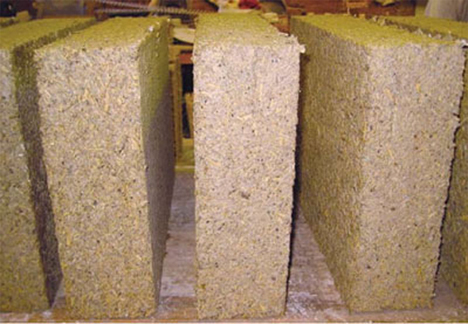
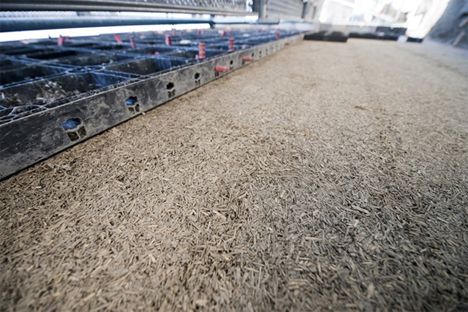
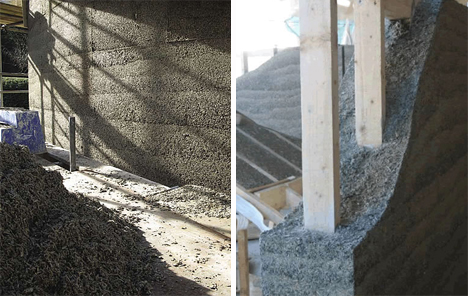
We have, of course, known about and used hemp for thousands of years. It’s one of the oldest known cultivated crops, and it can be used for everything from textiles to paper to food and beyond. It’s also extremely renewable, with crops maturing after just 14 weeks. And now, you can make buildings out of it. Tradical Hemcrete is a fascinating material designed by UK company Lhoist, made of hemp held together with a lime-based binder. It’s durable, strong, just as easy to use as conventional building materials, and actually good for the environment.
hemcrete carbon negative building material
Not only is Hemcrete carbon neutral; it’s actually carbon negative. CO2 from the atmosphere is trapped in the hemp plants as they grow, and remains there after the plants are harvested. During their grow cycle, the plants also release oxygen into the atmosphere. Even when combined with the lime binder, the overall product takes more CO2 out of the atmosphere than it puts into it.
hemcrete renewable building material
As if that weren’t enough to make the construction industry take notice, Hemcrete is also recyclable. When a Hemcrete building is torn down, the remnants can amazingly be used as fertilizer. And this isn’t one of those great ideas that’s completely impractical to use, either – the material is fireproof, waterproof, a great insulator, and resistant to rotting (as long as it’s above ground), making it a viable choice for any number of construction applications.
hemcrete hemp building material
Unfortunately, because the species of hemp used in Hemcrete is illegal to grow in the U.S., it’s not yet widely used here. The construction industry is feeling increasing pressure to green up their practices, though, and Hemcrete is finally available in the U.S., though not without a significant cost. Hopefully this will change as the government seeks to open up new avenues to climate change.

Friday, June 1, 2012

Tyres burnt over lack of houses

About 100 Delft residents who are living in temporary structures while waiting for the government to provide them with RDP houses, blocked Symphony Way Road by burning tyres in a protest over their living conditions on Wednesday.

This demonstration was the latest in a series of such protests in the area. Two weeks ago, residents burnt tyres on the same road for the same reason.

The residents also accuse the Housing Development Agency (HDA) of illegally selling houses and say they need the security of knowing that RDP houses will definitely be built for them.

Singing and carrying placards while overturning rubbish bins, the residents marched to the offices of the HDA to demand answers.

Masonwabe Gubu, 56, said they had been protesting since Monday and on Tuesday night, during a community meeting, the residents decided to burn tyres to show their anger.

He said that residents living in the Temporary Relocation Areas (TRAs) had enough of staying there, claiming they were told they would live in the TRA temporarily, but believe that the city 
of Cape Town and the provincial government have no plans to allocate RDP houses to them.

He said the reason the community decided to burn tyres was because the HDA kept postponing scheduled meetings.

Resident Abongile Chama, 39, who has been living in the TRA for the last four years, said she and her neighbours deserved to be allocated a house from the new homes being built in Delft and the surrounding areas.

“When we first came here, the government told us we would be moved soon to RDP houses,” said Chama. She said she knew of people who had bought houses who were connected to HDA officials.

The area’s ward councillor, Khayalethu Makeleni, is on record as saying that he also has proof that people have been sold houses by the HDA.

Bruce Oom, spokesperson for the provincial human settlement department MEC, Bonginkosi Madikizela, said department officials had been deployed to the area to discuss the residents’ frustrations. – WCN

Sexwale cites homelessness as a major challenge

Human Settlements Minister Tokyo Sexwale says the biggest challenge for his department is to make sure that South Africans are not homeless, or refugees in the various squatter camps dotted around the country. Sexwale says the provision of sanitation is also an important element in restoring people's dignity.

He was speaking at the Govan Mbeki Human Settlements Awards held in Midrand last night.
The embattled Limpopo province won top honours for being the best province at delivering houses in the country. The announcement was made at the Govan Mbeki Human Settlements Awards Ceremony held in Midrand, Johannesburg last night. Last year the auditor general's report brevealed that the Limpopo province had incurred R2.7 billion in unauthorised expenditure under Premier Cassel Mathale and five departments were placed under administration.

But MEC for the Department of Co-operative Governance and Human Settlements, Clifford Motsepe, says Limpopo beat other provinces because they were the only Human Settlements Department to receive a clean audit for 2010/11.

The award comes at a time when everybody has got doubts about what is happening in the province of Limpopo.
"The award comes at a time when everybody has got doubts about what is happening in the province of Limpopo. We are delighted that because of hard work, commitments and visionary leadership of the province under Cassel Mathale once more we have been declared as the best performing province in terms of service delivery of housing in the country," says Motsepe.

Meanwhile, breaking down the gender barriers in housing, Malebo Magasa, from the North West province won the award for the best woman contractor. She says the project in which her company built 50 low cost houses in five months, instead of six months in Rasimoni near Rustenburg, is what gave her the edge.

"It is a lot of work, a lot of dedication. It was not easy, we have been through highs and lows in the last nine years of the business. Men do not believe that a woman can build, every step of the way you have got to prove yourself. You have got to build good houses, it has got to be the best."

- SABC

MEC: we will take your house away

The Western Cape government intends taking back houses sold or rented out by housing beneficiaries.

Five beneficiaries who received low-cost houses at the Mama’s housing project near Pelican Park have been given seven days to explain why they were not staying in their homes.

Human Settlements MEC Bonginkosi Madikizela personally delivered letters of final notice to the houses on Thursday.

The letters, addressed to the erf title holders, state that the Department of Human Settlements “has noted with concern that you have not yet taken occupation of the house that was allocated to you”.

To avoid further action, title holders are requested to submit reasons, within seven days of receipt of the letter, why they haven’t taken occupation of the house.

Failure to do so may result in the forfeiture of the house and its allocation to another beneficiary.

Madikizela said the provincial government had a “major problem” with beneficiaries selling or renting houses, in some cases days after the two-bedroomed units were handed to them.

“Through issuing these letters, we are sending a clear message: when the government gives you a house, live in it; don’t make money from it.”

At a housing hand-over in Blue Downs earlier this week, Madikizela warned beneficiaries that houses would be taken back and re-allocated to other deserving beneficiaries should they sell or rent their homes.

“If they try and rent out their house or sell it, it shows me that they don’t really need houses,” he said. “If that happens, we will use whatever legal means at our disposal and take the houses back, and give them to people who really need them.”

One of the people who received a final notice yesterday was Nomadinga Mamputa, who lives in the house of her daughter, Maud Yoliswa Mamputa.

“I’m living here now, but I will give the letter to her,” Mamputa said.

Madikizela said his department was working with steering committees, who were his “eyes and ears”, in all areas. “The steering committee members have full knowledge of who should be in which houses,” he said. “If they find that other people are staying there, we will deliver notices.”

Madikizela called on anyone who knew of beneficiaries who had sold or rented out their houses to contact the provincial Human Settlements Department.

Residents want houses

DELFT ANC councillor Khayalethu Makaleni told transit resident area community members, who were protesting in front of his Cape Town office yesterday over new houses, that they will not get houses from him.

About 100 protesting residents from TRA 5 and TRA 5.1 urged the councillor to call an urgent meeting with Housing Development Agency (HDA) officials to resolve the housing backlog.

"Firstly, let me tell you that I'm not HDA and you will not get houses from me. But I'll ask you to wait and I will phone HDA officials to come here (to his office) to talk to you," Makaleni said, and went to his office escorted by police.

TRA 5 resident Masibulele Gusha described Makaleni as "arrogant and disrespectful".

"Makaleni undermines us. He forgets that we voted for him to be there. How can he tell us that he is not HDA when we come to him," he asked.

Gusha said they called Makaleni on Monday to a meeting and he didn't come and when they came to him he told them "nonsense".

He said that if their grievances were not resolve they would march to the HDA offices in Cape Town tomorrow.

Nolwandle Bhotsi of TRA5.1 said: "We are tired of staying in shacks, we want to stay in TRAs. The shacks are leaking and cold. We got pneumonia and TB infections because of bad conditions. We want decent houses."

She said she sent her child to study in the Eastern Cape because she got asthma staying in the shack.

Bhotsi said there were empty TRAs as the people who were staying in them had received new houses.

"There are more than 100 empty TRAs as their owners got new houses. And we know they (HDA officials) will want to be bribed."

TRA 5 chairman Siviwe Nondonga said they wanted the HDA to relocate them to new houses.

"When we were relocated by HDA to TRAs they promised us it's for temporal and they will move us soon to the new houses," Nondonga said.

"But what we have observed that there were people coming from Tsunami TRAs to our area. Some of them only stay for only three weeks or a month and were relocated to new houses."

He said the TRAs were designed for people who were relocated from several informal areas for various reasons.

"I was relocated from Joe Slovo informal settlement in Langa because of road construction, and others from New Rest informal settlement in Gugulethu," he explained.

An HDA official, who was contacted, declined to comment, saying he was in the meeting.

Thursday, May 31, 2012

Sexwale's Unilateral Withdrawal of the Rental Housing Amendment Bill Is Not Acceptable

Today, the Minister of Human Settlements Tokyo Sexwale, withdrew the Rental Housing Amendment Bill (RHAB) from Parliament despite the unanimous support for the bill in the Portfolio Committee on Human Settlements.

The Minister argues that it would be legally and practically impossible for his department to implement the bill.

The Democratic Alliance (DA) recognises the significance of rental housing as one of the alternative housing methods that cater for the gap market, which includes middle income earners and students. The RHAB outlines mechanisms in support of a harmonious relationship between tenants and landlords.

One of the most important amendments was to introduce an appeals mechanism, which would allow an independent body to evaluate disputes between tenants and landlords.

Minister Sexwale introduced this bill in September last year. Whilst the bill was deliberated upon in the committee, the Minister had several opportunities to express his reservations or objections to the bill. No such objections were raised by the Minister.

Instead, he waited until committee deliberations were completed and the bill tabled for adoption in parliament before declaring it impossible to implement.

This undermines the legislative mandate of parliament.

Members from all parties in the Portfolio Committee on Human Settlements today expressed their dissatisfaction with the Minister's decision.

This bill was intended to improve protection for both landlords and tenants in the rental housing market. This market has an important role to play in terms of creating sustainable human settlement solutions for poor South Africans.

The DA will support proposals by the committee to have the RHAB re-introduced to the National Assembly as a committee bill.

Stevens Mokgalapa, Shadow Minister of Human Settlements