Showing posts with label Alternative Construction. Show all posts

Wednesday, July 8, 2015

The New Green Building Trend is Bricks of Cannabis. Really.

Builders are using cannabis "not in joints but between joists."

The jokes about homes “going up in smoke” are inevitable.

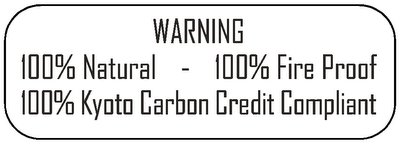
But the truth is that one of the reasons the cannabis-based building material called hempcrete is gaining acceptance in home construction is that it’s entirely fireproof. As a recent New York Times story reported, hempcrete has been used as a building material in Europe for decades, and lately it’s been incorporated in more homes and offices in the U.S. A small group of hemp entrepreneurs envisions a time very soon when hempcrete will be totally mainstream.

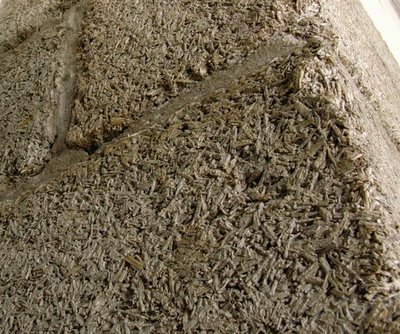
Hempcrete is made with the wood-like interior part of a Cannabis plant, which resemble the look and feel of balsa chips. They’re combined with lime and water, and the resulting material is a block that provides terrific natural insulation, while still being flexible, breathable, and, as mentioned already, fireproof.

And there’s no need to worry about teenage hooligans ripping out your insulation to smoke it. Hempcrete contains an almost imperceptible amount of THC, the active ingredient in marijuana that gets you high.

Time

How to Build a cannabrick home

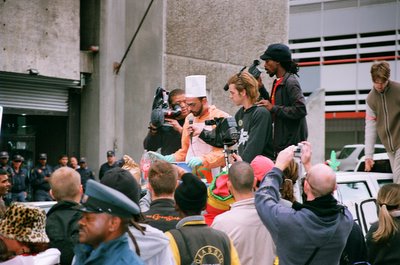
Peacefully Demonstrated outside the Department of Housing May 7 2005
  1. Plant a cannabis seed. Water and allow the plant to grow and produce seed. Plant and water these seeds. Your goal is to grow enough to build a house, you will need about 1 acre to build a 5 roomed home.

    Tyala imbewu ntsangu (ye-cannabis). Nkcenkceshela imbewu uze uyinike ithuba lokuba ikhule ide ikhuphe eyayo imbewu. Uyothi ke uyityale nalembewu uyinkcenkceshele njalo. Injongo yakho kukukhulisa izityalo ezothi zonele ekwakheni indlu, uyakudinga i-acre (malunga nentsimi) enye ukuze wakhe indlu enamagumbi amahlanu.

    Plant 'n hemp saad. Water en laat die plante om te groei en saad te produseer. Plant en water hierdie sade. Jou doel is om  genoeg te groei om 'n huis bou, jy sal ongeveer een aker benodig om 'n 5-kamer huis te bou.

    Sokutshala imbewu insangu njalo. Amanzi nokuvumela isitshalo ukuze zikhule futhi ukhiqize imbewu. Plant namanzi lezi zinhlamvu. Umgomo wakho iwukuba akhule ngokwanele ukwakha indlu, uzodinga 1 Acre ukwakha 5 roomed ekhaya.


  2. Consider the many relevant points presented in the guidelines of Build a house with hemp / Building with hemp.

    Qwalasela yonke imigaqo oyibekelweyo kwincwadana i-Build a house with hemp / Building with hemp.

    Oorweeg die baie relevante punte in die riglyne van die Build a house with hemp / Building with hemp.

    Cabangela amaphuzu amaningi efanele evezwa neziqondiso of Yakha indlu nge insangu / Building nge insangu.


  3. Start planning where your house will stand. Consider everything about the environment you’ll be building in, like winter and summer sunshine, wind and rain – you don’t want to build on a floodplain, or your house will wash away. Be sure to plan all your water and waste requirements.

    Ceba indawo ozokwakha kuyo indlu yakho. Qwalasela yonke into ngomhlaba lo uzokwakha kuwo indlu yakho, izinto ezinje ngemimoya, ilanga, neemvula zehlobo nobusika, akekho umntu ofuna ukwakha indlu yakhe emgxobhozweni okanye apho iyothi ibe lilifa lezikhukhula khona. Uqiniseke ukuba unamanzi akulungeleyo ukwenza oku.

    Begin met die beplanning, waar jou huis sal staan. Oorweeg dit alles oor die omgewing en jy sal gebou in, soos winter en somer son, wind en reën - jy wil nie op 'n vloedvlakte bou nie, of jou huis sal wegspoel. Maak seker om te beplan al jou water en afval vereistes voldoen.

    Qala uhlela kuphi indlu yakho eyokuma. Cabanga konke mayelana imvelo uyobe ngokwakha ku, efana ebusika kanye kwelanga ehlobo, umoya nemvula-ungafuni ukwakha ethile kwemfunda, noma indlu yakho iyoba basuse. Qiniseka ukuhlela konke amanzi kanye imfucuza izidingo zakho.

  4. Cut the grown cannabis plants down and leave in the field to rett for a week. The morning dew and natural rotting process will loosen the fibers from the plant.

    a. Process the plant matter by cutting leaves and branches off, then hit small bundles the length of the plant over and upturned rake.
    b. The long fiber parts that remain in your hand are good for weaving rugs and making various other items your skills can accomplish.
    c. The seed can be gathered for more housing.
    d. Gather the small woody bits (the hurd) that have fallen, this waste is what will be used in the construction material.

    Sika / sarha izityalo uzibeke egadini ixesha elingangeveki ukuze zibole. Umbethe wasekuseni nezinye izinto zendalo ezibolisayo ziya kuyikhulula I-fibre ezityalweni.

    a. Yikhawulezise ngohlukanisa intonga zezityalo namagqabi, uhlale uyiharika rhoqo.
    b. Intonga ezi zinothi zincede kwezinye izinto ezifana nokwenza ingubo nezinye izinto onothi uzibonele zona ngokolwazi lwakho.
    c. Imbewu inokuqokelelwe ukwakha ezinye izindlu.
    d. Qokelela imithana ethe yaziwela njengokuba uzoyisebenzisa xa usakha indlu yakho.

    Sny die gegroei hemp/cannabis plante af en in die veld verlaat om rhett vir 'n week. Die oggend-dou en die natuurlike verrotting proses sal die vesel van die plant los te maak.

    a. Proses van die plantmateriaal deur te sny blare en takke af, dan is getref klein bundels die lengte van die plant oor en omgekeerde hark.
    b. Die lang vesel dele wat in jou hand bly is goed vir die matte weef en die maak van verskeie ander items jou vaardighede kan bereik.
    c. Die saad kan vir meer behuising ingesamel word.
    d. Versamel die klein houtagtige bits (die hurd) wat gedaal het, die afval is wat sal in die konstruksie materiaal gebruik kan word.

    Sika izitshalo insangu njalo. isikhule phansi endle ukuze rhett isonto lonke. Amazolo ekuseni inqubo lwemvelo ukubola kuzokwenza athambise imicu kulesi simila.

    a. Ukucubungula udaba plant ukusika amaqabunga namagatsha ahambe ke hit izinyanda amancane ubude sitshalo phezu ne hala sokutakula.
    b. I-long fibre izingxenye ezisele esandleni sakho kukhona okuhle ngokuba ihlanganisa omata kanye nokwenza ezinye izinto ezahlukahlukene amakhono akho kungaba afeze.
    c. Imbewu kungenziwa babuthana izindlu xaxa.
    d. Ubuthe izingcezu bok encane (i-hurd) ukuthi uwe, lokhu imfucuza okuzokusiza lisetshenziswe ukwaziswa yezokwakha

  5. Wash the hurd, dry it, then wash it again. Be careful not to allow the matter to rot or decay during this process, by turning, airing and allowing the African sun to dry the hurd properly. Now combine in proportions 10:2:3:3 combine the cannabis/ntsangu/dagga Hurd(10), washed river sand 0.5mm(2), hydraulic lime(3) and water(3) to make the mulch (This process may need tweaking depending on your geographic location, humidity, rainfall etc)

    Hlamba ingqokelela yakho, uyomise, uphinde uyihlambe.Ulumkele ukuba lengqokelela ibole kwelithuba, yiguquguqule, uyivumele ibethwe ngumoya uvumele nelanga lase Afrika liyomise lengqokelela. Dibanisa ngokwalo mgaqo 10:2:3:3, dibanisa ke lemvuno yakho yomgquba wentsangu (10) kunye nesanti yasemlanjeni 0.5mm(2), ikalika (3) kunye namanzi (3) ukwenza udaka (Nale into ke iyokuthi ixhomekeke kwindawo leyo ukuyo nemvula zakhona njalo-njalo).

    Was die kudde, droog dit af, dan was dit weer. Wees versigtig om nie toe te laat die aangeleentheid te verrot of verval gedurende hierdie proses, deur die draai, voorlê en laat die Afrika-son om droog die kudde goed. Nou kombineer in verhoudings 10:2:3:3 kombineer die cannabis / ntsangu / dagga Hurd (10), gewaste riviersand 0.5 mm (2), hidrouliese kalk (3) en water (3) aan die deklaag te maak (Hierdie proses kan tweaking nodig, afhangende van jou geografiese ligging, humiditeit, reën, ens)

    Geza izinti, zome it ke geza futhi. Qaphela ukuba singavumeli udaba ukubola noma ukubola kulo msebenzi , ngokubhekisa , angabiki futhi sivumele ilanga Afrika ukuze ome le hurd kahle . Sebesebenzisa ngezabelo 10:2:3:3 hlanganisa insangu njalo. / ntsangu / insangu Hurd (10) , umfula wageza isihlabathi 0.5mm (2) , wokubacindezela umcako (3) kanye namanzi (3) ukwenza semboza ngabo izithombo zezihlahla (Le nqubo may badinga tweaking kuye ngokuthi indawo yokuhlala yakho, umswakama, imvula, njll)

  6. Now build your house! Ngoku ke yakha indlu yakho! Nou bou jou huis! Manje ukwakha indlu yakho!

  7. Teach others. Fundisa abanye. Onderrig ander.

You can use this “dagga-cement” for making bricks, shutter casting or the proven “pole-and-dagga” method. This last method allows for a sturdy, warm, fireproof and water proof home – built with pride and intuitive engineering, not a ‘uniform box’.

Be sure to consider all aspects of your house design and structural requirements. Although the cannabis-cement will become stronger than steel in time, it is not advised to build over 2 floors high without considering structural implications. With planning this cement can be used to build up to 4 floors high.

The cannabis-cement will dry over a period of a month (depending on the weather). At this point you will be able to add the roof. Seal your home’s walls with lime; lime external walls annually. Decorate your house with masonry to make it unique, and paint with coloured lime as per custom.

Always PLANT A TREE in a place that will provide shade, to commemorate this accomplishment.
Council will plant trees if citizens care for them. Call (021) 689-8938 http://www.trees.org.za/

Assist your family, friends or neighbors with your experience and expertise. Share information and technique; you can uplift yourself and your community.


Saturday, May 9, 2015

Decade anniversary - How to Build a cannabrick home

Peacefully Demonstrated outside the Department of Housing May 7 2005
  1. Plant a cannabis seed. Water and allow the plant to grow and produce seed. Plant and water these seeds. Your goal is to grow enough to build a house, you will need about 1 acre to build a 5 roomed home.

    Tyala imbewu ntsangu (ye-cannabis). Nkcenkceshela imbewu uze uyinike ithuba lokuba ikhule ide ikhuphe eyayo imbewu. Uyothi ke uyityale nalembewu uyinkcenkceshele njalo. Injongo yakho kukukhulisa izityalo ezothi zonele ekwakheni indlu, uyakudinga i-acre (malunga nentsimi) enye ukuze wakhe indlu enamagumbi amahlanu.

    Plant 'n hemp saad. Water en laat die plante om te groei en saad te produseer. Plant en water hierdie sade. Jou doel is om  genoeg te groei om 'n huis bou, jy sal ongeveer een aker benodig om 'n 5-kamer huis te bou.

    Sokutshala imbewu insangu njalo. Amanzi nokuvumela isitshalo ukuze zikhule futhi ukhiqize imbewu. Plant namanzi lezi zinhlamvu. Umgomo wakho iwukuba akhule ngokwanele ukwakha indlu, uzodinga 1 Acre ukwakha 5 roomed ekhaya.


  2. Consider the many relevant points presented in the guidelines of Build a house with hemp / Building with hemp.

    Qwalasela yonke imigaqo oyibekelweyo kwincwadana i-Build a house with hemp / Building with hemp.

    Oorweeg die baie relevante punte in die riglyne van die Build a house with hemp / Building with hemp.

    Cabangela amaphuzu amaningi efanele evezwa neziqondiso of Yakha indlu nge insangu / Building nge insangu.


  3. Start planning where your house will stand. Consider everything about the environment you’ll be building in, like winter and summer sunshine, wind and rain – you don’t want to build on a floodplain, or your house will wash away. Be sure to plan all your water and waste requirements.

    Ceba indawo ozokwakha kuyo indlu yakho. Qwalasela yonke into ngomhlaba lo uzokwakha kuwo indlu yakho, izinto ezinje ngemimoya, ilanga, neemvula zehlobo nobusika, akekho umntu ofuna ukwakha indlu yakhe emgxobhozweni okanye apho iyothi ibe lilifa lezikhukhula khona. Uqiniseke ukuba unamanzi akulungeleyo ukwenza oku.

    Begin met die beplanning, waar jou huis sal staan. Oorweeg dit alles oor die omgewing en jy sal gebou in, soos winter en somer son, wind en reën - jy wil nie op 'n vloedvlakte bou nie, of jou huis sal wegspoel. Maak seker om te beplan al jou water en afval vereistes voldoen.

    Qala uhlela kuphi indlu yakho eyokuma. Cabanga konke mayelana imvelo uyobe ngokwakha ku, efana ebusika kanye kwelanga ehlobo, umoya nemvula-ungafuni ukwakha ethile kwemfunda, noma indlu yakho iyoba basuse. Qiniseka ukuhlela konke amanzi kanye imfucuza izidingo zakho.

  4. Cut the grown cannabis plants down and leave in the field to rett for a week. The morning dew and natural rotting process will loosen the fibers from the plant.

    a. Process the plant matter by cutting leaves and branches off, then hit small bundles the length of the plant over and upturned rake.
    b. The long fiber parts that remain in your hand are good for weaving rugs and making various other items your skills can accomplish.
    c. The seed can be gathered for more housing.
    d. Gather the small woody bits (the hurd) that have fallen, this waste is what will be used in the construction material.

    Sika / sarha izityalo uzibeke egadini ixesha elingangeveki ukuze zibole. Umbethe wasekuseni nezinye izinto zendalo ezibolisayo ziya kuyikhulula I-fibre ezityalweni.

    a. Yikhawulezise ngohlukanisa intonga zezityalo namagqabi, uhlale uyiharika rhoqo.
    b. Intonga ezi zinothi zincede kwezinye izinto ezifana nokwenza ingubo nezinye izinto onothi uzibonele zona ngokolwazi lwakho.
    c. Imbewu inokuqokelelwe ukwakha ezinye izindlu.
    d. Qokelela imithana ethe yaziwela njengokuba uzoyisebenzisa xa usakha indlu yakho.

    Sny die gegroei hemp/cannabis plante af en in die veld verlaat om rhett vir 'n week. Die oggend-dou en die natuurlike verrotting proses sal die vesel van die plant los te maak.

    a. Proses van die plantmateriaal deur te sny blare en takke af, dan is getref klein bundels die lengte van die plant oor en omgekeerde hark.
    b. Die lang vesel dele wat in jou hand bly is goed vir die matte weef en die maak van verskeie ander items jou vaardighede kan bereik.
    c. Die saad kan vir meer behuising ingesamel word.
    d. Versamel die klein houtagtige bits (die hurd) wat gedaal het, die afval is wat sal in die konstruksie materiaal gebruik kan word.

    Sika izitshalo insangu njalo. isikhule phansi endle ukuze rhett isonto lonke. Amazolo ekuseni inqubo lwemvelo ukubola kuzokwenza athambise imicu kulesi simila.

    a. Ukucubungula udaba plant ukusika amaqabunga namagatsha ahambe ke hit izinyanda amancane ubude sitshalo phezu ne hala sokutakula.
    b. I-long fibre izingxenye ezisele esandleni sakho kukhona okuhle ngokuba ihlanganisa omata kanye nokwenza ezinye izinto ezahlukahlukene amakhono akho kungaba afeze.
    c. Imbewu kungenziwa babuthana izindlu xaxa.
    d. Ubuthe izingcezu bok encane (i-hurd) ukuthi uwe, lokhu imfucuza okuzokusiza lisetshenziswe ukwaziswa yezokwakha

  5. Wash the hurd, dry it, then wash it again. Be careful not to allow the matter to rot or decay during this process, by turning, airing and allowing the African sun to dry the hurd properly. Now combine in proportions 10:2:3:3 combine the cannabis/ntsangu/dagga Hurd(10), washed river sand 0.5mm(2), hydraulic lime(3) and water(3) to make the mulch (This process may need tweaking depending on your geographic location, humidity, rainfall etc)

    Hlamba ingqokelela yakho, uyomise, uphinde uyihlambe.Ulumkele ukuba lengqokelela ibole kwelithuba, yiguquguqule, uyivumele ibethwe ngumoya uvumele nelanga lase Afrika liyomise lengqokelela. Dibanisa ngokwalo mgaqo 10:2:3:3, dibanisa ke lemvuno yakho yomgquba wentsangu (10) kunye nesanti yasemlanjeni 0.5mm(2), ikalika (3) kunye namanzi (3) ukwenza udaka (Nale into ke iyokuthi ixhomekeke kwindawo leyo ukuyo nemvula zakhona njalo-njalo).

    Was die kudde, droog dit af, dan was dit weer. Wees versigtig om nie toe te laat die aangeleentheid te verrot of verval gedurende hierdie proses, deur die draai, voorlê en laat die Afrika-son om droog die kudde goed. Nou kombineer in verhoudings 10:2:3:3 kombineer die cannabis / ntsangu / dagga Hurd (10), gewaste riviersand 0.5 mm (2), hidrouliese kalk (3) en water (3) aan die deklaag te maak (Hierdie proses kan tweaking nodig, afhangende van jou geografiese ligging, humiditeit, reën, ens)

    Geza izinti, zome it ke geza futhi. Qaphela ukuba singavumeli udaba ukubola noma ukubola kulo msebenzi , ngokubhekisa , angabiki futhi sivumele ilanga Afrika ukuze ome le hurd kahle . Sebesebenzisa ngezabelo 10:2:3:3 hlanganisa insangu njalo. / ntsangu / insangu Hurd (10) , umfula wageza isihlabathi 0.5mm (2) , wokubacindezela umcako (3) kanye namanzi (3) ukwenza semboza ngabo izithombo zezihlahla (Le nqubo may badinga tweaking kuye ngokuthi indawo yokuhlala yakho, umswakama, imvula, njll)

  6. Now build your house! Ngoku ke yakha indlu yakho! Nou bou jou huis! Manje ukwakha indlu yakho!

  7. Teach others. Fundisa abanye. Onderrig ander.

You can use this “dagga-cement” for making bricks, shutter casting or the proven “pole-and-dagga” method. This last method allows for a sturdy, warm, fireproof and water proof home – built with pride and intuitive engineering, not a ‘uniform box’.

Be sure to consider all aspects of your house design and structural requirements. Although the cannabis-cement will become stronger than steel in time, it is not advised to build over 2 floors high without considering structural implications. With planning this cement can be used to build up to 4 floors high.

The cannabis-cement will dry over a period of a month (depending on the weather). At this point you will be able to add the roof. Seal your home’s walls with lime; lime external walls annually. Decorate your house with masonry to make it unique, and paint with coloured lime as per custom.

Always PLANT A TREE in a place that will provide shade, to commemorate this accomplishment.
Council will plant trees if citizens care for them. Call (021) 689-8938 http://www.trees.org.za/

Assist your family, friends or neighbors with your experience and expertise. Share information and technique; you can uplift yourself and your community.


Thursday, March 19, 2015

Cape Town cries foul after councillor ‘asked to leave’ human settlements meeting

THE city of Cape Town has cried foul after one of its councillors sent to attend a Department of Human Settlements meeting in Johannesburg this week was asked to leave the meeting venue by Human Settlements Minister Lindiwe Sisulu.

Ms Sisulu is said to have asked Cape Town mayoral committee member for human settlements Benedicta van Minnen to leave Monday’s meeting arguing that it was only for mayors.

The incident is likely to put further strain on the relationship between the city of Cape Town and Ms Sisulu. Last year the minister and the city clashed over the Lwandle Commission of Inquiry. She also accused the Democratic Alliance-led city of "buying" the title of World Design Capital in 2014.

According to Ms van Minnen, Cape Town mayor Patricia de Lille could not attend the meeting because she had a previous long-standing commitment that she could not cancel for a meeting where she was given only three days’ notice.

"She communicated her unavailability to the minister’s office the very next day, but added that she would be sending me as her representative in my capacity as mayoral committee member for human settlements. Considering that the meeting pertained to my directorate, both myself and the mayor felt it apt that I should attend the meeting," Ms van Minnen said.

"This morning (Monday) I proceeded to travel to Johannesburg to attend the meeting. An e-mail was sent from the minister’s office ... when I was already en route to the meeting once more indicating that I was not allowed to attend. Upon my arrival, I entered the meeting.

"About 40 minutes into the discussions, Minister Sisulu arrived and asked me to leave the meeting venue. She personally blocked me from taking part in the discussion that directly impacts my directorate, and service delivery in the city at large," Ms van Minnen said.

She said Ms Sisulu has "once again misused her position as the national minister of human settlements to purposefully block service delivery in the City of Cape Town".

Ms Sisulu’s spokesman, Ndivhuwo Mabaya, said that Ms van Minnen was not an acting mayor and therefore her presence at the meeting "would not have assisted with anything, as she does not have mayoral executive powers — she was just there to take minutes".

"The city was informed that only mayors will attend the meeting. Mayor de Lille issued a number of media statements attacking the national Department of Human Settlements in the past six months; it was only fair for her to attend the meeting herself so that she can explain herself on a number of issues. We suspect she did not attend the meeting to run away from them," Mr Mabaya said.

- BDLive

Thursday, November 13, 2014

Building industry embraces hemp-based concrete

INDUSTRIAL hemp, widely applauded for its unrivalled green credentials, is emerging with a bright future in the building industry.
Hempcrete
Hempcrete
And one Queensland builder is especially passionate about the material’s potential, is educating visitors from around the globe in how to use it.
Hempcrete Australia director Johan Tijssen, of Maleny, has now built several buildings around Australia using hempcrete, more accurately known as hemp lime composite (HLC).
His latest project is a two-level three-bedroom house nearing completion at Moffat Beach, Caloundra.
Mr Tijssen also conducts regular workshops in hempcrete construction which have attracted overseas participants. The next training is due to run in Perth early in 2015.
“We look at why and how HLC insulation works including aspects such as the hygroscopic nature of hempcrete,” Mr Tijssen said.
“This is its ability to regulate the humidity and temperature in a room.”
Hempcrete was created in the 1980s by a Frenchman restoring old buildings in the Champagne region and it has taken on a new prominence in recent years, particularly in the sustainable housing sector.
Hempcrete
Hempcrete
HLC, a combination of water, hemp aggregate and a lime-based binder, sequesters carbon dioxide for the life of the building and offers excellent thermal insulating and acoustic properties.
Mr Tijssen, who has more than 20 years experience as a builder and has studied hempcrete applications extensively across Europe, is the first in Australia to acquire BCA certification for hempcrete installation and training methods.
He sources industrial hemp grown in the Hunter Valley for his projects but hopes the crop will eventually be grown widely in Queensland. Growers require a permit. The plant is a different strain of cannabis sativa that contains very little of the psychoactive substance found in marijuana.
Mr Tijssen said hempcrete buildings had excellent insulation and thus significantly lower energy costs, and were a good option in cyclone and earthquake prone regions because HLC was more flexible than concrete.
“To an extent the hempcrete wall will flex back, when concrete would crack,” he said.
Hempcrete was also a carbon-negative material, removing more CO2 from the atmosphere than what it puts into it.
Originally published as Hemp makes for green home building

- Herald Sun

Diverse imperatives cannot be contained in a mass housing programme

MINISTER of Human Settlements, Lindiwe Sisulu recently raised two controversial issues. One was that people younger than 40 should not expect free houses from government. Her logic is that they have not experienced apartheid firsthand. The other issue was that people selling or renting out their state-provided houses would be subject to a judicial tribunal.

Both points need urgent engagement to avoid fuelling anger and frustration. Calls have already been made to consider carefully young people’s prospects in the context of the present situation of high unemployment, low skill levels and low wages. We add our concern on the role housing plays in relation to poverty.

The rationale in 1994 was for the government to give fully subsidised housing to impoverished people to alleviate poverty, allowing them to use property as an asset. Conceptually this included the idea that the house could be used to generate income, such as letting part or all of it. It was also hoped that, eventually, the housing asset could be traded, should a household need to relocate or had found the means to move to better accommodation. Ultimately, subsidised housing was to form a component of the property market.

In 2000, the government reasoned such trading was appropriate only after a period of time and sought to restrict trade in the early years of occupation.

Our research shows that housing beneficiaries are indeed making use of their subsidised housing asset in various ways, including selling or renting the houses to others, although the extent of this unclear. Other strategies include living in the subsidised houses part-time, only on weekends or holidays, for example, if daily transport costs are too high or the location of the allocated house is inconvenient.

For many people these are rational and strategic responses to adverse conditions. They are ways to address the pressures of poverty. Criminalising these strategies does not enable beneficiaries to use the housing asset constructively to reduce poverty.

Underlying Sisulu’s condemnation of the sale or rental of RDP housing is the concern that, in disposing of an RDP house, beneficiaries might end up in worse rather than better living conditions. This is seen to undermine efforts to house the nation in formal accommodation. But the current drive by her department for decent shelter overlooks how people earn a living and the priority some might accord to minimising their living costs. These diverse imperatives cannot be contained in a mass housing programme of the sort adopted in 1994, notwithstanding the benefits that programme had for many.

The notion that the present pattern of free housing delivery is economically and spatially unsustainable has long been acknowledged. But to the long-unemployed, constrained by the uneven post-apartheid economy, the prospect of a RDP house may mean a lot. The challenges are how to change the approach of RDP housing without reducing the much-needed social benefits and how to support people’s efforts to reduce living costs and increase household income.

These are hard questions that require careful deliberation. One avenue to pursue is to greatly increase other forms of housing delivery as outlined in the decade-old Breaking New Ground. This would mainstream in-situ upgrading of informal settlements, while also accelerating the servicing of sites for self-built houses. For various reasons, this has not contributed to the overall housing production by the government to date.

Incremental, in-situ upgrading of informal settlements recognises the fragility and complexity of the livelihoods that poor households have secured in chosen localities. It aims to stitch these households more securely into the urban fabric while promoting dignity through community involvement in decision making for tangible and meaningful improvements. The emphasis is on interventions that support livelihoods. In recent years, extensive groundwork by the department’s National Upgrading Support Programme and the Housing Development Agency has paved the way for an approach that now needs full political support.

In the same vein, political support is needed for programmes that provide advantageously located low-cost rental housing, which can provide households and individuals with a base from which to accumulate resources. Additionally, a drive for well-located affordable serviced land can offer opportunities to consolidate long-term homes.

With the new mega-projects that are currently on Sisulu’s agenda, very careful planning will be required to ensure the state housing interventions positively transform SA’s towns and cities.

The minister’s recent statements seem to signal a willingness to change direction and tackle problems such as duplication and corruption in the demand database. This will be good news for those patiently waiting for a house for more than a decade.

From our base in an academic institution, we would like to see research findings considered and shared, potential consequences of new approaches examined and realistic alternatives sought for young people and those attempting to build an asset base.

Sisulu recently signed a social compact with the planning profession. While this is welcomed, there is a need for the public and private sectors, and civil and political society to engage more widely, so a constructive, participatory and mutually satisfactory outcome can be achieved for all.

• Charlton, Huchzermeyer, Klug and Rubin are with the Centre for Urbanism and Built Environment Studies at the School of Architecture and Planning at Wits University.

- BDLive

Tuesday, October 28, 2014

Lindiwe Sisulu and the New Denialism

In 2005, early in her in her first term as Minister of Housing, Lindiwe Sisulu announced that the state had resolved to 'eradicate slums' by 2014. This was a time when the technocratic ideal had more credibility than it did now and officials and politicians often spoke, with genuine conviction, as if it were an established fact that this aspiration would translate into reality.

It was not unusual for people trying to engage the state around questions of urban land and housing to be rebuffed as troublemakers, either ignorant or malicious, on the grounds that it was an established fact that there would be no more shacks by 2014.

As we head towards the end of 2014 there are considerably more people living in shacks than there were in 2005, in 1994 or at any point in our history. The gulf between the state's aspirations to shape society and what actually happens in society have also been starkly illustrated at the more local level. Sisulu's flagship housing project, the N2 Gateway project in Cape Town, resulted in acute conflict and remains in various kinds of crisis to this day.

One of the lessons to be learnt from the denialism around the nature and scale of the urban crisis that characterised Thabo Mbeki's Presidency is that although the state is certainly a powerful actor, it has often been profoundly wrong about its capacity to understand and to shape social reality.

But Sisulu's first term as the Minister of Housing is not only remembered for her failure to grasp either the scale of the demand for urban land and housing or the limits of the state's response. There was also a marked authoritarianism to her approach. She did not oppose the escalating and consistently unlawful violence with which municipalities across the country were attempting to contain the physical manifestation of the urban crisis via land occupations.

Sisulu also offered her full support to the failed attempt, first proposed in the Polokwane Resolutions, and then taken forward in the KwaZulu-Natal parliament in the form of the Slums Act in 2007, to roll back some of the limited rights that had been conceded in the early years of democracy to people occupying land without the consent of the state or private land owners.

At the same time she also earned some notoriety for her unilateral, and clearly unlawful, declaration in 2007 that residents of the Joe Slovo settlement in Cape Town would be permanently removed from the (entirely mythical) 'housing list' for opposing forced removal. She was also silent in the face of the violence marshalled through party structures against shack dwellers who had had the temerity to organise around issues of urban land and housing independently of the ANC in both Durban and on the East Rand in 2009 and 2010.

Her second term as Minister, in a portfolio now termed Human Settlements, has been marked by a similar silence in response to the even more brazen forms of repression, including assassination, now visited on people organised outside of the ANC in shack settlements in Durban. But there have been some important shifts in her position.

One is that like her predecessor Tokyo Sexwale, she no longer speaks as if the 'eradication of slums' is imminent. In this regard the state has developed a more realistic understanding of the situation it confronts. Another shift is Sisulu's opposition to unlawful evictions in Cape Town. This is, given her on-going silence in response to violent and unlawful evictions elsewhere in the country, clearly an expedient rather than a principled position. But in a context where land occupations are routinely misrepresented through the lens of criminality or political conspiracy her framing of her opposition to eviction in Cape Town in the language of justice may open some space in elite publics to politicise the contestation over urban land, something that is relentlessly expelled from the terrain of the political by a variety of elite actors.

But it is Sisulu's recent declaration that the state intends to do away with the provision of free housing and that people under forty will no longer be eligible for public housing that has been particularly controversial. Both aspects of this comment position her in direct contradiction to the law and the policies to which the government is, at least in principle, committed.

This is nothing new. When it comes to its response to the urban land occupation the state routinely speaks and acts in direct contradiction to both law and policy. What is significant here is the indication that the state, increasingly short of cash, intends to step back from some of its commitments to sustain some forms of public welfare.

Sisulu is presenting the state's public housing programme as if it were a temporary state response to apartheid, which now that things have been normalised, can be abandoned. Both parts of this equation are seriously problematic.

The ANC, in a posture that these days is simply farcical given that it is Putin rather than Lenin that restores the sparkle to Zuma's eyes in tough times, likes to pretend to itself that it is a revolutionary organisation. But public housing, far from being some kind of unique and temporary South African exception to the general status quo, is a standard part of even basic social democratic programmes.

Countries in the South like Bolivia, Brazil and Venezuela all have public housing programmes of various kinds. These programmes all have serious flaws, but the fact that they exist and that other states are committed to public housing as a principle, should not be denied. In Venezuela the public housing programme includes housing that is entirely free for entirely impoverished people. There are also governments in the South that have actively sought to legalise land occupations and support the improvement of conditions in shack settlements.

Sisulu's assertion that people under forty "have lost nothing [to apartheid]" is one of the most extraordinary statements to have escaped from the mouth of a cabinet minister since 1994. The pretence that apartheid's consequences came to an end in 1994 is the sort of denialism that is so out of touch with reality - and in a way that works to naturalise inequalities inherited from a long history of brutal oppression that turned race into class - that it's almost obscene to even engage it as if it were a serious proposition.

In a situation in which millions of people cannot access housing through the market the state should recognise the social value of land occupations, offer all the support that it can to improve conditions in shack settlements and develop the best and most extensive public housing programme possible.

But if the state continues to see most land occupations as criminal and to curtail its own public housing programme, it will place millions of people in a situation that is just not viable. The inevitable consequence of the state committing itself to an urban agenda that simply has no place for millions of people will be a radical escalation of the already intense conflict in our cities. To put it plainly guns will become even more central to how our cities are governed. Sisulu's comments amount to a declaration of war.

Dr. Pithouse teaches politics at Rhodes University.

- allAfrica

Monday, October 6, 2014

Hempcrete Store Wins Sustainability Awards

The Science Museum has been honoured for its green credentials this month by scooping two prestigious awards for its new Hempcrete storage facility at Wroughton.
The innovative storage building which is made from hemp and lime, was honoured for its sustainable design by winning the Sustainability Award at the Museums and Heritage Awards – beating stiff competition from the BP Showcase Pavilion at the Olympic Park and the Museum of Surfing.
The Science Museum won in the Sustainability category at the Museums and Heritage Awards. Picture credit: M&H Show
The project was also recognised earlier this month at the Greenbuild Awards, where it won the Best Workplace New Build category – fending off competition from organisations such as Co-op and Network Rail.
Like many other national museums, the Science Museum only displays 8% of its collections to the public – there is just not enough space to display any more. The other 92% of the collection is housed in storage facilities. One of these storage sites is a former airfield near Swindon, which holds 16,000 objects including large scale items such as aeroplanes, trains and cars.
The Wroughton site houses large objects in aircraft hangars. Image credit: Science Museum
The Hempcrete facility was designed as a radical new solution to protecting objects including horse-drawn carriages, fine art works, wooden ship models and paper archives. Many of these objects are sensitive to changing climate conditions such as light, heat and moisture so providing the right environment is essential to prevent deterioration.
The solution was to create a zero-carbon storage building from hemp and lime – low carbon natural materials which provide temperature and humidity buffering and ensure that the museum’s collections are maintained for future generations.
The Hempcrete store is a new solution to preserving the museum's sensitive objects. Picture credit: Science Museum
The Hempcrete store is a new solution to preserving the museum’s sensitive objects. Picture credit: Science Museum
Matt Moore, Head of Sustainable Development, Science Museum said “I’m delighted that the Hempcrete project has won these awards and been recognised by the museums and building sectors. The project is part of a wider remit to reduce emissions across all our sites. Using science and engineering to look after the Science Museum collections seems to be a perfect solution to one of our biggest challenges.”
Hempcrete is a material made from hemp fibre and lime mortar mixed and moulded in precast, pre-dried cassettes to form Hemclad panels. The material is typically used to provide sustainable building materials for housing and industrial building sectors.
As well as protecting objects from deterioration, the Hempcrete facility allows the museum to reduce carbon emissions and make significant energy savings. The new store will be used to house valuable objects from the Science Museum as well as those of its sister museum – the National Railway Museum.

Thursday, September 25, 2014

Growing our way out of climate change by building with hemp and wood fibre

Hemp pant
Houses made from hemp could mitigate climate change. Photograph: Roy Morsch/Corbis
From domestic housing to the Science Museum, plant-based construction materials cut reliance on scarce resources and build healthy, efficient and zero carbon buildings

How can buildings help with climate change? It’s all about renewables and “sequestered carbon”.
The Department for Business, Innovation and Skills’ 2010 report on Low Carbon Construction concluded that construction was responsible for around 300m tonnes of carbon dioxide emissions, which is almost 47% of the UK’s total. Of this, around 50m tonnes is embedded in the fabric of buildings.
Making one tonne of steel emits 1.46 tonnes of CO2 and 198kg of CO2 is emitted make one tonne of reinforced concrete. One square metre of timber framed, hemp-lime wall (weighing 120kg), after allowing for the energy cost of transporting and assembling the materials actually stores 35.5kg of CO2.
If we can convert plants into building materials, we are in a win-win situation. Plants use the energy of the sun to convert atmospheric CO2 and water into hydrocarbons – the material from which plants are made.
The plant acts as a carbon store, sequestering (absorbing) atmospheric CO2 for as long as the plant continues to exist. This CO2 is only re-released when the material is composted or burnt, and the great thing is that through replanting it you can re-absorb this CO2 annually, in the case of straw or hemp, or every decade or so in the case of timber, rather than the 300m years that it takes to recycle coal or oil.
Secondly, plant based materials can be used to make high performing building envelopes, protecting against external weather and making a building more comfortable, healthy and energy efficient to live in.
Not only can they be used as insulation materials, displacing oil-based alternatives such as polyurethane foam, but they also interact with the internal environment in a way that inorganic materials just can’t do.
This is because they are “vapour active”. Insulating materials such as hemp-lime, hemp fibre and wood fibre are capable of absorbing and releasing water vapour. This is doubly effective, because not only can they act as a buffer to humidity (taking moisture out of the air), but they also stabilise a building’s internal temperature much better through latent heat effects (energy consumed and released during evaporation and condensation within the pores of the material).
To build using hemp, the woody core or shiv of the industrial hemp plant is mixed with a specially developed lime-based binder. Factory-constructed panels are pre-dried and when assembled in a timber frame building, the hemp shiv traps air in the walls, providing a strong barrier to heat loss. The hemp itself is porous, meaning the walls are well insulated while the lime-based binder sticks together and protects the hemp, making the building material resistant to fire and decay. The industrial hemp plant takes in carbon dioxide as it grows and the lime render absorbs even more of the climate change gas. Hemp-lime buildings have an extremely low carbon footprint.
Building with hemp lime
Building with hemp lime. Photograph: University of Bath
In this way bio-based materials can be used to construct “zero carbon” buildings, where the materials have absorbed more CO2 than is consumed during construction. By applying PassivHaus principles (the voluntary industry standard for low-carbon design) to bio-based buildings, a building’s energy use once inhabited can also be reduced to minimal levels. This is a true “fabric first” approach, where the fabric of buildings passively manages energy consumption, rather than purely relying on renewables such as solar panels and ground source heating systems, which have a more limited life-span and the potential for failure.
I worked on a project recently for the Science Museum to reduce the high energy cost of archival storage. They needed to have large enclosures kept at a steady humidity and temperature to ensure that items ranging from the first edition of Newton’s Principia through to horse drawn carriages and even Daleks do not deteriorate. Normally this uses energy intensive air conditioning systems.
The three-storey archival store that the Science Museum built in 2012 using a hemp-lime envelope was so effective that they switched off all heating, cooling, and humidity control for over a year, maintaining steadier conditions than in their traditionally equipped stores, reducing emissions while saving a huge amount of energy.
Improved bio-based materials can also passively improve the internal air quality of buildings by interacting with airborne pollutants, removing them from the building. The new HIVE building – a £1m project funded by the Engineering and Physical Sciences Research Council – has been designed as a platform for research projects into this kind of sustainable construction. The HIVE has a purpose-built flood cell, which will also support research into creating buildings and building materials that are more flood-resilient – a valuable resource in these times of climate change induced adverse weather conditions.
Hive building
The Hive building. Photograph: University of Bath
Industry and government must also embrace the opportunities presented by bio-based construction materials to reduce emissions. Domestic housing is a key part of this. Good quality housing can be built out of structural timber with a bio-based insulating envelope using straw; hemp-lime, or other systems using wood fibre or other cellulose fibres.
With domestic housing high on the government’s agenda, it is time the construction industry recognised the economic and environmental benefits of bio-based construction materials and became less reliant on depleting resources including oil and steel.
Dr Mike Lawrence is Director of the University of Bath’s new research facility – the Building Research Park – aimed at reducing the carbon footprint of buildings. Follow the facility on twitter @HiveBRP

Monday, August 4, 2014

Transforming urban realities: the need for responsive strategies

There is a need today to rethink the attitudes and strategies with which we approach human settlements. The ongoing Lwandle inquiry, as well as the Minister of Human Settlements’ recent budget speech, indicates that South Africa finds itself at a critical juncture. Decisions about housing, informality and the rights of property owners and the urban poor will have a marked impact on the future of development in the country.

The upcoming Outcome 8 agreement will set the stage for the next five years of interventions aimed at bettering South Africans’ quality of life. As we await its final iteration, it is necessary to consider the theory of change that currently drives the actions of the Department of Human Settlements. Are the strategies for transformation proposed by the state adequate to address growing inequality, injustice and segregation in the country?

Throughout her recent budget speech the Minister of Human Settlements, Lindiwe Sisulu, outlines the goals that her department hopes to achieve in its upcoming term. The minister makes reference to Breaking New Ground, a document formally espoused in 2004 that signalled a shift in post-Apartheid housing policy. While the minister’s address is adamant about the importance of Breaking New Ground, she neglects to mention one of its most progressive provisions.

Breaking New Ground was instrumental in highlighting the value of incremental in situ informal settlement upgrading as a strategy for building safe and adequate living environments. In a recent piece in the Daily Maverick, Lauren Royston and Stuart Wilson from SERI note that informal settlement upgrading is essential for providing affordable housing at scale. The upgrading approach also recognises the need for both physical and social infrastructure. In addition to the provision of sufficient shelter and access to basic services and amenities, upgrading interventions emphasise the need for building the capacities of urban communities.

If South Africa faces, as the Minister suggests, “alarming” rates of urbanisation, then informal settlement upgrading offers a viable strategy for dealing with rapid growth and transformation. Such an approach can ensure that the basic needs of millions of urbanites are met, and that residents are empowered to engage with the state as equal partners in development.

During her previous stint in the Department of Human Settlements, the Minister was vocal about the need to eradicate informal settlements. Hopefully her omission of upgrading in the recent budget address does not point to a resurgence of this kind of language.

In neglecting informal settlement upgrading, the minister also ignores policies formulated over the last ten years. Significant paradigms shifts have occurred in the decade since the Minister first left the portfolio. In 2009 the National Housing Code instigated the Upgrading of Informal Settlements Programme to be enforced in municipalities across the country. Subsequently, the National Upgrading Support Programme was designed as an instrument to assist the Department of Human Settlements in implementing upgrading interventions. The previous Outcome 8 agreement, formalised in 2010, also made explicit reference to upgrading. The document noted that interventions focused entirely on state-driven housing provision would be insufficient to respond to the realities faced in the country's urban areas.

The value of upgrading for residents in South African cities is already evident in the work of civil society organisations. In Sheffield Road, an informal settlement in Cape Town, the Community Organisation Resources Centre supported the local community in addressing some of the community's most pressing issues through upgrading interventions. Through collaborative mapping exercises and enumerations to identify the immediate needs of residents, and through re-blocking, the community was given access to adequate water and sanitation facilities and to public space.

There are numerous other examples of upgrading projects that have resulted in safer, more accessible settlements that build, rather than erode, the well-being of residents. In South Africa spatial segregation and socio-economic inequality are not issues that will be resolved easily. It is clear, however, that the provision of housing opportunities alone will not be sufficient for building sustainable and responsive living environments. At this critical juncture, informal settlement upgrading will have to feature on the human settlements agenda.

Moreover, the creation of liveable, sustainable environments is a process that will require a concerted effort by multiple stakeholders. The minister's budget speech calls for 'all of society' to participate in the making of integrated human settlements, and yet the banking sector is the only social partner mentioned here.

By the Minister’s own admission, the language of housing delivery creates expectations and entitlements amongst South Africa’s urban poor. But if the state continues to act as sole provider of housing, then expectations and entitlements will continue to grow. This approach forces communities to wait, and to expect. And when the waiting becomes too long, what other course of action is there but for residents to demand what they have been promised?

Recent cases of land invasion as well as continuous community-based protest action should be evidence enough of the fact that residents are not passive. Rather, communities are key to the formulation and implementation of appropriate and robust development projects.

It is then, firstly, essential that the state recognises the voices of the urban poor. Secondly, it must create platforms for meaningful community participation, and become a structure that empowers residents by building their capability to improve their own living conditions. For communities to realise their role as active and equal partners in development, the state will also have to invest significant effort in building parks, recreational facilities, schools and clinics.

Organised civil society, too, has a critical role to play in meeting South Africa’s development goals. Social movements and organisations in the non-profit sector are engaged in the everyday working of urban communities and are sensitive to realities on the ground. These organisations often have access to skills, capabilities and resources that allow for effective interventions.

Over the next five years, collaboration between multiple actors with an interest in the creation of integrated and sustainable human settlements will be vital.

The current state of affairs suggests that there is a mismatch between the state’s proposed strategies for transformation and the reality faced in South African cities today. Rapid population growth coupled with housing backlogs and dwindling delivery rates make it clear that the road ahead will not be an easy one. But the challenge of human settlements can be met through responsive approaches such as in situ informal settlement upgrading, and through collaborative processes that draw on the skills of multiple partners. 

- DM

Thursday, June 26, 2014

Hemp And Lime Help Make Winery Green

It is always nice to hear businesses creating their products in a sustainable and environmentally friendly way, and one French winery is a great example of it. The organic and biodynamic winery has constructed a cellar using bricks made of organic hemp and lime.

They also installed a green roof and solar panels, meaning that the Château Maris winery is now a net-zero energy building. The 9,000-square-foot wine cellar produces enough energy to meet its needs and is also biodegradable. The hemp bricks used in the construction process ensure consistent temperature and humidity in the structure, while they also absorb carbon from the surrounding environment. In other words, the winery needs no heating, cooling or ventilation systems to function optimally.

Hemp is a great building material, since it insulates, while remaining breathable, meaning that, in the case of the winery, it keeps the structure warm in winter and cool in the summer, and always in the optimal temperature range of 54°-63°F. The structure also has two exterior walls, which are connected by an air tunnel that is also well insulated against extreme temperatures. Should additional airflow be required to lower the heat that is created by the fermentation process of wine creation, there is also a manual duct in the cellar’s roof, which can be opened and closed at need.

The winery owners decided to use hemp and lime to build their cellar after careful research, which took them about five years. During this time they carefully evaluated all other natural building options, such as stone, earth and even straw. In the end they chose hemp, because it is locally produced and the least expensive. Also, hemp bricks are very light, with a 2-foot brick only weighing about 33 pounds. This makes transporting them very easy. Hemp brick production is also very sustainable, since after the addition of lime, which hardens hemp straw into bricks, the chemical transformation into limestone carbonate captures and sequesters carbon.

So, the building is both biodegradable and sequesters around 44 kilos per square meter of carbon, which it will continue to do for the next 20-25 years. The winery is also currently in the process of applying for a LEED-Platinum certification. Apart from the sustainable nature of the building, the cellar was also fitted with LED lighting, while they also have systems in place to capture rainwater, and to recycle gray water.

But that’s not all. The winery also uses only recycled glass bottles and recycled paper labels for their products. They also donate $1.50 from each bottle sold to the Jane Goodall Institute, the Rainforest Foundation or International Polar Foundation. 

Sunday, February 23, 2014

SANCWG Press Release

The Medical Innovation Bill recently announced in parliament by Mario Oriani-Ambrosini brings cannabis into discussion and more in line with international changes. Issues arising from the bill will serve as important instruments to guide the law and policymakers through the process of reform.

Oriani-Ambrosini spoke of The Cannabis Position Paper, available at cannabis.reforms.co.za, which he gave to President Jacob Zuma and Minister of Health Dr Aaron Motsoledi. It summarises current scientific literature in an easy-to-read format that sets out the historical backdrop of prohibition and its negative effects.

The SANCWG is engaged in discussions with the Central Drug Authority (CDA) regarding the review and reform of cannabis policies. To bring our laws in line with international policies in a manner that is equitable and resistant to monopolisation. A complaint laid in 2013 with the Public Protector regarding impropriety in the cannabis trials performed by government thus far, is under investigation. Friday, Advocate Johan Raunbenheimer, investigator on this complaint said that he will be meeting with the Director-General of the Department of Health in the coming week regarding this, and will be reporting back once this meeting has been held.

In the President’s SONA speech he indicated, other than mining, five other job drivers were identified: tourism, agriculture, the green economy, infrastructure development and manufacturing. The SANCWG, InternAfrica and NORML ZA will make application to research the cannabis plant’s full potential and to participate in the trials that will supply the first hospital pilots.

Cannabis, has been identified as a niche product worth exploring and can serve as a cash crop with labour-intensive job creation. The National Development Plan 2030 contemplates niche markets that provide opportunities for South African’s to compete globally. Agricultural niche crops are mentioned as target markets. Cannabis used for all its industrial purposes has the potential to radically transform some of South Africa’s poorest regions. A regulated environment will allow this.

President Zuma instructed the Minister of Health to investigate this further. Support from the legal and medical fraternity has been widespread and positive.

The SANCWG will make representations on the Medical Innovation Bill by the due date.

SANCWG - South African National Cannabis Working Group 

Contact: Info@reforms.co.za

Friday, February 21, 2014

Zuma notes MP’s call for medicinal canabis

Cape Town - IFP MP Mario Oriani-Ambrosini’s urgent call for the legalisation of marijuana for medicinal use seems to have found an ear in the country’s top office.

“I was touched to see the man I’ve known and worked with for more than 20 years in this condition. I’ve asked the minister of health to look into this matter,” President Jacob Zuma said on Thursday during his reply to the parliamentary debate on the State of the Nation address.

Less than two hours earlier, Oriani-Ambrosini, flanked by IFP president Mangosuthu Buthelezi and IFP caucus chairman Ndlovu Velaphi, released details of his private member’s bill, the Medical Innovation Bill.

“I am here because I am a man of principle. This is not an easy thing to do,” said Oriani-Ambrosini, the day after he used his four minutes in the parliamentary debate on Wednesday to make his call – almost a year after he was diagnosed with terminal lung cancer.

“I am now in the 0.01 percent survival rate… Being a politician, paid by the people of South Africa to do a job, it became natural for me (to speak) for those who do not have a voice. The most important thing to do is to remove the legal obstacles.”

His private member’s bill seeks to make it possible to prescribe marijuana, or other alternative treatments, to terminally ill patients. It excludes doctors and patients from possible prosecution, seeks to regulate the use of medical marijuana – “to trade criminal profits into tax for people”, according to Oriani-Ambrosini – while also establishing at least one research hospital for medical treatment innovation.

Published in the Government Gazette on Valentine’s Day, the private member’s bill also sets out a framework for the commercial and industrial uses of cannabis, which is already used in textiles and building materials in a global industry.

“This is my contribution – I don’t want to say last contribution – I hope God will give me the strength… ” said Oriani-Ambrosini, who with his usual self-depreciating wit touched on the consequences of using medicinal dagga.

“There are no side effects except my hair growing curly for the first time in my life. I’m still looking to manage this,” he quipped, adding that he appreciated his glowing skin.

Buthelezi confirmed his support for his MP.

“Dr Ambrosini, we have travelled a long road with him. We have slaughtered many monsters… He has taken on one of the most fearsome monsters at this time.

“I do hope, with God’s help, he will do something not only for himself, because this is not his attitude, but for the whole human race.”

Advocate Robin Stransham-Ford, also a cancer patient on alternative treatment, outlined plans to push for a constitutional challenge to decriminalise dagga for medicinal use next year, but acknowledged Oriani-Ambrosini’s request to try for a political solution.

It is understood the president has already received from Oriani-Ambrosini the large volumes of work of the South African national working group on the medicinal use of marijuana.

Submitted to the government last November, it includes reports on various clinical trials, including several run by US teaching hospitals, on the benefits of medicinal marijuana.

- Political Bureau