Showing posts with label Clean Development Mechanism (CDM). Show all posts

Saturday, May 9, 2015

Decade anniversary - How to Build a cannabrick home

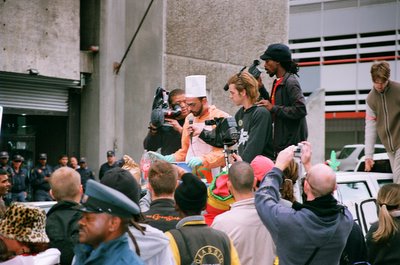
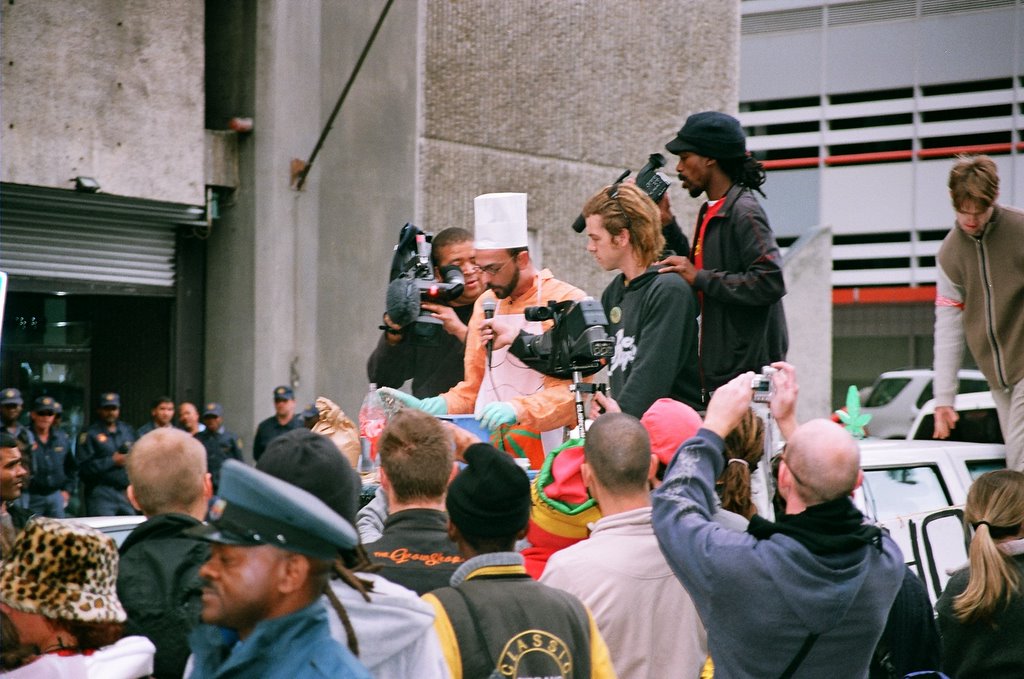
Peacefully Demonstrated outside the Department of Housing May 7 2005
  1. Plant a cannabis seed. Water and allow the plant to grow and produce seed. Plant and water these seeds. Your goal is to grow enough to build a house, you will need about 1 acre to build a 5 roomed home.

    Tyala imbewu ntsangu (ye-cannabis). Nkcenkceshela imbewu uze uyinike ithuba lokuba ikhule ide ikhuphe eyayo imbewu. Uyothi ke uyityale nalembewu uyinkcenkceshele njalo. Injongo yakho kukukhulisa izityalo ezothi zonele ekwakheni indlu, uyakudinga i-acre (malunga nentsimi) enye ukuze wakhe indlu enamagumbi amahlanu.

    Plant 'n hemp saad. Water en laat die plante om te groei en saad te produseer. Plant en water hierdie sade. Jou doel is om  genoeg te groei om 'n huis bou, jy sal ongeveer een aker benodig om 'n 5-kamer huis te bou.

    Sokutshala imbewu insangu njalo. Amanzi nokuvumela isitshalo ukuze zikhule futhi ukhiqize imbewu. Plant namanzi lezi zinhlamvu. Umgomo wakho iwukuba akhule ngokwanele ukwakha indlu, uzodinga 1 Acre ukwakha 5 roomed ekhaya.


  2. Consider the many relevant points presented in the guidelines of Build a house with hemp / Building with hemp.

    Qwalasela yonke imigaqo oyibekelweyo kwincwadana i-Build a house with hemp / Building with hemp.

    Oorweeg die baie relevante punte in die riglyne van die Build a house with hemp / Building with hemp.

    Cabangela amaphuzu amaningi efanele evezwa neziqondiso of Yakha indlu nge insangu / Building nge insangu.


  3. Start planning where your house will stand. Consider everything about the environment you’ll be building in, like winter and summer sunshine, wind and rain – you don’t want to build on a floodplain, or your house will wash away. Be sure to plan all your water and waste requirements.

    Ceba indawo ozokwakha kuyo indlu yakho. Qwalasela yonke into ngomhlaba lo uzokwakha kuwo indlu yakho, izinto ezinje ngemimoya, ilanga, neemvula zehlobo nobusika, akekho umntu ofuna ukwakha indlu yakhe emgxobhozweni okanye apho iyothi ibe lilifa lezikhukhula khona. Uqiniseke ukuba unamanzi akulungeleyo ukwenza oku.

    Begin met die beplanning, waar jou huis sal staan. Oorweeg dit alles oor die omgewing en jy sal gebou in, soos winter en somer son, wind en reën - jy wil nie op 'n vloedvlakte bou nie, of jou huis sal wegspoel. Maak seker om te beplan al jou water en afval vereistes voldoen.

    Qala uhlela kuphi indlu yakho eyokuma. Cabanga konke mayelana imvelo uyobe ngokwakha ku, efana ebusika kanye kwelanga ehlobo, umoya nemvula-ungafuni ukwakha ethile kwemfunda, noma indlu yakho iyoba basuse. Qiniseka ukuhlela konke amanzi kanye imfucuza izidingo zakho.

  4. Cut the grown cannabis plants down and leave in the field to rett for a week. The morning dew and natural rotting process will loosen the fibers from the plant.

    a. Process the plant matter by cutting leaves and branches off, then hit small bundles the length of the plant over and upturned rake.
    b. The long fiber parts that remain in your hand are good for weaving rugs and making various other items your skills can accomplish.
    c. The seed can be gathered for more housing.
    d. Gather the small woody bits (the hurd) that have fallen, this waste is what will be used in the construction material.

    Sika / sarha izityalo uzibeke egadini ixesha elingangeveki ukuze zibole. Umbethe wasekuseni nezinye izinto zendalo ezibolisayo ziya kuyikhulula I-fibre ezityalweni.

    a. Yikhawulezise ngohlukanisa intonga zezityalo namagqabi, uhlale uyiharika rhoqo.
    b. Intonga ezi zinothi zincede kwezinye izinto ezifana nokwenza ingubo nezinye izinto onothi uzibonele zona ngokolwazi lwakho.
    c. Imbewu inokuqokelelwe ukwakha ezinye izindlu.
    d. Qokelela imithana ethe yaziwela njengokuba uzoyisebenzisa xa usakha indlu yakho.

    Sny die gegroei hemp/cannabis plante af en in die veld verlaat om rhett vir 'n week. Die oggend-dou en die natuurlike verrotting proses sal die vesel van die plant los te maak.

    a. Proses van die plantmateriaal deur te sny blare en takke af, dan is getref klein bundels die lengte van die plant oor en omgekeerde hark.
    b. Die lang vesel dele wat in jou hand bly is goed vir die matte weef en die maak van verskeie ander items jou vaardighede kan bereik.
    c. Die saad kan vir meer behuising ingesamel word.
    d. Versamel die klein houtagtige bits (die hurd) wat gedaal het, die afval is wat sal in die konstruksie materiaal gebruik kan word.

    Sika izitshalo insangu njalo. isikhule phansi endle ukuze rhett isonto lonke. Amazolo ekuseni inqubo lwemvelo ukubola kuzokwenza athambise imicu kulesi simila.

    a. Ukucubungula udaba plant ukusika amaqabunga namagatsha ahambe ke hit izinyanda amancane ubude sitshalo phezu ne hala sokutakula.
    b. I-long fibre izingxenye ezisele esandleni sakho kukhona okuhle ngokuba ihlanganisa omata kanye nokwenza ezinye izinto ezahlukahlukene amakhono akho kungaba afeze.
    c. Imbewu kungenziwa babuthana izindlu xaxa.
    d. Ubuthe izingcezu bok encane (i-hurd) ukuthi uwe, lokhu imfucuza okuzokusiza lisetshenziswe ukwaziswa yezokwakha

  5. Wash the hurd, dry it, then wash it again. Be careful not to allow the matter to rot or decay during this process, by turning, airing and allowing the African sun to dry the hurd properly. Now combine in proportions 10:2:3:3 combine the cannabis/ntsangu/dagga Hurd(10), washed river sand 0.5mm(2), hydraulic lime(3) and water(3) to make the mulch (This process may need tweaking depending on your geographic location, humidity, rainfall etc)

    Hlamba ingqokelela yakho, uyomise, uphinde uyihlambe.Ulumkele ukuba lengqokelela ibole kwelithuba, yiguquguqule, uyivumele ibethwe ngumoya uvumele nelanga lase Afrika liyomise lengqokelela. Dibanisa ngokwalo mgaqo 10:2:3:3, dibanisa ke lemvuno yakho yomgquba wentsangu (10) kunye nesanti yasemlanjeni 0.5mm(2), ikalika (3) kunye namanzi (3) ukwenza udaka (Nale into ke iyokuthi ixhomekeke kwindawo leyo ukuyo nemvula zakhona njalo-njalo).

    Was die kudde, droog dit af, dan was dit weer. Wees versigtig om nie toe te laat die aangeleentheid te verrot of verval gedurende hierdie proses, deur die draai, voorlê en laat die Afrika-son om droog die kudde goed. Nou kombineer in verhoudings 10:2:3:3 kombineer die cannabis / ntsangu / dagga Hurd (10), gewaste riviersand 0.5 mm (2), hidrouliese kalk (3) en water (3) aan die deklaag te maak (Hierdie proses kan tweaking nodig, afhangende van jou geografiese ligging, humiditeit, reën, ens)

    Geza izinti, zome it ke geza futhi. Qaphela ukuba singavumeli udaba ukubola noma ukubola kulo msebenzi , ngokubhekisa , angabiki futhi sivumele ilanga Afrika ukuze ome le hurd kahle . Sebesebenzisa ngezabelo 10:2:3:3 hlanganisa insangu njalo. / ntsangu / insangu Hurd (10) , umfula wageza isihlabathi 0.5mm (2) , wokubacindezela umcako (3) kanye namanzi (3) ukwenza semboza ngabo izithombo zezihlahla (Le nqubo may badinga tweaking kuye ngokuthi indawo yokuhlala yakho, umswakama, imvula, njll)

  6. Now build your house! Ngoku ke yakha indlu yakho! Nou bou jou huis! Manje ukwakha indlu yakho!

  7. Teach others. Fundisa abanye. Onderrig ander.
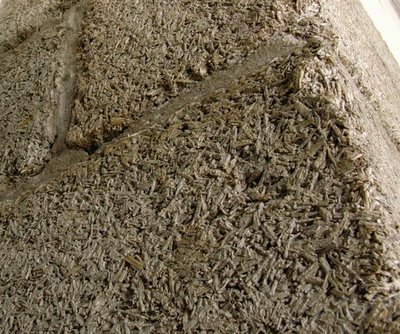
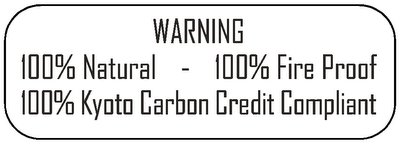
You can use this “dagga-cement” for making bricks, shutter casting or the proven “pole-and-dagga” method. This last method allows for a sturdy, warm, fireproof and water proof home – built with pride and intuitive engineering, not a ‘uniform box’.

Be sure to consider all aspects of your house design and structural requirements. Although the cannabis-cement will become stronger than steel in time, it is not advised to build over 2 floors high without considering structural implications. With planning this cement can be used to build up to 4 floors high.

The cannabis-cement will dry over a period of a month (depending on the weather). At this point you will be able to add the roof. Seal your home’s walls with lime; lime external walls annually. Decorate your house with masonry to make it unique, and paint with coloured lime as per custom.

Always PLANT A TREE in a place that will provide shade, to commemorate this accomplishment.
Council will plant trees if citizens care for them. Call (021) 689-8938 http://www.trees.org.za/

Assist your family, friends or neighbors with your experience and expertise. Share information and technique; you can uplift yourself and your community.


Sunday, February 23, 2014

SANCWG Press Release

The Medical Innovation Bill recently announced in parliament by Mario Oriani-Ambrosini brings cannabis into discussion and more in line with international changes. Issues arising from the bill will serve as important instruments to guide the law and policymakers through the process of reform.

Oriani-Ambrosini spoke of The Cannabis Position Paper, available at cannabis.reforms.co.za, which he gave to President Jacob Zuma and Minister of Health Dr Aaron Motsoledi. It summarises current scientific literature in an easy-to-read format that sets out the historical backdrop of prohibition and its negative effects.

The SANCWG is engaged in discussions with the Central Drug Authority (CDA) regarding the review and reform of cannabis policies. To bring our laws in line with international policies in a manner that is equitable and resistant to monopolisation. A complaint laid in 2013 with the Public Protector regarding impropriety in the cannabis trials performed by government thus far, is under investigation. Friday, Advocate Johan Raunbenheimer, investigator on this complaint said that he will be meeting with the Director-General of the Department of Health in the coming week regarding this, and will be reporting back once this meeting has been held.

In the President’s SONA speech he indicated, other than mining, five other job drivers were identified: tourism, agriculture, the green economy, infrastructure development and manufacturing. The SANCWG, InternAfrica and NORML ZA will make application to research the cannabis plant’s full potential and to participate in the trials that will supply the first hospital pilots.

Cannabis, has been identified as a niche product worth exploring and can serve as a cash crop with labour-intensive job creation. The National Development Plan 2030 contemplates niche markets that provide opportunities for South African’s to compete globally. Agricultural niche crops are mentioned as target markets. Cannabis used for all its industrial purposes has the potential to radically transform some of South Africa’s poorest regions. A regulated environment will allow this.

President Zuma instructed the Minister of Health to investigate this further. Support from the legal and medical fraternity has been widespread and positive.

The SANCWG will make representations on the Medical Innovation Bill by the due date.

SANCWG - South African National Cannabis Working Group 

Contact: Info@reforms.co.za

Thursday, February 14, 2013

State of nation speech low on green details

Cape Town - President Jacob Zuma's state of the nation address covered a wide variety of social issues, but was scant on detail, a sociologist said on Thursday evening.

“The president covered a wide range of ground, but perhaps he lost a bit of focus,” said Prof Roger Southall of the University of the Witwatersrand's sociology department.

He said Zuma mentioned the importance of small business and government support for such entities, but gave “absolutely no details”.

It was promising that Zuma had spoken about renewable energy, but more money should be allocated to realising green initiatives, Southall said. 

- Sapa

Sunday, December 4, 2011

Jobs promise gives SA green fever

SOUTH Africa is hoping to capitalise on a "green revolution" that could boost the economy and generate hundreds of thousands of jobs within 10 years.

Key government, civil society and business players at the COP17 climate talks on Friday night were all pushing for the country's transition towards a more eco-friendly and sustainable economy.

Renewable sources of energy and materials form the basis of a green economy, in which industries commit to limiting their harmful carbon emissions.

South Africa currently produces more than 90% of its electricity from coal-fired power stations and accounts for just over 1% of man-made greenhouse gases in the world.

The government, through its "green" tax system, collected nearly R700-million over the past year from levies and taxes on plastic bags, fuel, electricity, vehicle emissions and air travel.

The taxes are aimed at reducing the negative impact on the environment.

Now the government is intensifying plans to move to a low-carbon economy within the next decade, with the recent signing of the national green economy accord in Pretoria.

The accord binds government, business and labour to creating 300000 jobs by building a green industrial base in South Africa.

Experts believe the new accord has the potential to significantly change the country's current carbon and capital-intensive economic framework.

Economic Development Minister Ebrahim Patel said this week that South Africa had to make the move towards a green economy as quickly as possible.

"As a considerable emitter of greenhouse gases, South Africa faces the challenge of transitioning to a less carbon-intensive growth trajectory without delay."

At a round-table discussion hosted by the Financial Times and Brand SA on Friday, Environment Minister Edna Molewa said she welcomed South Africa's "confident move into a green economy", with the creation of jobs in the next 10 years.

"At COP18 we will stand up proud and say to the world, 'yes, we are doing our bit'," Molewa said.

"We have stressed that there will be creation of jobs. This is not just an effort that is jobless, we will be getting into sustainable development, that talks to our people, our economy and takes care of our environment."

According to a "green jobs" report released on Friday, the largest contribution to the job market would come from natural resource management "due to the rich endowment that SA has in terms of solar and wind power".

The report - compiled by the Industrial Development Council and the Development Bank of South Africa - estimates that as many as 500000 jobs could be created in a greener economy.

"As more and more businesses, households and the public sector begin to embrace green technologies and practices, the potential exists to create a sustainable number of new job opportunities and to facilitate reskilling," the report said.

It showed that other jobs would come from green building activities, recycling, the conversion of waste to energy, the production of batteries for electric vehicles, soil and land management and renewable energy generation.

Finance Minister Pravin Gordhan said South Africa needed to find more effective economic models to address the issue of climate change.

"We must convert opportunities into actuality," he said. "What we have witnessed now as a result of the climate crisis is the inability of the current economic models to create jobs ... Greening the economy is a huge opportunity."

Cosatu is backing the move towards a greener economy.

Said its spokesman Patrick Craven: "In the long run it is essential for the survival of the planet, that we have an economy which is not dependent on the burning of fossil fuels.

"Of course some jobs will be lost in some sectors. We believe that many, if not more, could be created in other sectors."

- Timeslive

Saturday, October 8, 2011

Analysis: South African carbon tax plan hurts job ambitions

(Reuters) - South Africa's carbon tax plan is running headlong into a clash with its job creation plans, putting the government in a bind ahead of hosting of a global climate summit at the end of the year as it seeks to rein in emissions without hurting growth.

Africa's biggest economy wants to cut CO2 emissions by 34 percent over the next decade but has little flexibility to make fast changes with major employers among the top polluters and its cash-strapped power sector almost fully reliant on coal.

The government has said its top priority is to cut into a chronic 25 percent unemployment rate but industry will have less money for new employees if it is forced to pay high carbon taxes and while exports flounder due to an economic slump in Europe and the United States.

South Africa said it would consider sector-specific tax reductions and exemptions to protect key industries, although these would be temporary, raising fears the proposed tax will force some mining or industrial operations to close.

"The carbon tax as currently proposed would certainly kill the South African steel industry," Nonkululeko Nyembezi-Heita, the chief executive ArcelorMittal South Africa said.

The government said a tax imposed directly on all measured emissions at a rate of 75 rand ($9) a tonne of CO2 and eventually rising to around 200 rand ($25) a tonne, seemed "most appropriate," although analysts said the rates were high.

The benchmark EU Allowances carbon price is at just under 11 euros ($14.6) per tonne of CO2.

Australia, a mining hub like South Africa, said it would tax its top 500 polluters at a price starting at A$23($22) per tonne that would rise about 5 percent a year before moving to a market-based emissions trading scheme in 2015.

Nearly all of South Africa's power is generated by state-utility Eskom's coal-fired plants, making it impossible for companies to choose less carbon-heavy electricity.

South Africa is investing heavily to diversify its energy mix away from coal and to have renewable energy and nuclear power supply a big portion of its electricity, but it may take decades until such measures materialize.

"You can't be introducing any penal measures in the form of a carbon tax until the government has restructured its energy source," said Duane Newman, a tax director at Deloitte.

TOP POLLUTERS

South Africa hopes the tax will influence behavior, especially at top polluters Eskom and petrochemicals group Sasol, which collectively spew out more than half of the country's annual emissions of around 500 million tonnes.

Yet emissions in South Africa are still disclosed on a voluntary basis, making it difficult to name the full extent of pollution or to calculate an appropriate tax, analysts said.

"We are making decisions based on potentially factually incorrect information," Deloitte's Newman said.

A carbon tax would put further strain on industries that are already battling with steep increases in power tariffs, meant to help Eskom pay for new power plants and avoid a repeat of a crisis which brought industry to a halt in early 2008.

Cash-strapped Eskom's chief executive Brian Dames said any cost of a carbon tax be fully passed to consumers, with analysts saying it could raise tariffs by up to 30 percent.

Critics question South Africa's desire to be a frontrunner on the tax, especially as its voluntary offer to cut emissions is tied to commitments of financial and technical support from developed nations, which so far have not materialized.

They argue it is too early to look at a tax, especially given the absence of international climate change agreements.

South Africa is hoping the tax, along with investments in renewable energy, will spur the development of a local green industry, create a renewable power manufacturing base and jobs.

But analysts said the tax may instead force miners to choose to relocate their smelting or other energy-intensive activities.

"This could potentially have a material impact on our competitiveness in the export market, in particular the coal market," said Stan Pillay, manager for climate change and energy at global miner Anglo American.

Some fear South Africa may be rushing on the tax decision as it seeks to improve its carbon credentials ahead of hosting the Conference of Parties (COP17) in Durban at the end of 2011.

ArcelorMittal said industries should be given allowances based on global benchmarks and be taxed if they exceed them.

"Then you would be taxed on something over which you have some control and which you can manage down overtime by implementing improvement projects," said Siegfried Spanig, the steelmaker's environmental manager.

Sasol's chief executive David Constable said it would push for voluntary reductions over the punitive measures currently proposed.

"We would much rather like to see a carrot rather than a stick approach," he said.

"There will have to be different rulings and guidelines by sector. Voluntary targets with incentives will not affect the competitiveness of the country and reduce jobs."

A draft tax policy paper will be released in November. ($1 = 7.879 South African Rand) ($1 = 0.751 Euros) ($1 = 1.041 Australian Dollars)

Wednesday, April 14, 2010

How green is our Constitution?

Nature has powerful resonances for South Africans. Well-heeled, educated folk regard it as an elitist hobby. Others, who live off the land, revere it as a critical survival resource.

Paradoxically, nature is routinely disrespected by South Africans.

Debacles such as those involving coal-mining rights near the Mapungubwe National Park and the dumping of polluted water in the Marievale Nature Reserve in Springs seem to be on the rise. The former is a world heritage site and the latter is an internationally recognised Ramsar bird and wetland area.

One source of this ungreen behaviour is the Constitution. Section 24 of the Bill of Rights, which deals with the environment, is limp. Nearing retirement age, it is the result of a problematic people-centred, rights-based approach. It is worth unpacking these shortcomings if we are to deserve our emerging status as a player in international green politics.

Basic rights to life, dignity and equality are expressed in our Constitution, as well as democratic freedoms of expression, association, assembly, opinion, belief and religion, and culture and language. These reflect the giddiness of fresh post-apartheid psychology.

Complex relationships between people and the environment appear to have been overlooked in the Constitution. Section 24 (b) states that "[e]veryone has the right to have the environment protected for the benefit of present and future generations, through reasonable legislative and other measures".

This comes across as a weak attempt to broadly define sustainable development because it does not delineate how humans should interact with the environment of which they are a part. Later on, Section 24 b(iii) refers to "justifiable economic and social development and ecologically sustainable development". This vagueness and jargon causes difficulties in interpreting what sustainable development actually means in the legal-politik of ordinary people's lives.

The right to "an environment that is not harmful to their health or wellbeing" is stated in Section 24(a) even before any reference to sustainable development -- suggesting that greater importance is attached to human needs and standards than to sustainable development. More importantly, it reveals that the Constitution treats "health or ­wellbeing" and "sustainable development" as mutually exclusive concepts that are not interrelated.

Section 24 b(i) to (iii) collectively refers to "reasonable legislative and other measures that prevent pollution and ecological degradation, promote conservation and secure … sustainable development". So, for example, as long as water quality is fit for human health or wellbeing, the law courts and other regulatory systems can allow rivers to become polluted to the point where all life forms and ecological processes in those rivers are destroyed.

In effect, the poorly thought-through expression of sustainable development in the Constitution can translate to mean that the state can sanction environmental destruction.

The Bill of Rights also fails to anticipate emerging environmental challenges such as those associated with climate change and carbon emissions. For example, do citizens have the right to clean air, irrespective of whether the law courts determine the effect on our health or wellbeing? It is clear that Section 24 presents environmental rights as trade-off rights that are negotiable. In contrast, the Constitution is explicit about the right to education, the right to a free and fair trial, the right to shelter and so forth.

Our Constitution is a platform that allows for fundamental shifts in society's norms and values and to this end it imposes duties on all spheres of government to satisfy "everyone's right to have the environment protected". This requires resources and technical and leadership capacity in government. It also requires a coordinated understanding and a shared vision of sustainable development, especially among the environmental affairs, minerals and energy and agriculture, fisheries and forestry departments.

Our Constitution dissociates Citizen Joe Soap from playing an active role in protecting the environment because government is the regulator. This is disempowering for two reasons.

First, it removes any incentive for people to bring the state to book when it fails in its duty. Legal recourse is almost impossible in South Africa because Section 24 does not give easy credence to laws that grant people the right to sue on behalf of nature, even when legal compliance standards were not met. Recall the high-profile slanders associated with the court case involving the preservation of the flamingo breeding site in Kimberley versus the lobbying for a housing scheme.

Second, the scope for people power, social mobilisation and environmental activism is absent from Section 24. For seemingly enlightened types, environmental rights embody lifestyle changes that reduce carbon footprints and consumption behaviour. This can amount to remaining childless (but adopting an orphan), giving up meat and getting on bicycles to buy organic veggies from the local market. But for the majority, environmental rights involve local, proactive decision-making muscle in spaces where corporations or government exercise power.

In September 2008 disillusionment with foreign multinationals displacing people and damaging the richness of Ecuador's biodiversity (including the Galapagos Islands) led to a successful vote to constitutionally enshrine nature-based rights. Ecuador's Constitution recognises that people are trustees of nature who are obliged to protect and preserve it. It also recognises that nature -- ecosystems and all living organisms -- have fundamental and inalienable rights to exist.

The Ecuadorian case is groundbreaking in sophistication because human beings are correctly seen as being part of nature. This is a key principle of sustainable development. The result is a fusion of holistic human values into the sustainable development agenda, which in return is integrated with governance systems -- a philosophy known as "Earth jurisprudence".

As in Ecuador, South Africa and elsewhere in the developing world, the vacuuming effect of expanding external powers in many rural landscapes dries up small local businesses and wreaks havoc with environmental resources, community values and labour rights. Safeguarding the future may mean creating local constitutions or municipal bylaws that espouse the rights of both nature and citizens. The basis for this is a robust and well-thought-through approach to sustainable development in the Constitution.

A legal remedy for Section 24, for example, might be to present principles and goals for air and water as individual subsections that relate to biodiversity and people. This would signal to the state and society what the particular duties are that we have towards our environment. This will also slay the perspective that the environment is the property of the state.

If we dare to forecast the evolution of South Africa's track record of sustainable development over the next few years, then perhaps it is time for a radical rethink.

~ Janice Golding is an independent consultant and commentator with a doctorate in environmental change from Oxford University

- M&G

Saturday, February 20, 2010

How the Western Cape will be run – Helen Zille

Speaker, besides making the Western Cape the national benchmark for good governance, we want to make the Western Cape the place in South Africa to do business. Attracting and retaining our capital and skills is essential for growth, which in turn is essential to create sustainable jobs.

This goal is captured in another of our strategic objectives: maximising economic growth, job creation and sustainability.

Provincial governments, and national governments for that matter, do not grow the economy or create jobs. Businesses do that. But governments can provide an enabling environment, or a disabling environment, which either encourages or discourages growth.

We intend to do the former.

There are limits to what provincial governments can do in this regard. We cannot, for example, change the inflexible labour legislation that severely inhibits job creation.

However, there are a number of innovations we can make which will create the kind of enabling environment that allows businesses, entrepreneurs and job-seekers to succeed.

Agriculture, which brings in 40% of all export revenue and employs 200,000 people, is integral to maximizing economic growth and creating jobs in the province.

We will help shield farmers and farm workers from the negative impact of climate change by investigating ways to mitigate its effects. Over the next five years, we aim to increase agricultural production through research and financial support to farmers and assisting farmers to access domestic and international markets. To encourage more people to take up farming, we will continue to offer training and financial support to students who study agriculture. This sector is of cardinal importance to the welfare of our people...

...We are currently reviewing the regulatory environment and the cost of doing business in the province. Our aim is to cut red tape by 20% in the next five years to encourage more companies to do business in the province. Dr Johann Rupert, at his inauguration as chancellor of Stellenbosch University last night, spoke about his experience of being able to set up a company in less than 3 weeks in some parts of the world. Those are the places we must learn to compete with if we want to attract investment. ..

...Speaker another area where we face severe financial and other constraints is housing. As part of our strategic objective plan to develop integrated human settlements we are looking at a number of innovative ways to provide more people with access to shelter and basic services than ever before.

There are number of constraints to housing delivery in the province. I will list them briefly. One is that demand drastically outstrips supply. The current backlog of 500,000 households is growing year-on-year due to in-migration and barriers to delivery.

Another is that onerous planning legislation is hampering delivery to the point of paralysis in some cases.

We are also constrained by a lack of funding for housing from the national government and a scarcity of well-located housing land in the province.

If we carry on like this, the housing backlog will double in the next thirty years.

Since we have been in office, we have cultivated good relations with the City of Cape Town and the national Department of Housing - the lack of which have compromised delivery in the past.

All three spheres of government are working together to re-conceptualise the next phase of the N2 Gateway in a way that avoids the previous policy mistakes we in the City of Cape Town warned about. This co-operation cannot happen if the national government cuts off funding for the project, and seeks to pass on the cost to the ratepayers of the City.

We are also working with the City and the national Housing Development Agency (HDA) on an integrated plan to develop Joe Slovo phase 2 which will not require mass evictions, despite the court order that was obtained for this purpose by the previous government.

But this improvement in intergovernmental relations will only take us so far. The truth is that the current main mode of housing delivery simply cannot address the current and future need for housing in the
province.

Speaker, as I said at the beginning of my address, we believe in expanding opportunities to as many people as possible and allowing them to take responsibility for maximising those opportunities.

This shapes our approach to housing just as it does every other policy area. When resources are as scarce as ours are, it is fairer to do something for many rather than a lot for very few. The latter approach encourages abuse and corruption and leaves most people with nothing.

We will therefore increase our focus on the provision of serviced sites.

We are introducing a municipal database support programme to ensure that accurate data is captured onto the national Housing Subsidy System for verification. This will enable us to develop a standardised, transparent and fair selection process of beneficiaries to be applied across the province.

As I mentioned earlier, besides the financial constraints on housing delivery, there is a scarcity of well-located land for housing. New housing developments tend to be built away from economic opportunities and social amenities, reinforcing the impact of apartheid-era spatial planning.

To tackle this, we are lobbying national departments and state owned enterprises to make land available for human settlement development in our province. We are also developing clear guidelines which set out the minimum densities for low-cost and GAP housing projects.

Speaker, we simply have to build upwards if we are to prevent more urban sprawl and bring people closer to economic opportunities. By 2014, we aim to triple the average density of housing projects on well-located land to 90 units per hectare. This is also crucial to secure the viability of public transport systems.

There are a number of other components to our strategic plan for housing, which I will leave for the Minister to announce in his budget vote.

I will say one thing about the onerous red tape and planning legislation that can stall housing projects for years. Many of the regulations, such as the Environmental (and other) Impact Assessments, fall under national legislation which is why I have presented them as part of a package to President Zuma requesting their review.

Others, such as the Land Use Planning Ordinance, are provincial laws. We are currently in the process of reviewing all provincial spatial planning legislation with the aim of consolidating all of it into one Act that simplifies and clarifies roles and responsibilities regarding land use planning.

We are also seriously exploring the viability of alternative building materials and methods for house construction. Some of these alternatives are much cheaper than conventional brick and mortar to build and maintain. They are also more environmentally sustainable. (Click this statement to see more)
By 2014, we aim to increase the percentage of units built using energy-efficient methods and materials, from 10% to 40%.
This brings me to another of our ten strategic objectives: optimising resource efficiency and sustainability.

We know that if we are to compete globally, we need to make more efficient use of our resources.

As more and more people migrate to the Western Cape, so our carbon footprint increases. Currently, 95% of the energy generated in the province is generated by burning fossil fuels. If we do nothing, greenhouse gas emissions will increase by 20% in the next decade.

We cannot go on like this. We have to take proactive steps to improve the quality of the air we breathe.

I have already mentioned our commitment to green low cost housing programmes. This will form part of a broader renewable energy programme including the harnessing of wind and solar power as well as generating energy from alternative sources such as sewerage sludge, biogas and agricultural waste.

Climate change and in-migration to the province mean that there is less water for more people. So, as part of our commitment to resource sustainability, we are making water management a special focus area.

We are currently in the development phase of a provincial integrated water resource management plan which will improve catchment management and make the province more water efficient through the recycling and reuse of wastewater.

Speaker, all of the policy programmes and interventions I have mentioned today contribute to the final strategic objective of poverty reduction and alleviation.

This is our single biggest challenge and underpins all we do. Let me summarise our approach.

To alleviate poverty in the short term:

We must provide as many people as we can with basic services, access to clean water, sanitation and electricity. We must find a range of ways to deliver sustainable housing opportunities.

We must encourage entrepreneurship and self-sustainable income-generating projects that give people the opportunity to break the cycle of dependency on the state.

We must increase access to quality healthcare and antiretroviral medication.

We must ensure that the funds directed to our social partners are used to improve people's lives.

To reduce poverty in the long term:

We must create an enabling environment for job-creating economic growth and ensure the skills we produce are matched to the needs of the economy.

This includes combating social ills such as crime, which scares off investors, and substance abuse, which renders many people irresponsible and unemployable.

We must fight corruption which makes poor people poorer...

... Within five years we will have tangible results to show for our efforts. We will be much closer to creating the open, opportunity society that the people of the Western Cape voted for.

I have no doubt we will make mistakes along the way. When we do, you can be sure they will be pointed out to us. When we genuinely err, we will admit it, take remedial action and plot a new course.

But we will, at all times, be honest with the citizens of the Western Cape. If we do not meet the targets we have set for ourselves, we won't try and spin the statistics, shift the goal posts or blame others.

We understand that integrity is the most powerful asset of any government. And we know that once the people of this province lose faith in you, your days are numbered.

This is how it should be. The politicians should be scared of the people, not the other way around.

This is why the Western Cape is at the vanguard of democracy in South Africa. It is why this province, under this government, will one day be a beacon of hope for every South African.

- PoliticsWeb

Thursday, January 21, 2010

How to build a Cannabrick Home


Peacefully Demonstrated outside the Department of Housing May 7 2005

  1. Plant a cannabis seed. Water and allow the plant to grow and produce seed. Plant and water these seeds. Your goal is to grow enough to build a house, you will need about 1 acre to build a 5 roomed home.

    Tyala imbewu ntsangu (ye-cannabis). Nkcenkceshela imbewu uze uyinike ithuba lokuba ikhule ide ikhuphe eyayo imbewu. Uyothi ke uyityale nalembewu uyinkcenkceshele njalo. Injongo yakho kukukhulisa izityalo ezothi zonele ekwakheni indlu, uyakudinga i-acre (malunga nentsimi) enye ukuze wakhe indlu enamagumbi amahlanu.

    Plant 'n hemp saad. Water en laat die plante om te groei en saad te produseer. Plant en water hierdie sade. Jou doel is om te groei genoeg is om 'n huis bou, jy sal ongeveer een aker benodig om' n 5-kamer huis te bou.

  2. Consider the many relevant points presented in the guidelines of Build your house step-by-step.

    Qwalasela yonke imigaqo oyibekelweyo kwincwadana i-Build Your House Step By Step.

    Oorweeg die baie relevante punte in die riglyne van die bou van jou huis stap aangebied-vir-stap.


  3. Start planning where your house will stand. Consider everything about the environment you’ll be building in, like winter and summer sunshine, wind and rain – you don’t want to build on a floodplain, or your house will wash away. Be sure to plan all your water and waste requirements.

    Ceba indawo ozokwakha kuyo indlu yakho. Qwalasela yonke into ngomhlaba lo uzokwakha kuwo indlu yakho, izinto ezinje ngemimoya, ilanga, neemvula zehlobo nobusika, akekho umntu ofuna ukwakha indlu yakhe emgxobhozweni okanye apho iyothi ibe lilifa lezikhukhula khona. Uqiniseke ukuba unamanzi akulungeleyo ukwenza oku.

    Begin met die beplanning, waar jou huis sal staan. Oorweeg dit alles oor die omgewing en jy sal gebou in, soos winter en somer son, wind en reën - jy nie wil bou op 'n vloedvlakte, of jou huis sal wegspoelen nie. Maak seker om te beplan al jou water en afval vereistes voldoen.

  4. Cut the grown cannabis plants down and leave in the field to rhett for a week. The morning dew and natural rotting process will loosen the fibers from the plant.

    a. Process the plant matter by cutting leaves and branches off, then hit small bundles the length of the plant over and upturned rake.
    b. The long fiber parts that remain in your hand are good for weaving rugs and making various other items your skills can accomplish.
    c. The seed can be gathered for more housing.
    d. Gather the small woody bits (the hurd) that have fallen, this waste is what will be used in the construction material.

    Sika / sarha izityalo uzibeke egadini ixesha elingangeveki ukuze zibole. Umbethe wasekuseni nezinye izinto zendalo ezibolisayo ziya kuyikhulula I-fibre ezityalweni.

    a. Yikhawulezise ngohlukanisa intonga zezityalo namagqabi, uhlale uyiharika rhoqo.
    b. Intonga ezi zinothi zincede kwezinye izinto ezifana nokwenza ingubo nezinye izinto onothi uzibonele zona ngokolwazi lwakho.
    c. Imbewu inokuqokelelwe ukwakha ezinye izindlu.
    d. Qokelela imithana ethe yaziwela njengokuba uzoyisebenzisa xa usakha indlu yakho.

    Sny die gegroei hemp/cannabis plante af en in die veld verlaat om rhett vir 'n week. Die oggend-dou en die natuurlike verrotting proses sal die vesel van die plant los te maak.

    a. Proses van die plantmateriaal deur te sny blare en takke af, dan is getref klein bundels die lengte van die plant oor en omgekeerde hark.
    b. Die lang vesel dele wat in jou hand bly is goed vir die matte weef en die maak van verskeie ander items jou vaardighede kan bereik.
    c. Die saad kan vir meer behuising ingesamel word.
    d. Versamel die klein houtagtige bits (die hurd) wat gedaal het, die afval is wat sal in die konstruksie materiaal gebruik kan word.


  5. Wash the hurd, dry it, then wash it again. Be careful not to allow the matter to rot or decay during this process, by turning, airing and allowing the African sun to dry the hurd properly. Now combine in proportions 10:2:3:3 combine the cannabis/ntsangu/dagga Hurd(10), washed river sand 0.5mm(2), hydraulic lime(3) and water(3) to make the mulch (This process may need tweaking depending on your geographic location, humidity, rainfall etc)

    Hlamba ingqokelela yakho, uyomise, uphinde uyihlambe.Ulumkele ukuba lengqokelela ibole kwelithuba, yiguquguqule, uyivumele ibethwe ngumoya uvumele nelanga lase Afrika liyomise lengqokelela. Dibanisa ngokwalo mgaqo 10:2:3:3, dibanisa ke lemvuno yakho yomgquba wentsangu (10) kunye nesanti yasemlanjeni 0.5mm(2), ikalika (3) kunye namanzi (3) ukwenza udaka (Nale into ke iyokuthi ixhomekeke kwindawo leyo ukuyo nemvula zakhona njalo-njalo).

    Was die kudde, droog dit af, dan was dit weer. Wees versigtig om nie toe te laat die aangeleentheid te verrot of verval gedurende hierdie proses, deur die draai, voorlê en laat die Afrika-son om droog die kudde goed. Nou kombineer in verhoudings 10:2:3:3 kombineer die cannabis / ntsangu / dagga Hurd (10), gewaste riviersand 0.5 mm (2), hidrouliese kalk (3) en water (3) aan die deklaag te maak (Hierdie proses kan tweaking nodig, afhangende van jou geografiese ligging, humiditeit, reën, ens)

  6. Now build your house! Ngoku ke yakha indlu yakho! Nou bou jou huis!

  7. Teach others. Fundisa abanye. Onderrig ander.

You can use this “dagga-cement” for making bricks, shutter casting or the proven “pole-and-dagga” method. This last method allows for a sturdy, warm, fireproof and water proof home – built with pride and intuitive engineering, not a ‘uniform box’.

Be sure to consider all aspects of your house design and structural requirements. Although the cannabis-cement will become stronger than steel in time, it is not advised to build over 2 floors high without considering structural implications. With planning this cement can be used to build up to 4 floors high.

The cannabis-cement will dry over a period of a month (depending on the weather). At this point you will be able to add the roof. Seal your home’s walls with lime; lime external walls annually. Decorate your house with masonry to make it unique, and paint with coloured lime as per custom.

Always PLANT A TREE in a place that will provide shade, to commemorate this accomplishment.

Council will plant trees if citizens care for them. Call (021) 689-8938 http://www.trees.org.za/

Assist your family, friends or neighbors with your experience and expertise. Share information and technique; you can uplift yourself and your community.




Friday, January 15, 2010

Police swoop on what could be 144 built homes raw material

Police late this afternoon swooped on a dagga plantation barely outside of the western outskirts of Pretoria. The land apparently belongs to the provincial government and the dagga will be destroyed as soon as possible. No arrests were made.

The plantation, barely 50m from a major road connecting Pretoria to the North West Province, had plants some reaching more than 2m high and is growing undisturbed on about 12 square kilometres. Police started gathering intelligence on the site late last year.

The police’s Tummi Golding says they are worried about the land itself because they want to investigate further who the land belongs to. Golding says if the land does not belong to anybody it will go back to government. The area is informally used to grow vegetables and maize, but the land, usually bustling with people working in their crops, grew eerily deserted as police arrived.

A police helicopter was also used to do an aerial survey of the dagga field. The police investigation will continue but the dagga will be destroyed as soon as possible. Captain Meshack Mthembi of the police’s Forensic Science Laboratory’s Drug Section says they will use a special kind of weed killer which will slowly kill off the plant material. Samples of the dagga plants were also collected to be tested.

- SABC

Friday, January 1, 2010

2009

InternAfrica served information on the Western Cape Human Settlement and related South African Human Settlement crisis; reaching many more African countries this year, with a working solution.

This Information was accessed by:

102 Universities
35 Technicons

13 media houses including CNN, BBC & Al Jazeera.

In 2009
Fire displaced 6,129 humans, killing 20, maiming another 6 and destroyed 1,483 shacks. Floods displaced 36,399 humans from their settlements.

InternAfrica has not included Xenophobic displacements in this years tally.
(click here for 10 Year spreadsheet)

2000 - 2009 Affected by Fire & Flood

Number of Shacks: 52,875
Human Settlement Deaths: 281
Humans Displaced from Settlements: 220,302
Burn Victims: 88

2009 saw 3 international companies start their businesses building with cannabricks, including the 1st international conference; the year closed with the printing of an extraordinary gazette 6679 - where the city of Cape Town received R2,5 Million to research sustainable low-cost housing...

Measurable outputs: The research would result in:
(Please note this is as printed in the gazette)
  • New businesses that could emerge from the project
  • Ecological sound and energy efficient initiatives generated in the surrounding area;
  • Reduced levels of local drug use and violence
  • Percentage of food grown locally and energy produced locally;
  • Amount of local currency in circulation as a percentage of total money in circulation;
  • Quantity of renewable building materials produced locally
  • Levels of pride and "ownership" displayed through maintenance of the settlement; and
  • Contributions to the Cape town City targets (10% of houses in City with solar water heaters by 2010 and 10% renewable energy by 2020)

Tuesday, September 22, 2009

Dagga should be legalised: Police and prisonwardens

Cosatu's congress could end on a high note, with police union Popcru pushing for dagga to be legalised.

The proposal was due to come up for debate today when delegates debate resolutions.

Popcru general secretary Nkosinathi Theledi told The Star that by legalising dagga, the police would be freed to focus on fighting more serious crime.

If adopted, said Theledi, the proposal would be forwarded to the SAPS top brass for consideration.

"Whether we like it or not, dagga is being used and it should rather be legalised.

"We are saying it should be regulated ... the age limit on who is allowed to use it.

"Research even tells us that there are cases where doctors prescribe dagga for patients with particular ailments.

"If it happens, then this will save police resources - instead of chasing after (dagga sellers and producers), they can look at bigger crime," said Theledi.

Theledi, who says he does not smoke dagga, said he was initially opposed to the idea, but had been persuaded otherwise by his union.

While the use of dagga may encourage some users to try harder drugs, Theledi said regulation - such as that on alcohol sales - should be enforced.

Legalisation would also "empower the people who produce it and will add to the economy", according Theledi, stressing it would be up to congress delegates to debate and finalise the issue.

Meanwhile, Cosatu deputy general secretary Bheki Ntshalintshali said that, for the first time, the issue of global warming would feature at the congress.

- The Star

and like 5 other countries around the world with less of the raw product and housing demand - you too can build sustainable carbon negative cannabrick homes from it; click the pic to find out how

Monday, September 14, 2009

How to build your own carbon negative Cannabrick Home


Peacefully Demonstrated outside the Department of Housing May 7 2005
  1. Plant a cannabis seed. Water and allow the plant to grow and produce seed. Plant and water these seeds. Your goal is to grow enough to build a house, you will need about 1 acre to build a 5 roomed home.

    Tyala imbewu ntsangu (ye-cannabis). Nkcenkceshela imbewu uze uyinike ithuba lokuba ikhule ide ikhuphe eyayo imbewu. Uyothi ke uyityale nalembewu uyinkcenkceshele njalo. Injongo yakho kukukhulisa izityalo ezothi zonele ekwakheni indlu, uyakudinga i-acre (malunga nentsimi) enye ukuze wakhe indlu enamagumbi amahlanu.

    Plant 'n hemp saad. Water en laat die plante om te groei en saad te produseer. Plant en water hierdie sade. Jou doel is om te groei genoeg is om 'n huis bou, jy sal ongeveer een aker benodig om' n 5-kamer huis te bou.


  2. Consider the many relevant points presented in the guidelines of Build your house step-by-step.

    Qwalasela yonke imigaqo oyibekelweyo kwincwadana i-Build Your House Step By Step.

    Oorweeg die baie relevante punte in die riglyne van die bou van jou huis stap aangebied-vir-stap.


  3. Start planning where your house will stand. Consider everything about the environment you’ll be building in, like winter and summer sunshine, wind and rain – you don’t want to build on a floodplain, or your house will wash away. Be sure to plan all your water and waste requirements.

    Ceba indawo ozokwakha kuyo indlu yakho. Qwalasela yonke into ngomhlaba lo uzokwakha kuwo indlu yakho, izinto ezinje ngemimoya, ilanga, neemvula zehlobo nobusika, akekho umntu ofuna ukwakha indlu yakhe emgxobhozweni okanye apho iyothi ibe lilifa lezikhukhula khona. Uqiniseke ukuba unamanzi akulungeleyo ukwenza oku.

    Begin met die beplanning, waar jou huis sal staan. Oorweeg dit alles oor die omgewing en jy sal gebou in, soos winter en somer son, wind en reën - jy nie wil bou op 'n vloedvlakte, of jou huis sal wegspoelen nie. Maak seker om te beplan al jou water en afval vereistes voldoen.


  4. Cut the grown cannabis plants down and leave in the field to rhett for a week. The morning dew and natural rotting process will loosen the fibers from the plant.

    a. Process the plant matter by cutting leaves and branches off, then hit small bundles the length of the plant over and upturned rake.
    b. The long fiber parts that remain in your hand are good for weaving rugs and making various other items your skills can accomplish.
    c. The seed can be gathered for more housing.
    d. Gather the small woody bits (the hurd) that have fallen, this waste is what will be used in the construction material.

    Sika / sarha izityalo uzibeke egadini ixesha elingangeveki ukuze zibole. Umbethe wasekuseni nezinye izinto zendalo ezibolisayo ziya kuyikhulula I-fibre ezityalweni.

    a. Yikhawulezise ngohlukanisa intonga zezityalo namagqabi, uhlale uyiharika rhoqo.
    b. Intonga ezi zinothi zincede kwezinye izinto ezifana nokwenza ingubo nezinye izinto onothi uzibonele zona ngokolwazi lwakho.
    c. Imbewu inokuqokelelwe ukwakha ezinye izindlu.
    d. Qokelela imithana ethe yaziwela njengokuba uzoyisebenzisa xa usakha indlu yakho.

    Sny die gegroei hemp/cannabis plante af en in die veld verlaat om rhett vir 'n week. Die oggend-dou en die natuurlike verrotting proses sal die vesel van die plant los te maak.

    a. Proses van die plantmateriaal deur te sny blare en takke af, dan is getref klein bundels die lengte van die plant oor en omgekeerde hark.
    b. Die lang vesel dele wat in jou hand bly is goed vir die matte weef en die maak van verskeie ander items jou vaardighede kan bereik.
    c. Die saad kan vir meer behuising ingesamel word.
    d. Versamel die klein houtagtige bits (die hurd) wat gedaal het, die afval is wat sal in die konstruksie materiaal gebruik kan word.


  5. Wash the hurd, dry it, then wash it again. Be careful not to allow the matter to rot or decay during this process, by turning, airing and allowing the African sun to dry the hurd properly. Now combine in proportions 10:2:3:3 combine the cannabis/ntsangu/dagga Hurd(10), washed river sand 0.5mm(2), hydraulic lime(3) and water(3) to make the mulch (This process may need tweaking depending on your geographic location, humidity, rainfall etc)

    Hlamba ingqokelela yakho, uyomise, uphinde uyihlambe.Ulumkele ukuba lengqokelela ibole kwelithuba, yiguquguqule, uyivumele ibethwe ngumoya uvumele nelanga lase Afrika liyomise lengqokelela. Dibanisa ngokwalo mgaqo 10:2:3:3, dibanisa ke lemvuno yakho yomgquba wentsangu (10) kunye nesanti yasemlanjeni 0.5mm(2), ikalika (3) kunye namanzi (3) ukwenza udaka (Nale into ke iyokuthi ixhomekeke kwindawo leyo ukuyo nemvula zakhona njalo-njalo).

    Was die kudde, droog dit af, dan was dit weer. Wees versigtig om nie toe te laat die aangeleentheid te verrot of verval gedurende hierdie proses, deur die draai, voorlê en laat die Afrika-son om droog die kudde goed. Nou kombineer in verhoudings 10:2:3:3 kombineer die cannabis / ntsangu / dagga Hurd (10), gewaste riviersand 0.5 mm (2), hidrouliese kalk (3) en water (3) aan die deklaag te maak (Hierdie proses kan tweaking nodig, afhangende van jou geografiese ligging, humiditeit, reën, ens)


  6. Now build your house! Ngoku ke yakha indlu yakho! Nou bou jou huis!


  7. Teach others. Fundisa abanye. Onderrig ander.


You can use this “dagga-cement” for making bricks, shutter casting or the proven “pole-and-dagga” method. This last method allows for a sturdy, warm, fireproof and water proof home – built with pride and intuitive engineering, not a ‘uniform box’.

Be sure to consider all aspects of your house design and structural requirements. Although the cannabis-cement will become stronger than steel in time, it is not advised to build over 2 floors high without considering structural implications. With planning this cement can be used to build up to 4 floors high.

The cannabis-cement will dry over a period of a month (depending on the weather). At this point you will be able to add the roof. Seal your home’s walls with lime; lime external walls annually. Decorate your house with masonry to make it unique, and paint with coloured lime as per custom.

Always PLANT A TREE in a place that will provide shade, to commemorate this accomplishment.

Council will plant trees if citizens care for them. Call (021) 689-8938 http://www.trees.org.za/

Assist your family, friends or neighbors with your experience and expertise. Share information and technique; you can uplift yourself and your community.


Friday, June 19, 2009

Learn how to build a Cannabrick Home in the language of your choice

You can select your language though translate on the left which will translate the English.
InternAfrica is seeking assistance in getting this translated into the rest of South Africa's languages

Demonstrated outside the Department of Housing
  1. Plant a cannabis seed. Water and allow the plant to grow and produce seed. Plant and water these seeds. Your goal is to grow enough to build a house, you will need about 1 acre to build a 5 roomed home.

    Tyala imbewu ntsangu (ye-cannabis). Nkcenkceshela imbewu uze uyinike ithuba lokuba ikhule ide ikhuphe eyayo imbewu. Uyothi ke uyityale nalembewu uyinkcenkceshele njalo. Injongo yakho kukukhulisa izityalo ezothi zonele ekwakheni indlu, uyakudinga i-acre (malunga nentsimi) enye ukuze wakhe indlu enamagumbi amahlanu.

  2. Consider the many relevant points presented in the guidelines of Build your house step-by-step.

    Qwalasela yonke imigaqo oyibekelweyo kwincwadana i-Build Your House Step By Step.

    The Eastern Cape Government has developed a document titled:
    “A Basic Guide to Quality Housing Development”
    It is available here.

  3. Start planning where your house will stand. Consider everything about the environment you’ll be building in, like winter and summer sunshine, wind and rain – you don’t want to build on a floodplain, or your house will wash away. Be sure to plan all your water and waste requirements.

    Ceba indawo ozokwakha kuyo indlu yakho. Qwalasela yonke into ngomhlaba lo uzokwakha kuwo indlu yakho, izinto ezinje ngemimoya, ilanga, neemvula zehlobo nobusika, akekho umntu ofuna ukwakha indlu yakhe emgxobhozweni okanye apho iyothi ibe lilifa lezikhukhula khona. Uqiniseke ukuba unamanzi akulungeleyo ukwenza oku.

  4. Cut the grown cannabis plants down and leave in the field to rhett for a week. The morning dew and natural rotting process will loosen the fibers from the plant.

    a. Process the plant matter by cutting leaves and branches off, then hit small bundles the length of the plant over and upturned rake.
    b. The long fiber parts that remain in your hand are good for weaving rugs and making various other items your skills can accomplish.
    c. The seed can be gathered for more housing.
    d. Gather the small woody bits (the hurd) that have fallen, this waste is what will be used in the construction material.

    Sika / sarha izityalo uzibeke egadini ixesha elingangeveki ukuze zibole. Umbethe wasekuseni nezinye izinto zendalo ezibolisayo ziya kuyikhulula I-fibre ezityalweni.

    a. Yikhawulezise ngohlukanisa intonga zezityalo namagqabi, uhlale uyiharika rhoqo.
    b. Intonga ezi zinothi zincede kwezinye izinto ezifana nokwenza ingubo nezinye izinto onothi uzibonele zona ngokolwazi lwakho.
    c. Imbewu inokuqokelelwe ukwakha ezinye izindlu.
    d. Qokelela imithana ethe yaziwela njengokuba uzoyisebenzisa xa usakha indlu yakho.

  5. Wash the hurd, dry it, then wash it again. Be careful not to allow the matter to rot or decay during this process, by turning, airing and allowing the African sun to dry the hurd properly. Now combine in proportions 10:2:3:3 combine the cannabis/ntsangu/dagga Hurd(10), washed river sand 0.5mm(2), hydraulic lime(3) and water(3) to make the mulch (This process may need tweaking depending on your geographic location, humidity, rainfall etc)

    Hlamba ingqokelela yakho, uyomise, uphinde uyihlambe.Ulumkele ukuba lengqokelela ibole kwelithuba, yiguquguqule, uyivumele ibethwe ngumoya uvumele nelanga lase Afrika liyomise lengqokelela. Dibanisa ngokwalo mgaqo 10:2:3:3, dibanisa ke lemvuno yakho yomgquba wentsangu (10) kunye nesanti yasemlanjeni 0.5mm(2), ikalika (3) kunye namanzi (3) ukwenza udaka (Nale into ke iyokuthi ixhomekeke kwindawo leyo ukuyo nemvula zakhona njalo-njalo).

  6. Now build your house! Ngoku ke yakha indlu yakho!

  7. Teach others. Fundisa abanye.


You can use this “dagga-cement” for making bricks, shutter casting or the proven “pole-and-dagga” method. This last method allows for a sturdy, warm, fireproof and water proof home – built with pride and intuitive engineering, not a ‘uniform box’.

Be sure to consider all aspects of your house design and structural requirements. Although the cannabis-cement will become stronger than steel in time, it is not advised to build over 2 floors high without considering structural implications. With planning this cement can be used to build up to 4 floors high.

The cannabis-cement will dry over a period of a month (depending on the weather). At this point you will be able to add the roof. Seal your home’s walls with lime; lime external walls annually.

Decorate your house with masonry to make it unique, and paint with coloured lime as per custom.

Always PLANT A TREE in a place that will provide shade, to commemorate this accomplishment.

Council will plant trees if citizens care for them. Call (021) 689-8938 http://www.trees.org.za/

Assist your family, friends or neighbors with your experience and expertise. Share information and technique; you can uplift yourself and your community.

Wednesday, June 17, 2009

Cannabrick homes to be built in government drive

A prototype three-bedroom house, funded by the taxpayer, will go on show today. The home is part of a government drive to build more housing with a smaller carbon footprint.

The "renewable house" features walls made from Hemcrete - a mix of hamp and lime - and was built thanks to a £200,000 grant from the Department for Energy and Climate Change (DECC).

The National Non-Food Crops Centre (NNFCC), which built the home, said building it used half the energy that building a traditional brick home would use.

It claims energy bills for the home owners would be as low as £150 a year, and predicts building on thousands of houses could begin soon.

Dr John Williams, head of materials at the NNFCC, told The Guardian: "The forecasts are that we could roll this out very quickly if someone places an order for 25,000 homes.

"Increasing numbers of farmers are growing hemp because it fits in with their current growing cycles between April and September and it is a good break crop for wheat.

"If just 1 per cent of the UK's agricultural land was used to grow hemp, it would be enough to build 180,000 homes per year."

The hemp house provides a cheaper alternative to traditional brick and mortar housing, with a build cost of £75,000 excluding groundworks.

The hemp absorbs carbon dioxide when it is growing and the NNFCC estimates that 110kg (242.5lb) of carbon dioxide is removed from the atmosphere, the equivalent of a return flight from Plymouth to Manchester, for every square metre of wall.

- Telegraph

InternAfrica would again like to point out that South Africa has both more of the raw product available than the UK - and MORE of a housing demand.

Here is how to build your own Cannabrick home.

Sunday, April 26, 2009

House made from Cannabis

House Made Of Marijuana

Hemp, a plant from the cannabis family, could be used to build carbon-neutral homes of the future to help combat climate change and boost the rural economy, say researchers at the University of Bath.

A consortium, led by the BRE Centre for Innovative Construction Materials based at the University, has embarked on a unique housing project to develop the use of hemp-lime construction materials in the UK.

Hemp-lime is a lightweight composite building material made of fibres from the fast growing plant, bound together using a lime-based adhesive. The hemp plant stores carbon during its growth and this, combined with the low carbon footprint of lime and its very efficient insulating properties, gives the material a ‘better than zero carbon’ footprint.

Professor Pete Walker, Director of the BRE Centre for Innovative Construction Materials, explained: “We will be looking at the feasibility of using hemp-lime in place of traditional materials, so that they can be used widely in the building industry.

“We will be measuring the properties of lime-hemp materials, such as their strength and durability, as well as the energy efficiency of buildings made of these materials.

“Using renewable crops to make building materials makes real sense - it only takes an area the size of a rugby pitch four months to grow enough hemp to build a typical three bedroom house.

“Growing crops such as hemp can also provide economic and social benefits to rural economies through new agricultural markets for farmers and associated industries.”

The three year project, worth almost £750,000, will collect vital scientific and engineering data about this new material so that it can be more widely used in the UK for building homes.

The project brings together a team of nine partners, comprising BRE Ltd, Feilden Clegg Bradley Studio architects, Hanson Cement, Hemcore, Lhoist UK, Lime Technology, National Non-Food Crops Centre, University of Bath and Wates Living Space. As part of the project the University of Bath received a research grant of £391,000 from the Renewable Materials LINK programme run by the Department for Environment, Food & Rural Affairs (DEFRA). - Allvoices.com

How to build your own Cannabrick Home

Thursday, April 9, 2009

A HOUSE MADE FROM CANNABIS

MANY people controversially argue that cannabis has health benefits.

But never before has the class B drug been described as a way to save the environment too.

Researchers at the University of Bath believe they have discovered a way to build carbon-neutral homes of the future - by using cannabis instead of the usual bricks and mortar.

Experts are working on a revolutionary housing project using construction materials made out of hemp-lime, a form of the drug.

The lightweight building material is made of fibres from the fast-growing cannabis plant, bound together using a lime-based adhesive.

The hemp plant stores carbon as it grows and combined with the low carbon footprint of lime and its efficient insulating properties, gives the material a “better than zero carbon” footprint, researchers said.

Professor Pete Walker, director of the BRE Centre for Innovative Construction Materials, said: “We will be looking at the feasibility of using hemp-lime in place of traditional materials, so that they can be used widely in the building industry.

ì
Using renewable crops to make building materials makes real sense - it only takes an area the size of a rugby pitch four months to grow enough hemp to build a typical three-bedroom house
î

Professor Pete Walker


“We will be measuring the properties of lime-hemp materials, such as their strength and durability, as well as the energy efficiency of buildings made of these materials.

“Using renewable crops to make building materials makes real sense - it only takes an area the size of a rugby pitch four months to grow enough hemp to build a typical three-bedroom house.

“Growing crops such as hemp can also provide economic and social benefits to rural economies through new agricultural markets for farmers and associated industries.”

The three-year project, worth almost £750,000, will collect scientific and engineering data about this new material so it can be more widely used in the UK for building homes.

- Express

Monday, September 8, 2008

Cape Town makes top ten Sustainable cities list

Cape Town has been named as among the top 10 cities in the world on track to become a global sustainable centre by 2020.

The Ethisphere Institute on Monday ranked Cape Town among the cities which appear to be environmentally and economically sustainable and provides its citizens with a healthy quality of life. It is the only city in South Africa and the continent to make the list from an final shortlist of 20.

The other cities are Toronto, Hyderabad, Singapore, Abu Dhabi, New York, London, Frankfurt, Curtiba and Melbourne.

The Ethisphere Institute says the cities were chosen because they are large, cosmopolitan and economically significant centres which are preparing for the future, today.

"In a world of increasing population pressures and depleting natural resources, some cities are proactively adjusting their practices today, as well as implementing sustainable long-term practices," said Alex Brigham, executive director of The Ethisphere Institute.

"We are recognising these 'cities of tomorrow' today."

The Ethisphere Institute is a think tank dedicated to the research and promotion of profitable best practices in governance, business ethics, compliance and corporate social responsibility.

To determine which cities qualified, Ethispace weighted several factors including economies and populations - qualifying cities had to have a population over 600 000.

Cultural activities, universities and international acclaim were also taken into account to make sure the global sustainable centres were relevant and significant around the world.

They also needed a plan in place to shift to an environmentally sustainable path so that by 2020 they will be sustainability role models.

Cape Town has received acclaim for its energy plan developed in 2004 to help meet the growing energy needs of the city. This includes aiming to have 10 percent of homes using solar power by 2020, as well as to have 10 percent of the city's energy consumption coming from renewable sources in the same timeframe. Among Cape Town's strengths is being a top tourist destination in the world.

"Cape Town is enjoying economic growth that will likely continue through 2020 and beyond," says the report.

The Fifa World Cup in 2010 has been credited with jumpstarting Cape Town's sustainability goals.

But researchers also highlighted challenges for Cape Town, with poverty cited as the most notable.

"While much of the city is developing nicely, a good chunk of it remains in squalor conditions. This is a major obstacle," says the report. - Cape Argus

How to build sustainable Cannabrick Homes

Demonstrated outside the Department of Housing - Cape Town
  1. Plant a cannabis seed. Water and allow the plant to grow and produce seed. Plant and water these seeds. Your goal is to grow enough to build a house, you will need about 1 acre to build a 5 roomed home.

    Tyala imbewu ntsangu (ye-cannabis). Nkcenkceshela imbewu uze uyinike ithuba lokuba ikhule ide ikhuphe eyayo imbewu. Uyothi ke uyityale nalembewu uyinkcenkceshele njalo. Injongo yakho kukukhulisa izityalo ezothi zonele ekwakheni indlu, uyakudinga i-acre (malunga nentsimi) enye ukuze wakhe indlu enamagumbi amahlanu.

  2. Consider the many relevant points presented in the guidelines of Build your house step-by-step.

    Qwalasela yonke imigaqo oyibekelweyo kwincwadana i-Build Your House Step By Step.

    The Eastern Cape Government has developed a document titled:
    “A Basic Guide to Quality Housing Development”
    It is available here.

  3. Start planning where your house will stand. Consider everything about the environment you’ll be building in, like winter and summer sunshine, wind and rain – you don’t want to build on a floodplain, or your house will wash away. Be sure to plan all your water and waste requirements.

    Ceba indawo ozokwakha kuyo indlu yakho. Qwalasela yonke into ngomhlaba lo uzokwakha kuwo indlu yakho, izinto ezinje ngemimoya, ilanga, neemvula zehlobo nobusika, akekho umntu ofuna ukwakha indlu yakhe emgxobhozweni okanye apho iyothi ibe lilifa lezikhukhula khona. Uqiniseke ukuba unamanzi akulungeleyo ukwenza oku.

  4. Cut the grown cannabis plants down and leave in the field to rhett for a week. The morning dew and natural rotting process will loosen the fibers from the plant.

    a. Process the plant matter by cutting leaves and branches off, then hit small bundles the length of the plant over and upturned rake.
    b. The long fiber parts that remain in your hand are good for weaving rugs and making various other items your skills can accomplish.
    c. The seed can be gathered for more housing.
    d. Gather the small woody bits (the hurd) that have fallen, this waste is what will be used in the construction material.

    Sika / sarha izityalo uzibeke egadini ixesha elingangeveki ukuze zibole. Umbethe wasekuseni nezinye izinto zendalo ezibolisayo ziya kuyikhulula I-fibre ezityalweni.

    a. Yikhawulezise ngohlukanisa intonga zezityalo namagqabi, uhlale uyiharika rhoqo.
    b. Intonga ezi zinothi zincede kwezinye izinto ezifana nokwenza ingubo nezinye izinto onothi uzibonele zona ngokolwazi lwakho.
    c. Imbewu inokuqokelelwe ukwakha ezinye izindlu.
    d. Qokelela imithana ethe yaziwela njengokuba uzoyisebenzisa xa usakha indlu yakho.

  5. Wash the hurd, dry it, then wash it again. Be careful not to allow the matter to rot or decay during this process, by turning, airing and allowing the African sun to dry the hurd properly. Now combine in proportions 10:2:3:3 combine the cannabis/ntsangu/dagga Hurd(10), washed river sand 0.5mm(2), hydraulic lime(3) and water(3) to make the mulch (This process may need tweaking depending on your geographic location, humidity, rainfall etc)

    Hlamba ingqokelela yakho, uyomise, uphinde uyihlambe.Ulumkele ukuba lengqokelela ibole kwelithuba, yiguquguqule, uyivumele ibethwe ngumoya uvumele nelanga lase Afrika liyomise lengqokelela. Dibanisa ngokwalo mgaqo 10:2:3:3, dibanisa ke lemvuno yakho yomgquba wentsangu (10) kunye nesanti yasemlanjeni 0.5mm(2), ikalika (3) kunye namanzi (3) ukwenza udaka (Nale into ke iyokuthi ixhomekeke kwindawo leyo ukuyo nemvula zakhona njalo-njalo).

  6. Now build your house! Ngoku ke yakha indlu yakho!

  7. Teach others. Fundisa abanye.


You can use this “dagga-cement” for making bricks, shutter casting or the proven “pole-and-dagga” method. This last method allows for a sturdy, warm, fireproof and water proof home – built with pride and intuitive engineering, not a ‘uniform box’.

Be sure to consider all aspects of your house design and structural requirements. Although the cannabis-cement will become stronger than steel in time, it is not advised to build over 2 floors high without considering structural implications. With planning this cement can be used to build up to 4 floors high.

The cannabis-cement will dry over a period of a month (depending on the weather). At this point you will be able to add the roof. Seal your home’s walls with lime; lime external walls annually.

Decorate your house with masonry to make it unique, and paint with coloured lime as per custom.

Always PLANT A TREE in a place that will provide shade, to commemorate this accomplishment.

Council will plant trees if citizens care for them. Call (021) 689-8938 http://www.trees.org.za/

Assist your family, friends or neighbors with your experience and expertise. Share information and technique; you can uplift yourself and your community.