Showing posts with label cop17. Show all posts

Sunday, December 4, 2011

Jobs promise gives SA green fever

SOUTH Africa is hoping to capitalise on a "green revolution" that could boost the economy and generate hundreds of thousands of jobs within 10 years.

Key government, civil society and business players at the COP17 climate talks on Friday night were all pushing for the country's transition towards a more eco-friendly and sustainable economy.

Renewable sources of energy and materials form the basis of a green economy, in which industries commit to limiting their harmful carbon emissions.

South Africa currently produces more than 90% of its electricity from coal-fired power stations and accounts for just over 1% of man-made greenhouse gases in the world.

The government, through its "green" tax system, collected nearly R700-million over the past year from levies and taxes on plastic bags, fuel, electricity, vehicle emissions and air travel.

The taxes are aimed at reducing the negative impact on the environment.

Now the government is intensifying plans to move to a low-carbon economy within the next decade, with the recent signing of the national green economy accord in Pretoria.

The accord binds government, business and labour to creating 300000 jobs by building a green industrial base in South Africa.

Experts believe the new accord has the potential to significantly change the country's current carbon and capital-intensive economic framework.

Economic Development Minister Ebrahim Patel said this week that South Africa had to make the move towards a green economy as quickly as possible.

"As a considerable emitter of greenhouse gases, South Africa faces the challenge of transitioning to a less carbon-intensive growth trajectory without delay."

At a round-table discussion hosted by the Financial Times and Brand SA on Friday, Environment Minister Edna Molewa said she welcomed South Africa's "confident move into a green economy", with the creation of jobs in the next 10 years.

"At COP18 we will stand up proud and say to the world, 'yes, we are doing our bit'," Molewa said.

"We have stressed that there will be creation of jobs. This is not just an effort that is jobless, we will be getting into sustainable development, that talks to our people, our economy and takes care of our environment."

According to a "green jobs" report released on Friday, the largest contribution to the job market would come from natural resource management "due to the rich endowment that SA has in terms of solar and wind power".

The report - compiled by the Industrial Development Council and the Development Bank of South Africa - estimates that as many as 500000 jobs could be created in a greener economy.

"As more and more businesses, households and the public sector begin to embrace green technologies and practices, the potential exists to create a sustainable number of new job opportunities and to facilitate reskilling," the report said.

It showed that other jobs would come from green building activities, recycling, the conversion of waste to energy, the production of batteries for electric vehicles, soil and land management and renewable energy generation.

Finance Minister Pravin Gordhan said South Africa needed to find more effective economic models to address the issue of climate change.

"We must convert opportunities into actuality," he said. "What we have witnessed now as a result of the climate crisis is the inability of the current economic models to create jobs ... Greening the economy is a huge opportunity."

Cosatu is backing the move towards a greener economy.

Said its spokesman Patrick Craven: "In the long run it is essential for the survival of the planet, that we have an economy which is not dependent on the burning of fossil fuels.

"Of course some jobs will be lost in some sectors. We believe that many, if not more, could be created in other sectors."

- Timeslive

Thursday, October 27, 2011

How to build a Cannabrick Home - Cop17 Cape Design Solution


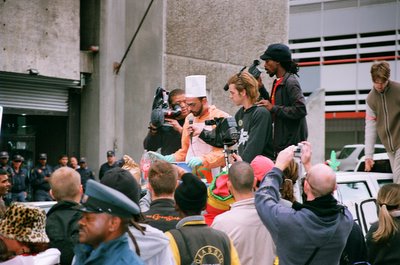
Peacefully Demonstrated outside the Department of Housing May 7 2005

  1. Plant a cannabis seed. Water and allow the plant to grow and produce seed. Plant and water these seeds. Your goal is to grow enough to build a house, you will need about 1 acre to build a 5 roomed home.

    Tyala imbewu ntsangu (ye-cannabis). Nkcenkceshela imbewu uze uyinike ithuba lokuba ikhule ide ikhuphe eyayo imbewu. Uyothi ke uyityale nalembewu uyinkcenkceshele njalo. Injongo yakho kukukhulisa izityalo ezothi zonele ekwakheni indlu, uyakudinga i-acre (malunga nentsimi) enye ukuze wakhe indlu enamagumbi amahlanu.

    Plant 'n hemp saad. Water en laat die plante om te groei en saad te produseer. Plant en water hierdie sade. Jou doel is om te groei genoeg is om 'n huis bou, jy sal ongeveer een aker benodig om' n 5-kamer huis te bou.

  2. Consider the many relevant points presented in the guidelines of Build your house step-by-step.

    Qwalasela yonke imigaqo oyibekelweyo kwincwadana i-Build Your House Step By Step.

    Oorweeg die baie relevante punte in die riglyne van die bou van jou huis stap aangebied-vir-stap.


  3. Start planning where your house will stand. Consider everything about the environment you’ll be building in, like winter and summer sunshine, wind and rain – you don’t want to build on a floodplain, or your house will wash away. Be sure to plan all your water and waste requirements.

    Ceba indawo ozokwakha kuyo indlu yakho. Qwalasela yonke into ngomhlaba lo uzokwakha kuwo indlu yakho, izinto ezinje ngemimoya, ilanga, neemvula zehlobo nobusika, akekho umntu ofuna ukwakha indlu yakhe emgxobhozweni okanye apho iyothi ibe lilifa lezikhukhula khona. Uqiniseke ukuba unamanzi akulungeleyo ukwenza oku.

    Begin met die beplanning, waar jou huis sal staan. Oorweeg dit alles oor die omgewing en jy sal gebou in, soos winter en somer son, wind en reën - jy nie wil bou op 'n vloedvlakte, of jou huis sal wegspoelen nie. Maak seker om te beplan al jou water en afval vereistes voldoen.

  4. Cut the grown cannabis plants down and leave in the field to rhett for a week. The morning dew and natural rotting process will loosen the fibers from the plant.

    a. Process the plant matter by cutting leaves and branches off, then hit small bundles the length of the plant over and upturned rake.
    b. The long fiber parts that remain in your hand are good for weaving rugs and making various other items your skills can accomplish.
    c. The seed can be gathered for more housing.
    d. Gather the small woody bits (the hurd) that have fallen, this waste is what will be used in the construction material.

    Sika / sarha izityalo uzibeke egadini ixesha elingangeveki ukuze zibole. Umbethe wasekuseni nezinye izinto zendalo ezibolisayo ziya kuyikhulula I-fibre ezityalweni.

    a. Yikhawulezise ngohlukanisa intonga zezityalo namagqabi, uhlale uyiharika rhoqo.
    b. Intonga ezi zinothi zincede kwezinye izinto ezifana nokwenza ingubo nezinye izinto onothi uzibonele zona ngokolwazi lwakho.
    c. Imbewu inokuqokelelwe ukwakha ezinye izindlu.
    d. Qokelela imithana ethe yaziwela njengokuba uzoyisebenzisa xa usakha indlu yakho.

    Sny die gegroei hemp/cannabis plante af en in die veld verlaat om rhett vir 'n week. Die oggend-dou en die natuurlike verrotting proses sal die vesel van die plant los te maak.

    a. Proses van die plantmateriaal deur te sny blare en takke af, dan is getref klein bundels die lengte van die plant oor en omgekeerde hark.
    b. Die lang vesel dele wat in jou hand bly is goed vir die matte weef en die maak van verskeie ander items jou vaardighede kan bereik.
    c. Die saad kan vir meer behuising ingesamel word.
    d. Versamel die klein houtagtige bits (die hurd) wat gedaal het, die afval is wat sal in die konstruksie materiaal gebruik kan word.


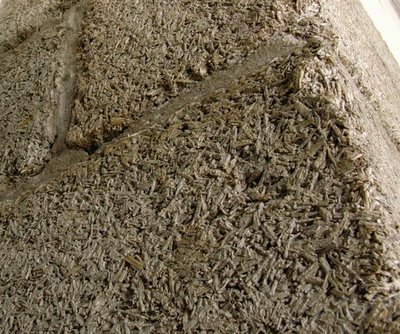
  5. Wash the hurd, dry it, then wash it again. Be careful not to allow the matter to rot or decay during this process, by turning, airing and allowing the African sun to dry the hurd properly. Now combine in proportions 10:2:3:3 combine the cannabis/ntsangu/dagga Hurd(10), washed river sand 0.5mm(2), hydraulic lime(3) and water(3) to make the mulch (This process may need tweaking depending on your geographic location, humidity, rainfall etc)

    Hlamba ingqokelela yakho, uyomise, uphinde uyihlambe.Ulumkele ukuba lengqokelela ibole kwelithuba, yiguquguqule, uyivumele ibethwe ngumoya uvumele nelanga lase Afrika liyomise lengqokelela. Dibanisa ngokwalo mgaqo 10:2:3:3, dibanisa ke lemvuno yakho yomgquba wentsangu (10) kunye nesanti yasemlanjeni 0.5mm(2), ikalika (3) kunye namanzi (3) ukwenza udaka (Nale into ke iyokuthi ixhomekeke kwindawo leyo ukuyo nemvula zakhona njalo-njalo).

    Was die kudde, droog dit af, dan was dit weer. Wees versigtig om nie toe te laat die aangeleentheid te verrot of verval gedurende hierdie proses, deur die draai, voorlê en laat die Afrika-son om droog die kudde goed. Nou kombineer in verhoudings 10:2:3:3 kombineer die cannabis / ntsangu / dagga Hurd (10), gewaste riviersand 0.5 mm (2), hidrouliese kalk (3) en water (3) aan die deklaag te maak (Hierdie proses kan tweaking nodig, afhangende van jou geografiese ligging, humiditeit, reën, ens)

  6. Now build your house! Ngoku ke yakha indlu yakho! Nou bou jou huis!

  7. Teach others. Fundisa abanye. Onderrig ander.


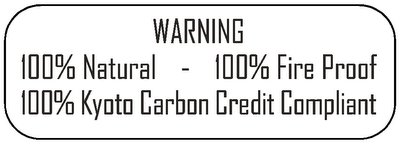
You can use this “dagga-cement” for making bricks, shutter casting or the proven “pole-and-dagga” method. This last method allows for a sturdy, warm, fireproof and water proof home – built with pride and intuitive engineering, not a ‘uniform box’.

Be sure to consider all aspects of your house design and structural requirements. Although the cannabis-cement will become stronger than steel in time, it is not advised to build over 2 floors high without considering structural implications. With planning this cement can be used to build up to 4 floors high.

The cannabis-cement will dry over a period of a month (depending on the weather). At this point you will be able to add the roof. Seal your home’s walls with lime; lime external walls annually. Decorate your house with masonry to make it unique, and paint with coloured lime as per custom.

Always PLANT A TREE in a place that will provide shade, to commemorate this accomplishment.

Council will plant trees if citizens care for them. Call (021) 689-8938 http://www.trees.org.za/

Assist your family, friends or neighbors with your experience and expertise. Share information and technique; you can uplift yourself and your community.


Calls for government officials to go GREEN

Cape Town - A suggestion has been made for government officials to go through a "mandatory energy efficient education."

In the same vein, Parliament in Cape Town and Pretoria's Union Buildings have been called upon to take the lead in energy saving.

Government has also been urged to stop the "urban sprawl" and have a coordinated approach on achieving energy efficiency.


This came out earlier on Tuesday during presentations to Parliament's Portfolio Committee on Energy by various built industry players, such as the Council for Scientific and Industrial Research (CSIR) and the Council for the Built Industry (CBE).

The meeting came at a time when the country and the global community is preparing for the much anticipated COP17 Climate Change talks later this year in Durban.

Dr Llewellyn van Wyk of CSIR argued that there were 10 things the government had to do in order to win the fight on energy-saving.

These, he said, included moving away from "urban sprawl" to integrated urban development and investing in alternative energy as well as innovative and bio-composite materials.

For instance, he said that industrial hemp, which can be grown four times a year in this country, could be used for building.

However, he said that the police were resistant in giving licenses for hemp growing, as some people tendered to grow the plant along with dagga.

While there were no simple solutions in saving energy, he called for "smart ways" in designing buildings and allocation of land.

He said that South Africa could save up to 23.3 million gigajoules of energy through clever design of houses.

By 2035, he said that the global energy use in the non-high income countries would have increased by 36 percent.

The committee admitted that the "situation is threatening and answers too hard to get."

Zola Skosana of CBE expressed concern on whether town planners were tapping into new and smart technologies when designing buildings.

He called on government to lead by example in the retrofitting of its buildings in order to save energy.

Steve Thorne, director of non-profit organisation SouthSouthNorth, said that they would upscale their Kuyasa Project in Cape Town to a National Sustainable Development Facility (NSDF).

The initiative was Africa's first Clean Development Mechanism project.

The committee was also impressed with the presentation on an "Integrated Energy Environment Empowerment - Cost Optimised (iEEECO)" project taking place in Atlantis, outside Cape Town.

The mixed housing project was also being funded by the Department of Human Settlements.

BuaNews / Environmental Issues

It's about my hotel stay and your poverty & poor climate

Later on in 2011, international climate change negotiators will meet in Africa to look back on the famine which is now sweeping the eastern parts of that continent, and make predictions that climate change will be largely injurious to Africa’s future food production.

The World Bank’s special envoy on climate change, Andrew Steer, told The Associated Press:

“The challenges are overwhelming… Africa needs to triple food production by 2050…At the same time, you’ve got climate change lowering average yields …. So, of course, we need something different.”

He hopes for a refocused look at agriculture to take place at the talks that are to be held in South Africa’s eastern city of Durban, the first talks in Africa since Nairobi hosted a round in 2006. South Africa says that as chair of the Durban conference, it will alert the industrializing nations to deliver money and technology to help developing countries in Africa to create clean industries and cope with the droughts and floods.

Africa is hard hit by the effects of climate change and needs more money for managing water and creating seeds for food crops which can withstand droughts and floods.

Researchers with the United Nations-sponsored Intergovernmental Panel on Climate Change estimates that global agriculture accounts for 14 percent of greenhouse gas emissions. This is more than transportation’s 13 percent and almost at the industry’s 19 percent. Farming’s contribution to global warming possibly might offset techniques to store and sequester more and more carbon in soil and trees.

Sequestering carbon is good for the environment and has even yielded increases.

“You invest in things that are good for yields, good for resilience and also sequester more carbon…You can have it both ways if you get carbon back in soils.”

Steer says it is hard to determine exactly how much money is needed, and cautioned that while agreements on helping poor countries and a focus on agriculture could emerge at Durban.

Durban isn’t “a pledging session”, mind you, said Mr. Steer on the sidelines of a climate change conference on farming which attracted agriculture ministers from across Africa to Johannesburg.

In a speech which opened the Johannesburg conference, South African agriculture minister Tina Joemat-Pettersson said that “Food security, poverty and climate are closely linked and should not be considered separately.”


- Naturalbuy