Tuesday, September 15, 2009

N2 Gateway Project: Housing Rights Violations as 'Development' in South Africa

The Centre on Housing Rights and Evictions (COHRE) today released a report on housing rights violations in the context of the N2 Gateway development project in South Africa. The report is based on research conducted by COHRE during a fact finding mission to South Africa in 2008 and its amicus curiae (‘friend of the court’) submission to the South African Constitutional Court in the recently decided "Joe Slovo" case (Residents of Joe Slovo Community, Western Cape v Thubelisha Homes & Others, CCT 22/08[2009] ZACC 16).

The N2 Gateway project has been mired in controversy and complications. Various concerns raised both by the people of Joe Slovo and Delft in the context of the project epitomise South Africa’s housing crisis which is marked by a huge housing backlog and lack of transparency with regard to the housing waiting lists, compounded by a continuing top down approach to housing delivery. Engagement and consultation with communities is increasingly viewed as a formality that needs to be completed while implementing the project rather than a necessary prerequisite for ensuring that the project truly caters to the needs of the community in question and is respectful of their human rights.
The report - N2 Gateway Project: Housing Rights Violations as ‘Development’ in South Africa - can be Downloaded here

Monday, September 14, 2009

How to build your own carbon negative Cannabrick Home


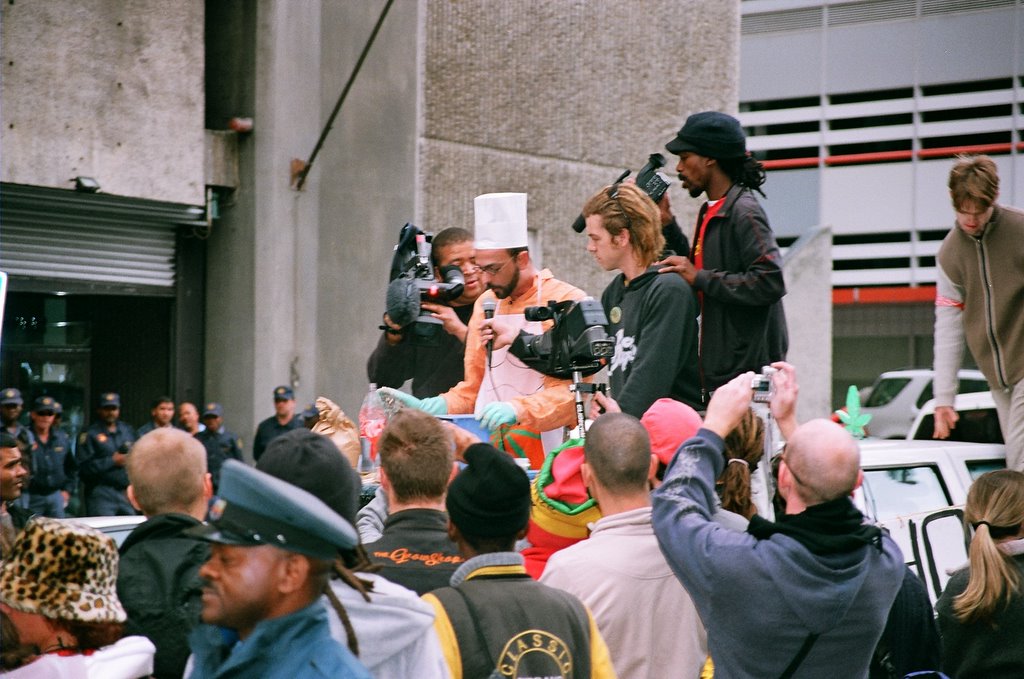
Peacefully Demonstrated outside the Department of Housing May 7 2005
  1. Plant a cannabis seed. Water and allow the plant to grow and produce seed. Plant and water these seeds. Your goal is to grow enough to build a house, you will need about 1 acre to build a 5 roomed home.

    Tyala imbewu ntsangu (ye-cannabis). Nkcenkceshela imbewu uze uyinike ithuba lokuba ikhule ide ikhuphe eyayo imbewu. Uyothi ke uyityale nalembewu uyinkcenkceshele njalo. Injongo yakho kukukhulisa izityalo ezothi zonele ekwakheni indlu, uyakudinga i-acre (malunga nentsimi) enye ukuze wakhe indlu enamagumbi amahlanu.

    Plant 'n hemp saad. Water en laat die plante om te groei en saad te produseer. Plant en water hierdie sade. Jou doel is om te groei genoeg is om 'n huis bou, jy sal ongeveer een aker benodig om' n 5-kamer huis te bou.


  2. Consider the many relevant points presented in the guidelines of Build your house step-by-step.

    Qwalasela yonke imigaqo oyibekelweyo kwincwadana i-Build Your House Step By Step.

    Oorweeg die baie relevante punte in die riglyne van die bou van jou huis stap aangebied-vir-stap.


  3. Start planning where your house will stand. Consider everything about the environment you’ll be building in, like winter and summer sunshine, wind and rain – you don’t want to build on a floodplain, or your house will wash away. Be sure to plan all your water and waste requirements.

    Ceba indawo ozokwakha kuyo indlu yakho. Qwalasela yonke into ngomhlaba lo uzokwakha kuwo indlu yakho, izinto ezinje ngemimoya, ilanga, neemvula zehlobo nobusika, akekho umntu ofuna ukwakha indlu yakhe emgxobhozweni okanye apho iyothi ibe lilifa lezikhukhula khona. Uqiniseke ukuba unamanzi akulungeleyo ukwenza oku.

    Begin met die beplanning, waar jou huis sal staan. Oorweeg dit alles oor die omgewing en jy sal gebou in, soos winter en somer son, wind en reën - jy nie wil bou op 'n vloedvlakte, of jou huis sal wegspoelen nie. Maak seker om te beplan al jou water en afval vereistes voldoen.


  4. Cut the grown cannabis plants down and leave in the field to rhett for a week. The morning dew and natural rotting process will loosen the fibers from the plant.

    a. Process the plant matter by cutting leaves and branches off, then hit small bundles the length of the plant over and upturned rake.
    b. The long fiber parts that remain in your hand are good for weaving rugs and making various other items your skills can accomplish.
    c. The seed can be gathered for more housing.
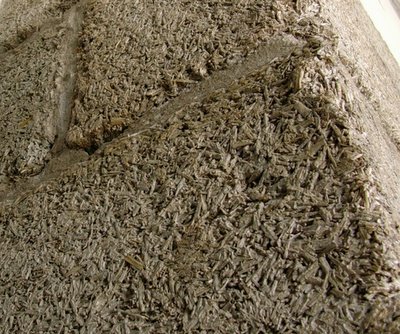
    d. Gather the small woody bits (the hurd) that have fallen, this waste is what will be used in the construction material.

    Sika / sarha izityalo uzibeke egadini ixesha elingangeveki ukuze zibole. Umbethe wasekuseni nezinye izinto zendalo ezibolisayo ziya kuyikhulula I-fibre ezityalweni.

    a. Yikhawulezise ngohlukanisa intonga zezityalo namagqabi, uhlale uyiharika rhoqo.
    b. Intonga ezi zinothi zincede kwezinye izinto ezifana nokwenza ingubo nezinye izinto onothi uzibonele zona ngokolwazi lwakho.
    c. Imbewu inokuqokelelwe ukwakha ezinye izindlu.
    d. Qokelela imithana ethe yaziwela njengokuba uzoyisebenzisa xa usakha indlu yakho.

    Sny die gegroei hemp/cannabis plante af en in die veld verlaat om rhett vir 'n week. Die oggend-dou en die natuurlike verrotting proses sal die vesel van die plant los te maak.

    a. Proses van die plantmateriaal deur te sny blare en takke af, dan is getref klein bundels die lengte van die plant oor en omgekeerde hark.
    b. Die lang vesel dele wat in jou hand bly is goed vir die matte weef en die maak van verskeie ander items jou vaardighede kan bereik.
    c. Die saad kan vir meer behuising ingesamel word.
    d. Versamel die klein houtagtige bits (die hurd) wat gedaal het, die afval is wat sal in die konstruksie materiaal gebruik kan word.


  5. Wash the hurd, dry it, then wash it again. Be careful not to allow the matter to rot or decay during this process, by turning, airing and allowing the African sun to dry the hurd properly. Now combine in proportions 10:2:3:3 combine the cannabis/ntsangu/dagga Hurd(10), washed river sand 0.5mm(2), hydraulic lime(3) and water(3) to make the mulch (This process may need tweaking depending on your geographic location, humidity, rainfall etc)

    Hlamba ingqokelela yakho, uyomise, uphinde uyihlambe.Ulumkele ukuba lengqokelela ibole kwelithuba, yiguquguqule, uyivumele ibethwe ngumoya uvumele nelanga lase Afrika liyomise lengqokelela. Dibanisa ngokwalo mgaqo 10:2:3:3, dibanisa ke lemvuno yakho yomgquba wentsangu (10) kunye nesanti yasemlanjeni 0.5mm(2), ikalika (3) kunye namanzi (3) ukwenza udaka (Nale into ke iyokuthi ixhomekeke kwindawo leyo ukuyo nemvula zakhona njalo-njalo).

    Was die kudde, droog dit af, dan was dit weer. Wees versigtig om nie toe te laat die aangeleentheid te verrot of verval gedurende hierdie proses, deur die draai, voorlê en laat die Afrika-son om droog die kudde goed. Nou kombineer in verhoudings 10:2:3:3 kombineer die cannabis / ntsangu / dagga Hurd (10), gewaste riviersand 0.5 mm (2), hidrouliese kalk (3) en water (3) aan die deklaag te maak (Hierdie proses kan tweaking nodig, afhangende van jou geografiese ligging, humiditeit, reën, ens)


  6. Now build your house! Ngoku ke yakha indlu yakho! Nou bou jou huis!


  7. Teach others. Fundisa abanye. Onderrig ander.


You can use this “dagga-cement” for making bricks, shutter casting or the proven “pole-and-dagga” method. This last method allows for a sturdy, warm, fireproof and water proof home – built with pride and intuitive engineering, not a ‘uniform box’.

Be sure to consider all aspects of your house design and structural requirements. Although the cannabis-cement will become stronger than steel in time, it is not advised to build over 2 floors high without considering structural implications. With planning this cement can be used to build up to 4 floors high.

The cannabis-cement will dry over a period of a month (depending on the weather). At this point you will be able to add the roof. Seal your home’s walls with lime; lime external walls annually. Decorate your house with masonry to make it unique, and paint with coloured lime as per custom.

Always PLANT A TREE in a place that will provide shade, to commemorate this accomplishment.

Council will plant trees if citizens care for them. Call (021) 689-8938 http://www.trees.org.za/

Assist your family, friends or neighbors with your experience and expertise. Share information and technique; you can uplift yourself and your community.


Legal rows stall Cape housing progress

The battle over the transfer of more than 1000ha of prime Western Cape land to the Housing Development Agency is delaying a range of housing projects, including restitution in Constantia, Western Cape Premier Helen Zille complained this week.

“There was an unlawful land transfer. We simply want to get the land restored. This is a matter of right and wrong, not political squabbling,” said Zille.

She said the former ANC provincial government had illegally transferred the land, worth about R500-million, the day before the April elections.

The Mail & Guardian has revealed how the provincial government is refusing to hand over the title deeds, as lawyers it has consulted believe the transaction is “invalid and unenforceable”.

Minister of Human Settlements Tokyo Sexwale has now asked law firm Edward Nathan Sonnenberg (ENS) to consider the disposal agreements. The legal team includes Chevan Daniels, the son of the chief state law adviser, Enver Daniels.

Chevan Daniels said he saw no conflict of interest: “At the time of our appointment, the director general of the department was aware that Enver Daniels was my father. The team acting for the department … included two other directors of ENS and … my views and advice were subject to rigorous peer review by fellow directors.”

Enver Daniels told the M&G he was not aware his son was part of the team advising Sexwale’s department and he had given no official advice on the transfer.

Prime properties in Constantia promised to the regional land claims commissioner, Beverley Jansen, for the resettlement of about 80 claimant families are included in the land transferred to the Housing Development Agency, set up to fast-track housing delivery.

Zille said Sexwale had cancelled a meeting this week, despite the urgency of the matter. She warned: “If we can’t have a meeting soon we will proceed with the intergovernmental relations process to achieve an outcome by other means.” - M&G

Friday, September 11, 2009

WC affordable project launched

Watergate Estate, the Western Cape's first privately-funded, affordable housing development, was launched in Mitchells Plain, with Western Cape premier Helen Zille and Cape Town mayor Dan Plato attending to endorse the project officially.

The R1,2bn project, to be developed by New Age Property Developments, will enable families with a joint monthly income of between R7,500 and R15k to own a home for the first time. The prices of properties on the estate will range from R329,900 to R409,900, and some major banks have committed to giving eligible buyers bonds of 100%, payable over 20 years.

The project, which will accommodate some 4,500 families, is in line with the government's Urban Renewal Programme (URP), a national strategy to uplift the most deprived areas, Mitchells Plain and Khayelitsha in the Western Cape being among them. The URP focuses on investment in economic and social infrastructure, human resource development and enterprise development.

At the ceremonial ribbon-cutting ceremony, Zille was reported to have said that Cape Town's housing backlog would be dramatically reduced by projects such as Watergate Estate. A significant proportion of people on the City's waiting list would be able to buy the homes in the development "and have self-respect and an affordable bond, and become part of the middle class of South Africa, raising their children and building everybody's future".

The mixed-use project, dubbed the "Gateway to Mitchells Plain", will occupy a 35ha site at the intersection of AZ Berman Drive and the R300 motorway, and is located opposite the Mitchells Plain General Hospital, which is nearing completion.

Watergate Estate will be developed in three phases over a five-year period, with 357 homes to be constructed in the first phase, followed by a further 2,400 homes in the second phase, which will also include a shopping mall, soccer field, and public facilities such as a multi-purpose community hall, park and undercover walkway leading to the newly upgraded Mandalay station. In addition, provision will be made for daycare facilities and places of worship.

The third phase, which is currently being planned, will comprise more upmarket homes, with a starting price of around R400k, according to Colleen Webb-Burgess of Webcol Properties, the marketing agent for the development.

The houses to be built in Phase 1 will comprise two- and three-bedroomed freestanding and semi-detached homes, ranging in size from 48sqm to 62sqm. In Phase 2, lock-up-and-go apartments, housed in three-storey high, walk-up blocks, will also be available.

It is anticipated that the installation of services on the site will begin next month, and building of the first houses will start around November 2009. The estimated construction cost for the whole of Phase 1 is about R99m, according to Webb-Burgess.

She says the response from potential buyers to the launch of the project has been phenomenal. "The homes are being offered on a first-come, first-served basis, but, as we are conscious of the lack of housing in the entire community, we will make every effort to meet housing needs. The details of all qualified buyers who can't be accommodated in Phase 1 will be kept on our records until the Phase 2 homes become available."

For more information contact Colleen Webb-Burgess on 021 761 0496 or send an email.

- Propterty24

Sexwale to act on N2 Gateway

Cape Town - Human Settlements Minister Tokyo Sexwale vowed on Thursday to act after Parliament's watchdog public accounts committee found officials had left houses in the N2 Gateway project in disrepair and lied about it.

Sexwale's advisor Chris Vick said the minister was awaiting a formal report from the Standing Committee on Public Accounts (Scopa), "including its recommendations and comments on information provided by departmental officials - and will then act without any equivocation".

Vick recalled that Sexwale visited the project last month and expressed concern about the poor craftsmanship and living conditions in many of the housing units.

Scopa chairperson Themba Godi, who also visited the project in August, returned with committee members on Wednesday and found that defects pointed out by the Auditor-General in a report had not been repaired.

Officials lied

He said human settlements officials who recently told Scopa the problems had been resolved, had lied to the committee.

"What we have been told by the officials during the meeting has not happened, the committee has been misinformed," Godi said.

"Members of the committee were outraged at officials who gave an inaccurate report."

The defects identified by the Auditor-General included cracks in the walls and floors, peeling paint, doors not fitted properly, loose fittings and uncovered drain pipes and blocked drains.

Scopa is finalising a report on the N2 Gateway Project with recommendations and will submit it to the Speaker of the National Assembly.

- SAPA

Thursday, September 10, 2009

N2 officials misled Parliament

National housing officials have "deliberately misled" Parliament about repair work being done at the N2 Gateway.

A parliamentary site visit to the flagship housing project yesterday revealed walls covered in damp, exposed pipes and electrical cables, blocked drains and collapsed walls.

"We are being misled at the expense of the poor," said chairman of Parliament's standing committee on public accounts (Scopa) Themba Godi.

The parliamentary delegation, that included representatives of the Scopa and Human Settlements portfolio committee, was shocked by the appalling conditions of many of the units which have not been repaired despite assurances from director-general of Housing Itumeleng Kotsoane during a recent Scopa briefing that these problems had been resolved.

"Unfortunately, once again this committee has been misled. We, as a committee, are very concerned and outraged that the officials have deliberately given us misinformation."

Godi said he would complain to the office of the Speaker of the National Assembly about the misinformation presented by housing officials to Scopa.

Scopa will also make recommendations to Parliament about the N2 Gateway's problems.

Godi said Human Settlements Minister Tokyo Sexwale, who visited the N2 Gateway in August, was "eagerly awaiting" the recommendations.

"This was a flagship project and we need to appreciate the lessons we have learnt."

Godi said Scopa's report would be referred to Parliament for the concerns raised to be dealt with at the highest level.

The Department of Human Settlements said it was "at great pains" to ensure the defects identified were dealt with.

"There has never been any intention to mislead Scopa. This is a complex project involving all three spheres of government and we remain totally committed to ensuring its success in partnership with all stakeholders," said a departmental statement.

- Cape times

The real lessons from the N2 Gateway

The next posting in this blog is a load of utter rubbish spewed by Director General of the Ministry of Housing/Human Settlements Itumeleng Kotsoane setting out the lessons learned from the N2 Gateway pilot project/showcase/disaster. The REAL LESSONS to be learnt from the N2 Gateway are as follows:

Lesson 0: Motive. Why build the N2 Gateway where it is? Not the "housing for all" excuse. The reason the N2 was built where it is, is to hide the "unsightly" informal settlements from arriving eyes. The idea was to build all along the N2 corridor so that the suffering of the people was out of sight. Out of sight out of mind! Rubbish motive... rubbish project...

Lesson 1: Site evaluation Before doing any real work on a project a proper investigation should be done into the site. This does not have to take long, but it should be long enough to spot the fact that the planned work is in a flood plain. Dig a hole and see what is under there!

Lesson 2: Planning No spade should be lifted until the ENTIRE project is planned. Include some lebensraum while you are at it. The N2 Gateway is shit! The communal areas are terrible. It's all dingy in there and it's obvious no one thought about where the water must go when it rains.

Lesson 3: Budget A complete AND REALISTIC budget must be drawn up before work starts. Not only does the budget have to be drawn up, but the best price for each item which is needed should be costed and CONFIRMED. No point rocking up at the supplier 6 months later to find that prices have doubled.

Lesson 4: Execution Construction companies for construction, IT companies for IT jobs. Having an IT company which "
did not submit a substantial document; but one that merely comprised a 20 page generic submission" doing the project management for this size construction is a recipe for disaster. True to the recipe.. disaster! Would a construction company order only 3 patterns of keys for the whole development? I think not!

Lesson 5:
Decision making - "M3" - the cabal of 3 who were/are responsible for the mess. Lindiwe Sisulu, Dick Diyanti and Nomainda Mfeketo. "Somebody needs to go to prison" There are three nomineess. Take your pick.

Lesson 6:
Thubelisha The idea that an outside agency can be created to come in and "fix everything" is mistaken. What is Thubelisha? Who does it answer to? Where are the accounts of Thubelisha? Thubelisha came to the N2 Gateway with no presence in Cape Town and has not managed to collect the rental for the development. Next stop the Housing Development Agency!

Lesson 7: Why is the problem getting worse? For Cape Town the answer lies in the Eastern Cape. The failed housing projects there and the lack of economic activity... ie the failure of Coega

Government pretends to learn lessons from N2 Gateway project!

In his book Planet of Slums, Mike Davis calls the Cape Flats the eleventh largest slum in the world, referring to the bleak conditions in the more than 200 informal settlements that are home to more than 250 000 people.

The Constitutional Court Grootboom ruling in 2 000 prescribed that the three spheres of government (national, provincial and local) should provide decent housing for Irene Grootboom and the community of Wallacedene living in these squalid conditions.

Although Grootboom's personal story is the tragedy of a premature loss of life in these settlements, some seven years later the rest of Wallacedene has finally received their homes.

Given that, under the watchful eye of the Constitutional Court, it took that long to carry through a single upgrade of living conditions, it became clear that the three spheres had to enter into a new working arrangement to avert an impending social catastrophe.

Concerned about the enduring features of the apartheid city and the rapid growth of informal settlements, the national Cabinet directed that a strategy be framed that responded to shelter needs and towards the building of more sustainable human settlements.

The mayor of Cape Town approached the minister of housing, requesting the opportunity collaboratively to pilot such a project, focused on the upgrading of informal settlements at the epicentre of the city and thus offering the opportunity to explore and demonstrate new ways to reintegrate the living space for all of its citizens.

This strategy, called "Breaking New Ground", (aka Broken Policy) was framed with the requirements to be economically proactive, socially responsible and sensitive to the natural environment. It attempted to address coherently a complicated evolving urban environment, offering critical directions for public investment through reformulated housing instruments. It was to realign financial and operational arrangements that could frame sector-wide partnerships to produce the desired pace of delivery.

A set of policy directives, legislative guidelines, financial and technical instruments, systems and procedures had to be redesigned to ensure optimal use, application and accountability. These processes are time-consuming and tedious.

The results are beginning to be realised in the massive growth of the budget of the new Human Settlements Department.

They are also only now beginning to be translated into the nature and form of public and private investments in the towns and cities across the country. Visitors as well as ordinary residents now marvel at the developments on the N2 corridor, reflecting the positive impression it creates. At the same time, to see Langa itself resolutely emerging as a suburb of Cape Town from the shadows of an apartheid township is a significant step away from the city of our past.

This is possible because we learned very difficult lessons in the application of the N2Gateway project. The cost of these lessons is the subject of your report, but the value to the development of a new way to build equitable and efficient cities is perhaps missed.

Although the development of the new tools in the arsenal now available in the Human Settlements Department had to be meticulously developed, the demand for urgent application in Cape Town at the time did not have that benefit. The collaboration was framed through a "learning-by-doing" approach by building on existing modalities and crafting new ones. (ie making shit up)

This project provoked a very public debate about the processes that are involved. Every major institution in the country has been called to offer an opinion, including Parliament and the Constitutional Court. That, in our opinion, was what the pilot was meant to be.

Four key issues continually emerge. Public funding streams are subject to complex rules for accounting purposes, and hybrid arrangements that are more likely to produce better outcomes have to develop better procedural performance to ensure effective oversight.

Although these were agonisingly recalibrated into the rules and support operations of the housing programmes, the very public pressure of this project spurred those changes. Future interventions in our cities will benefit from the hard lessons.

The second relates to new ways of framing implementation protocols for the application of human settlement resources. The performance requirements highlighted at the standing committee on public accounts (Scopa) help create the confidence about how government should work in relationship to building functionally supportive settlements.

The third relates to the requirements for better project management capabilities in projects that are meant to be catalysts for reintegrating our cities. The N2 was bound to make huge mistakes in its application in an arena of policy and institutional transition. Our response has been to establish the Housing Development Agency to tackle this.

Finally, the deliberations of the Constitutional Court on the N2 that centred on the nature of public consultation demonstrated how first-generation urban dwellers want their route into the urban economy navigated through their entitlement to housing. They want it to offer the benefits of the whole city.

The lesson is that only functionally supportive human settlements offered through a process of intense engagement provide the basis for meaningful citizenship. The extensive public engagement exercise of the N2 has alerted us to the ways in which we can better transform our cities into places that have meaning for all of its citizens.

Itumeleng Kotsoane is director general of the national department of human settlements - M&G

Tuesday, September 8, 2009

Sexwale bucks the trend

Cape Town - Human Settlements Minister Tokyo Sexwale said on Tuesday his department was introducing austerity measures to slash official travel, accommodation and administration costs.

Sexwale and his deputy Zoe Kota-Fredericks this week started flying economy-class to attend parliamentary sittings in Cape Town and all staff had been ordered to do the same, his spokesperson Chris Vick said.

Vick said Sexwale told his staff: "We need to lead by example. We have to tighten up on expenditure, particularly on some of the big-ticket items such as travel."

Lessing printing, photo-copying

The department had placed a moratorium on promotional items and instructed officials to share transport wherever possible.

It had given orders to cut down on printing and photo-copying costs.

Sexwale and Kota-Fredericks have bucked the ministerial trend for acquiring luxury official vehicles at taxpayers' expense.

Savings study
The minister was using his own car and his deputy one from the department's fleet, Vick said.

He said the human settlements department was doing a study of how much it could realistically save and would report to the national treasury once it was completed.

Sexwale, who made a personal fortune in business before joining President Jacob Zuma's Cabinet, is possibly pre-empting moves by government to cut ministerial perks.

Prompted by a public outcry over ministers buying top-of-the-range German cars, the government appointed a task team to see how officials could cut unnecessary spending.

Spokesperson Themba Maseko said recently it had yet to hand proposals to Cabinet, but promised on Tuesday to respond later in the week to a call by Cosatu for ministers to trade in expensive cars for more modest models.

- SAPA

Monday, September 7, 2009

MEC launches Housing listening Campaign

Western Cape Housing Minister Bonginkosi Madikizela will today launch the Rental Housing Tribunal “Know Your Rights Campaign”.

Minister Madikizela says the campaign is to inform tenants and landlords of their rights and responsibilities as well as the services offered by the Rental Housing Tribunal.

“The campaign bears out of the realisation that too few people are aware of the Rental Housing Tribunal and its role in fostering sound relations between landlords and tenants,” says the Minister.

The department believes it is more crucial since the onset of economic recession will increase the likelihood of tenants defaulting on rent and landlords acting immorally.

The Minister says it is very important that landlords and tenants alike understand that there is a Tribunal administered by the Department of Local Government and Housing whose purpose is to settle rental disputes free of charge.

“At the launch members of the Rental Housing Tribunal will stage a 15 minutes mock hearing to demonstrate how the tribunal operates,” added Minister Madikizela.

- Bush Radio

Friday, September 4, 2009

A welcome opportunity? Evictions Halt

In an unusual move by the Constitutional Court, a full bench of 10 judges has indefinitely suspended its own order for Joe Slovo residents and backyard dwellers to make way for the N2 Gateway development in a phased in, deadline-driven mass relocation.

This came as the court granted Housing MEC Bonginkosi Madikizela the opportunity to commission an expert to investigate the "practical, social, financial and legal consequences" of the ordered relocation to Delft.

"For the community, and indeed all parties involved, this is a welcome opportunity to seek a workable solution," said Steve Kahanovitz, the Legal Resources Centre attorney representing the 20,000 strong community resisting the eviction application by the Minister of Housing.

The matter had a long court history and the development plan was redesigned a few times, but in June the Constitutional Court finally made a ruling on it.

It directed the state to provide 70% of the low-cost housing to be built at Joe Slovo to former or current residents who applied and qualified for housing.

The residents were ordered to vacate in phases according to a schedule, but only on condition that they would be relocated to sturdy temporary residential units services with tarred roads and communal ablution facilities, at Delft or another suitable location.

The residents, the national minister, MEC and Thubelisha Homes (which no longer exists but whose responsibilities have been partly taken over by the National Housing Agency), were ordered to "engage meaningfully with each other" by June 30 to reach an agreement on all relevant issues regarding the relocation.

The Court however issued a new order last month after it considered a memorandum lodged by counsel for the Minister of Housing on August 4, 2009.

In the memorandum Michael Donan SC explained that the parties did meet on several occasions, but no agreement could be reached.

The Minister requested an extension so the parties could engage further and the MEC requested a postponement of the implementation, having expressed "grave concerns" about a variety of consequences of the relocation.

The MEC said he was concerned about the fact that the Concourt made no provisions for what would happen to the other 30% who had to be moved to the Temporary Relocation Area (TRA) housing but who could not be moved back to the permanent housing at Joe Slovo as soon as the project was completed.

He also had questions about the density of the proposed development and the social, financial and legal effects of this massive relocation.
The MEC said if the expert confirmed that the relocation would give rise to unforeseen difficulties, those difficulties had to be addressed before implementation.

All the parties agreed to his request for time until September 30 to deliver a report.

Acceding to this request, the judges said they would suspend their initial order "until further notice".

"Once the report referred to... has been received, further directions may be issued."

- Cape Times

Thursday, September 3, 2009

MEC admits to shoddy N2 Gateway construction

The Western Cape Housing MEC has admitted some flats in the N2 Gateway development are so badly built they should be demolished.

Bonginkosi Madikizela says he now understands why tenants refuse to pay rent.

N2 Gateway tenants reportedly owe the national government over R7 million in outstanding rent.

So far, the Human Settlements Department has only been able to recoup R600 000.

Madikizela says in some cases the shoddy workmanship cannot be rectified.

“Some of the units, it will not actually help to fix them. I think a possible solution which is something very difficult to do would be just to demolish the building you know and start afresh.”

JOE SLOVO RESIDENTS FEND FOR THEMSELVES

At the same time, informal settlers in Joe Slovo in Langa say they believe they are capable of building their own homes.

The Constitutional Court halted the eviction of the squatters from an area where authorities wanted to build homes as part of the troubled Gateway project.

The court ruled that 70 percent of the houses should go to Joe Slovo inhabitants.

Community leader Mzwanele Zulu says a study has been done to determine exactly how many homes are needed.

“From the community’s point of view we are able and capable of doing development. We’ve done a numeration, we’ve gathered information, we’ve got findings that we are planning to share all this information with the government," says Zulu.

- How to Build your own carbon negative Cannabrick home

-
Eyewitness News

Residents 'over the moon' with new homes

For the first time in her life, Nomanyana Njaxa, 29, will live in a real house with her husband and two children.

She was among 400 families left homeless three years ago when a fire raged through the Masiphumelele informal settlement.

She had lived there for 10 years, losing her shack home to fire four times.

Now Njaxa and 33 other families have moved into the first completed multi-storey blocks of flats built there.

"I'm over the moon," she said, showing officials and the media around her new home.

The two-roomed flats are part of the multimillion-rand Amakhaya Ngoku housing project, largely sponsored by foreign donors and the subject of ongoing controversy, with often violent resistance from community members who will not benefit.

Once completed, it will boast 12 multi-storey blocks of flats, which will be home to 352 families.

The scheme started last November, but its completion is still threatened by a group of residents who continue to refuse to move their shacks to make way for further construction.

Premier Helen Zille and Housing MEC Bonginkosi Madikizela officially handed over the flats yesterday.

Zille described the project as unique, saying that where development took place, conflict should be expected.

- Cape Argus

Wednesday, September 2, 2009

Zille to meet Zuma about housing

Western Cape Premier Helen Zille is set to meet with President Jacob Zuma sometime this month to discuss some of the housing problems in the province.

The premier handed over 33 flats to some Masiphumelele residents on Tuesday.

The flats form part of the Amakhaya Ngoku Housing Development, which is expected to accommodate about 350 families when completed.

“The life there in the shack was very very bad. The fire burnt down my stuff four times,” said one woman.

She is one of the first people to receive keys for new apartments.

The provincial housing backlog is close to half a million.

Zille acknowledged housing is one of the biggest challenges facing her administration.

She said she will be discussing this with Zuma soon.

“He has asked me to give him a paper on all of the laws that hinder development and that is what we’ll be doing," said Zille.

Officials said about 17,000 people migrate to the province annually, exacerbating the housing crisis.

- Eyewitness News